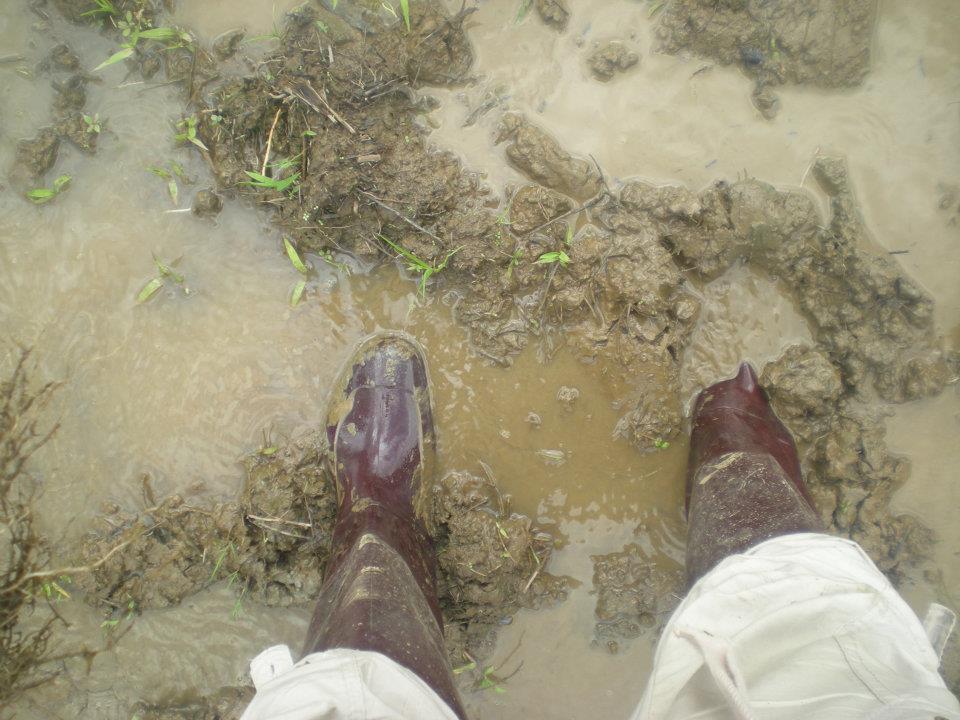
Knee-deep in mud: the planting grass adventure

Photo: K. Atkinson Jones

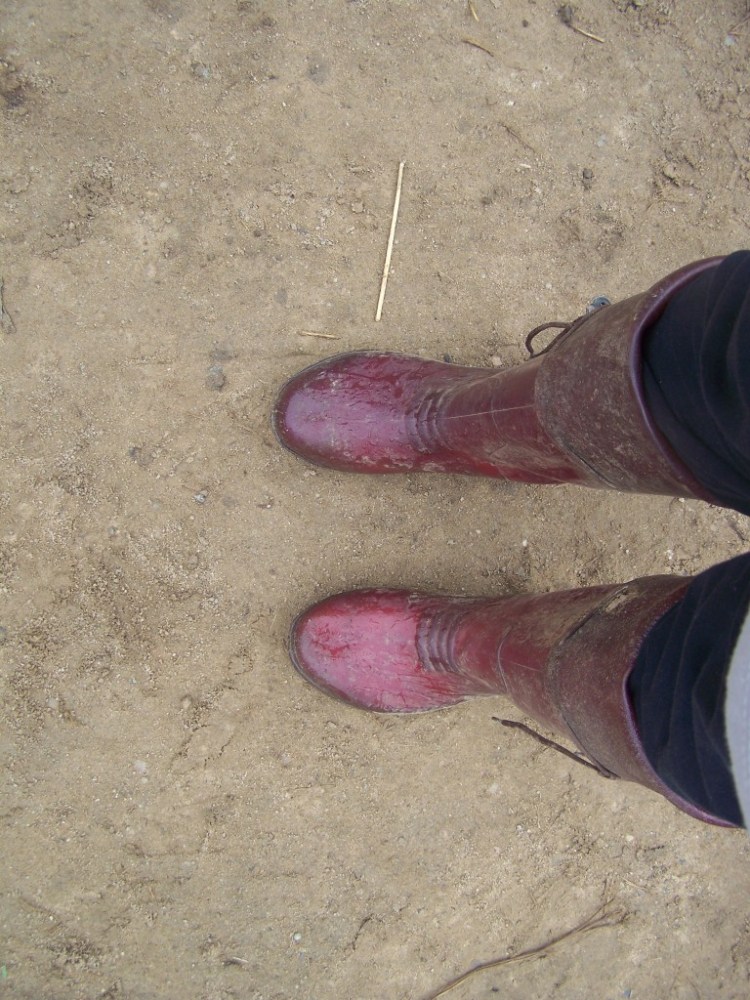
Thank goodness I am wearing boots, because otherwise, when I am knee-deep in the thick, gloppy mud in the humid and overcast afternoon, my foot would come shooting out and cause me to face plant it into the neat little rows of grass we are planting.

Our afternoon volunteer activity is another labor-intensive experience. This time, we have are split into two groups: grass planters and sugar-cane choppers. I’ve had my fill for life of machetes, so I opt to spend time hunched over a mud field, shoving little grass bulbs into holes.

As we walk to the field, Jack points out spots of interest, namely the moon bear Lek’s husband has rescued. This little, fluffy guy was having his bile harvested when he was rescued. I squint my eyes to a platform in a large, fenced off area and see the bear, a roly poly fella, hanging out, draping his head off of a platform, looking at the world upside down.

We finally arrive to our field, nearby Lilly’s grave. It’s roped off with stakes and string. And, it’s pretty big. Jack hands us each bundles of grass to plant, explaining he will come by and poke a hole in the ground where the grass goes, to put one piece in, then cover it up with more dirt. Then, when the row is done, we move back a fraction of an inch (not literally, but it seems like it), and do it all over again.

With 10 of us, we each cover about 10 holes in the ground before we retreat a row back.

Only, Lucy, Katy and I have it a bit harder. We’re off to one side of the field … pockmarked with huge puddles.

We’re filthy in seconds.

Photo: K. Atkinson Jones

First, it’s Jack who comes up to me, hand covered in mud, and runs his finger down both cheeks and my chin, leaving me with swipes of mud that look like I’m at some ancient tribal ritual.

Then, as we move further and further into the puddles, my hands, then arms, become covered in it. We don’t even need to poke holes in the earth anymore. I simply jab my finger into the ground, shove a piece of grass, then slosh some water and dirt over it, hoping the grass doesn’t get up and float away.

We get into a good routine. Grass in one hand. Popping our fingers down into the mud, shoving a piece in, covering it. Repeating down the line until we reach our neighbor’s planted grass. Then, step back a foot into more mud, and do it all over again.

“We should sing!” Lucy suggests. When there is no audible groan from the volunteers, she launches into song. Then, we begin to throw out suggestions.

“How about some New Kids on the Block?” I ask after they run through some songs from the early 90s. Lucy and Katy pause mid-plant and look at me.

“Who?” Lucy asks.

Oh my god. They don’t know New Kids on the Block.

“Ya know … Hanging Tough … Step by Step, oooh baby,” I sing.

They stare at me, blankly.

Then it hits me, I am old. Well, not old. But, significantly older than the two girls who are standing next to me.

Turns out, Katy isn’t even 20, and Lucy is in her early 20s. And, me? Well, I’ve got a good decade on Katy.

“The New Kids, for your information, were the first boy band in my time,” I explain, trying to salvage the situation. “They were popular when I was in elementary school. The first time they came to town and I wasn’t allowed to go to their concert, I threw myself on the floor of my bedroom and cried as I listened to Joey-Joe sing in his pre-pubescent girlie voice ‘Please Don’t Go Girl.'”

Instead, we sing Backstreet Boys. Well, they do. I don’t know enough of the words. Oh, beautiful generation gap.

From time to time, one of the three of us has a near splash in the mud. Our gumboots become firmly entrenched. No one notices until one of us — the stuck one — squeals and tries desperately to not land on all fours in the huge puddles. We wave our hands, lurched over and teetering, attempting to regain our balance. Sometimes, our feet actually become dislodged within the boot and creep dangerously close to falling out.

Fortunately, we always recover, getting our foot back into the foot portion of our boot.

When we run out of grass to plant, I’m actually kind of bummed, although I am thankful I won’t be having ants creep out of the strands and crawl up my arms anymore.

The three of us actually make it out of planting grass without landing in the mud.

Until Jack notices.

He gets Lucy and Katy first. I smugly step aside, avoiding the throw down. But then, as I walk towards the solid land, he tackles me, sending my entire right side plummeting into a huge mud puddle.

I can’t help but laugh and be giddy.

Being caked in mud doesn’t even bother me because we’re having so much fun.

As we walk back, Lucy, Katy and I link arms, giggling about our afternoon as our feet squish into the ground, I realize I like planting grass. I like this entire experience so far.
But still, nothing can surpass the shoveling.

An inside look at Elephant Nature Park

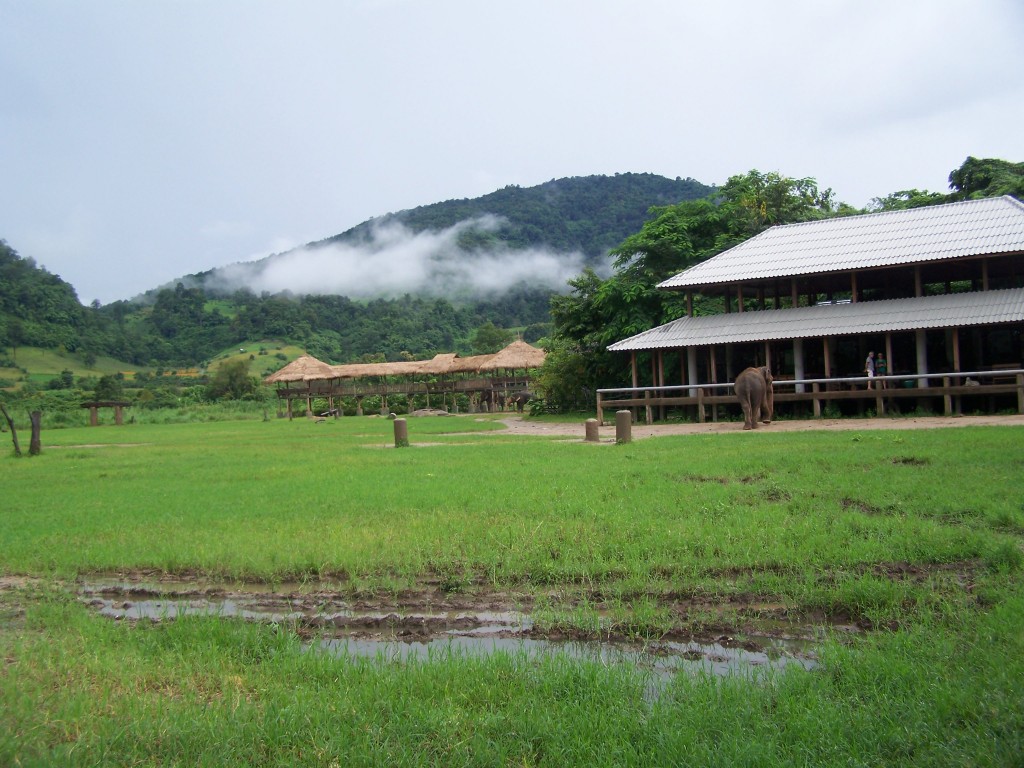
The expansive park is set among lush mountains and mist.

Chai hands us each a huge bundle of bananas as we suit up in our rain gear.

“For our walk,” he explains.

I pull on my gum boots (with socks this time) and pull my poncho over my head, tucking my camera under it securely so it won’t get rained on.

The clouds have been threatening all morning, and now, after our filling lunch, rain begins to spill from them. Big, fat drops of rain that hit our eyelashes and make us blink back the water so our view of the park isn’t obstructed.

The volunteers are split in half for this walk through the park — something every visitor to the park gets, whether they are volunteers or tourists up for a day or two. It doesn’t cover the entire 20 acres, but it gives us an idea of what goes on at the park, and a briefing on the elephants who live here and the programs the park is instituting to show tourists and locals there are other ways to earn a living from elephants that doesn’t cause them further harm after the brutal crush.

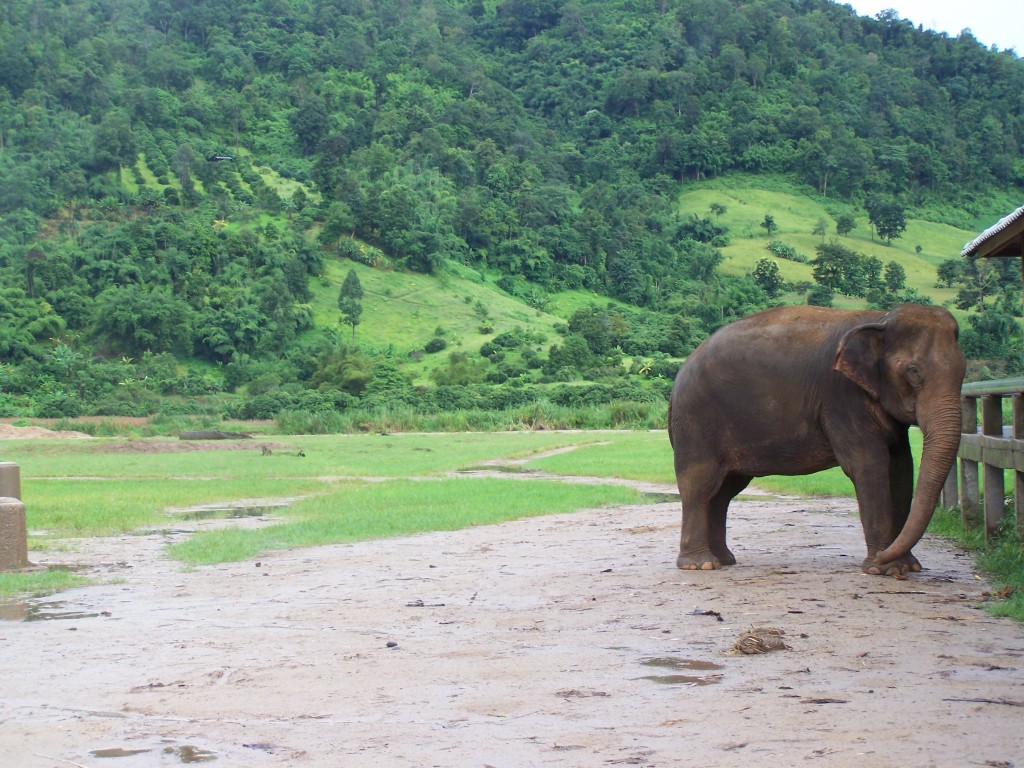
An elephant stands alone on our walk.

We start with the two girls I met the first day — Mae Tee and Mae Kham Geao — the chatty best friends. Then, we head over to a shelter where we shoveled earlier in the day and meet some elephants over there. I get distracted when I look to my right and see an elephant being trained with a clicker and bananas. She stands behind a wooden frame with beams at different levels. When the clicker goes off, she puts her foot where the noise comes from, and is then rewarded with food.

The positive training method being taught. A method that does not involve pain or suffering.

We then head over to her and give her even more bananas before we walk by a giant mound of earth, sprouting fresh grass and new trees.

“This is Lilly’s grave,” says Chai. “She died here a little while ago. We buried her near her best friend, Mae Keow’s, shelter and planted grass and trees.” He tells us of Lilly’s struggle in her last days and her best friend’s unwavering support and reassurance as Mae Keow stayed by her side to comfort her.

I can’t help it, I get emotional just looking at the giant grave rising above the long blades of grass below. I can almost tell there is an elephant buried there, the way the mound is shaped.

“Her best friend was very sad when she died,” he explains.

I get even sadder when I realize how similar elephants are to us.

They can feel the way we feel. They can experience grief and loss. Holy shit.

We continue our walk, past huts of staff members, through enormous puddles, stomping through foot prints of elephants who have walked on the same path we have.

It beings to boggle my mind as we walk deeper into the habitat of these creatures.

Along the way, Chai stops us at different elephants, telling us their stories. They are all similar and all heart-wrenching. Illegal logging. Fed methamphetamine to keep them working. Forced breeding. Street begging. Trekking at camps. Each situation is gut-wrenching, painful to hear.

I can’t believe these animals have been treated this way, and people like me unknowingly send the message to the industry that it is OK by riding them, going to circuses, buying elephant paintings.

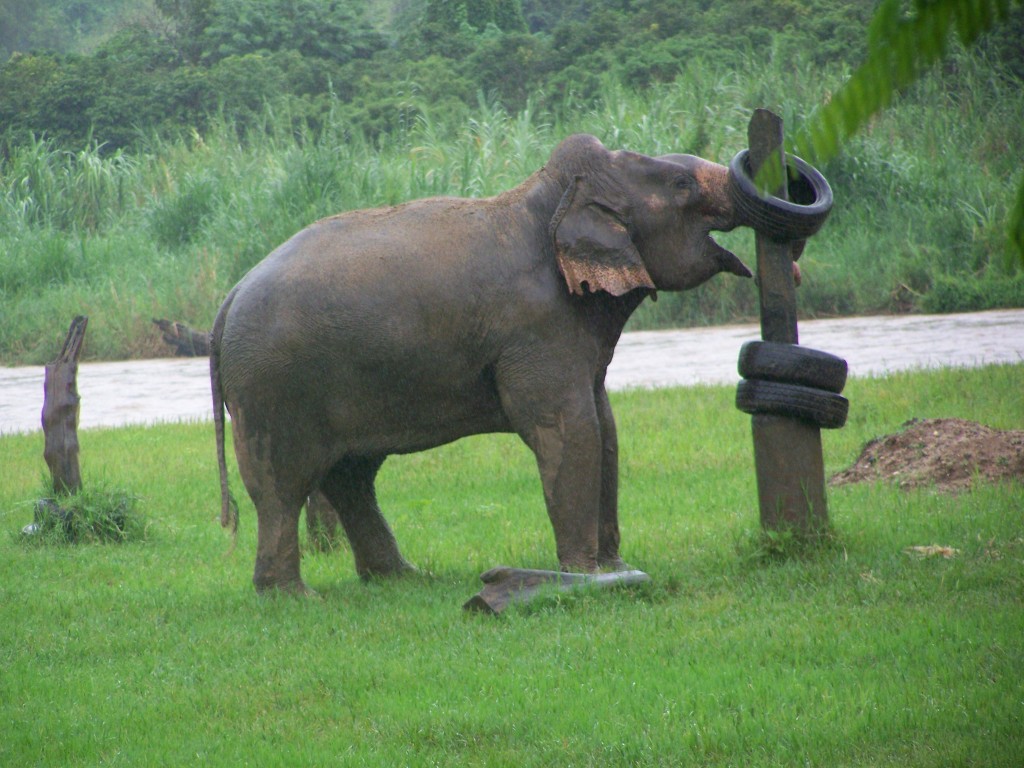
Elephants are a playful bunch. This one entertains herself with a tire.

Then, I look around. We’re not the only group on this tour today. In fact, there are quite a few groups touring the park and learning what we are learning. After they are done, they will watch the same DVD we watched the day before, and their eyes will be opened.

As we head back to the compound, I shake off the sadness and am comforted when I see Jokia, the elephant who lost her baby and while she was mourning, had her eyes shout out by slingshots by her mahout because she refused to work. I see her and her best friend, Mae Perm, gently touching her trunk to let her know she is by her side.

And, that makes me feel good. It reminds me that despite the abusive and awful pasts these elephants have endured, here, on these lush 20-acres with loving people watching over them, they are safe. And won’t have to go through anything like this again.

This is their sanctuary, and I am so fortunate to have been let inside to experience these creatures for myself.

Escape of the Week: Brela, Croatia

It’s no secret I love Croatia. It is what sparked my blog, it is what sparked my desire to quit my job and head out to explore more of the world. When I booked my long-term travel, I knew I wanted Croatia to be where I would end my trip. There is something magical about the country — the way the water is that perfect cerulean blue and the way the trees are neon green.

Yes, I love Croatia with all of my heart.

When my friend, Katie, suggested we visit Brela en route to Split, I agreed for one reason: there is no place in Croatia I don’t love. Surely, Brela would be no exception to this.

And, it wasn’t.

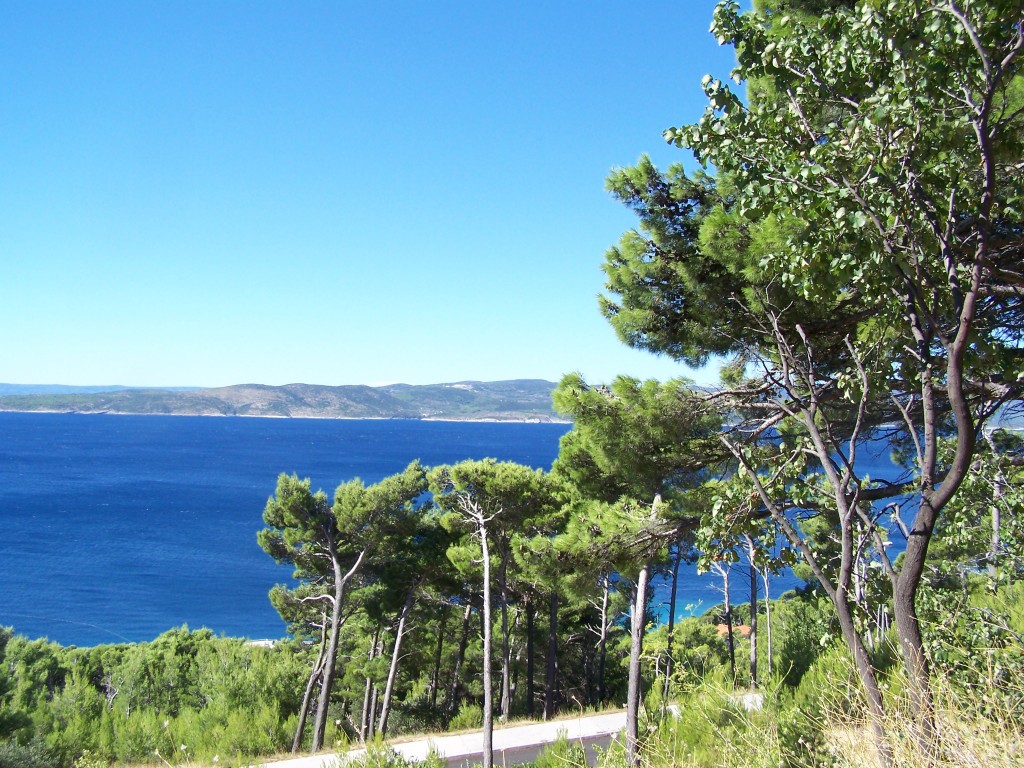
With amazing storms rolling in from Biokovo Mountain and hovering over the Adriatic Sea, how can you not love this little beach town? It’s enough to make someone book airline tickets immediately and head to this gorgeous destination.

Brela’s beaches are some of the best in Europe, earning one of its beaches, Dugi rat the distinction of being one of the most beautiful on the continent. Maybe you’ve seen this photo, of trees growing out of the white rock in the middle of the water?

With more than 7km. of pebble beaches, there are plenty of options to kick back and take in the colors, the fresh air and the relaxed atmosphere of this town.

There is only one hostel in Brela, Casa Vecchia. It’s awesome. Owned by an Aussie, it’s got a great beach feel with a huge outdoor patio, covered bar and stunning views of the seaside below. We got there the last night it was open, so for our second night, the owner moved us down to one of the apartments he rents out. On. The. Beach. Yeah, it was amazing.

Getting there: If you’re planning a trip to Croatia, there are a few stops most travelers are sure to hit — Dubrovnik and Split are two of them, in South Dalmatia. Brela is located about an hour south of Split, about three hours north of Dubrovnik, and about two hours from Mostar in Bosnia and Herecgovina.

If you’re taking the bus, be sure to let the driver know to stop at Brela. There isn’t a formal bus station, but a stop at the top of the town where you can hop on and off, paying when you board.

Have you been to Croatia? What’s your favorite beach?

They gave me a machete: a true story of corn-cutting

Imagine 10 of us standing in the back, en route to cutting corn.

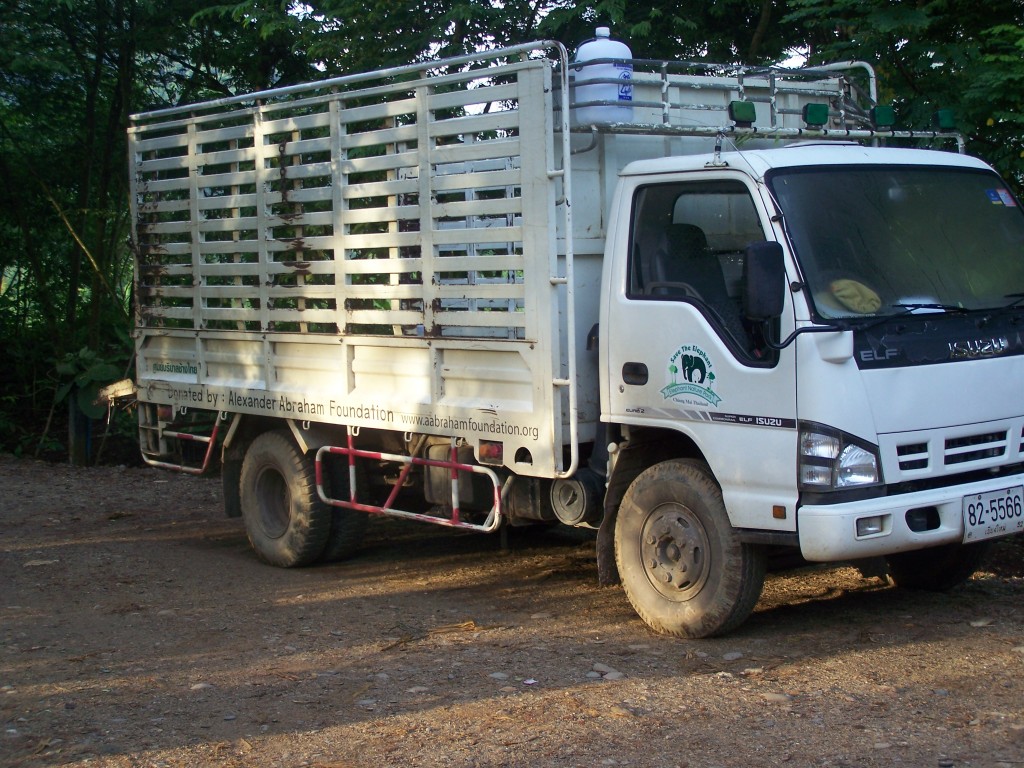
Our group of 10 piles into the back of a pickup truck at 8 a.m. We’re covered head-to-toe, largely to avoid ants crawling down our clothing and nipping us.

I’ve got on a hat with fabric flaps, a long-sleeved shirt, a T-shirt, leggings, gum boots, and a pair of gloves. And, I’m not as covered up as others.

There are no seats in the back of the truck, so the group of us stands, grabbing on to the thick white metal bars that remind me of a cage, to keep us all from flying out of the back.

We drive for miles, down the road we came in, past the elephants carrying passengers. When we drive past them, I get angry. A part of me wants to stop the truck, jump off and explain to the people on their backs about what these elephants have endured. But really, I want to kidnap the elephants and guide them on the quick walk up the road to safety at Elephant Nature Park. But, I do nothing. Instead, I turn to my fellow volunteer with simply a look of disgust.

That’s all we need to convey how we feel about what we see on that road.

We bop along, heading out onto the highway for a few minutes, holding tight to the bars. Then, we arrive to a little plot of land down a small road. In front of us is a field of corn that needs to be chopped, bundled, loaded back into the truck, and taken back to the park to feed the elephants today.

Jack unloads a bag of machetes.

I hate knives. I hate blades. I don’t like anything that has the ability to cut a finger or other body part clean off, so when he drops them on the earth, I feel the back of my knees tingle. I watch as everyone’s eyes light up.

Machetes!

One by one, they grab them and begin to chop at the thick stocks of corn. I’m a little more apprehensive. But, finally, I go and grab one.

It’s heavy in my gloved hand, and when I make my first swing, I realize I need to be a little more forceful than that if I want to make a dent in this field of corn. So, I swing again. This time, the corn falls to the ground.

Ha. Take that corn.

Since the pieces need to be roughly the same size, I pick it up and slice it in half again.

Within minutes, gloves are soaked with sweat. Dripping with sweat. I’ve sweat through nearly everything, actually. The sun may not be out, but the humidity and the heat are making the corn cutting exhausting.

I try to carve out a row, whacking and thwacking corn in my path. I try to be all Jungle D and, in one foul swoop, knock the corn to the ground. Of course, it doesn’t work like that. More often than not, I am standing there, at a stalk of corn, for a good minute, holding the top of it tight as I hack at the thick bottom part. Then, sometimes, if the middle part is too thin and I fear I may machete right through the stalk and into me, I just bend it over my knee and break it/rip it apart.

As the volunteers throw corn to the ground in piles, villagers who have come along with us, rope bundles together.

In an hour, we have hacked the entire field.

Next, we have to haul the bundles into the truck.

After the field has been cleared, it's time to haul the bundles. Photo: Sarah Bird

There is no graceful way to do this. At first, I try to be ambitious, grabbing two bundles — each hand grasping the twine — and teetering back to the truck. It doesn’t work well. At all.

So, the next round, I fling the bundle over my shoulders, draping my arms around it. This time, I am able to make it back a little easier. Granted, it’s not comfortable, and my mind keeps going back to the previous day’s conversation with Adele who got accosted by ants that trailed down her shirt when she did the same, but I manage.

I don’t get too many bundles to the truck before we are done. I’m half way back into the cleared field when I ask Pam if there are any more left. She shakes her head “no.”

I’m hit with a huge feeling of accomplishment. We started with an entire field to cut down, bundle and haul to the truck. Within 90 minutes, our little group has cleared the field and loaded the truck. I’ve never been witness to such teamwork before, and when we get back in the van (yes, the van instead of the pickup) to ride back to the park, I feel a rush of satisfaction and pride to be a part of such an amazing group of people.

We aren’t doing this for us. We’re doing it for the elephants. And, that feels awesome.


Travel Bloggers Give Back: The Elephant Nature Park

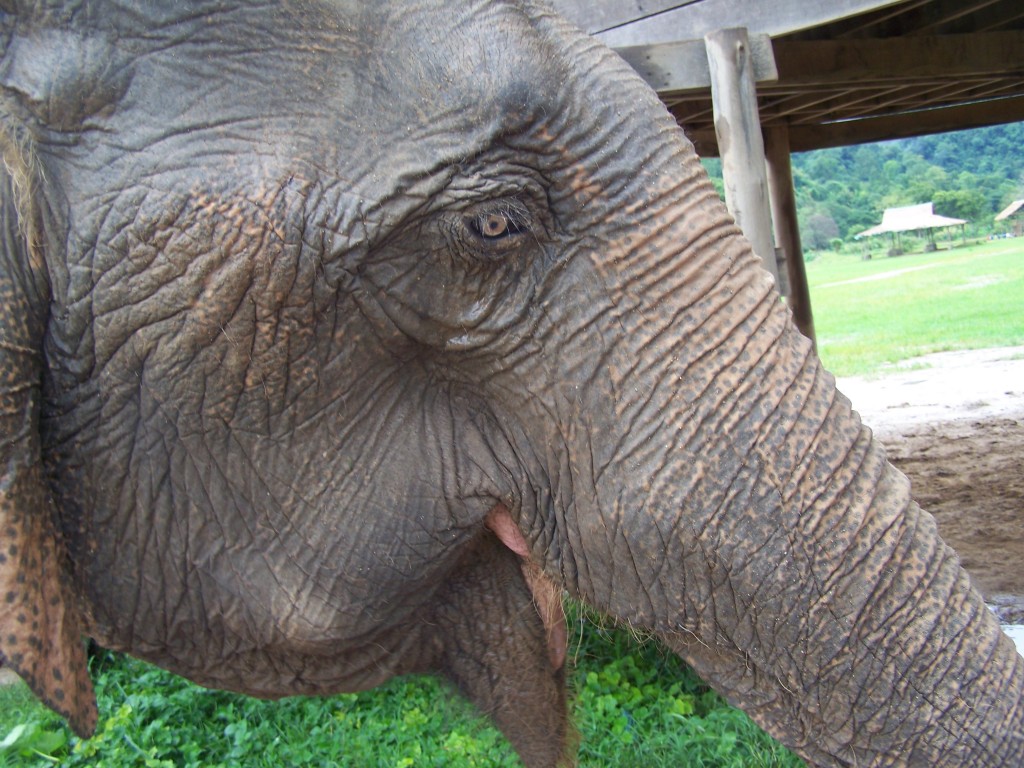
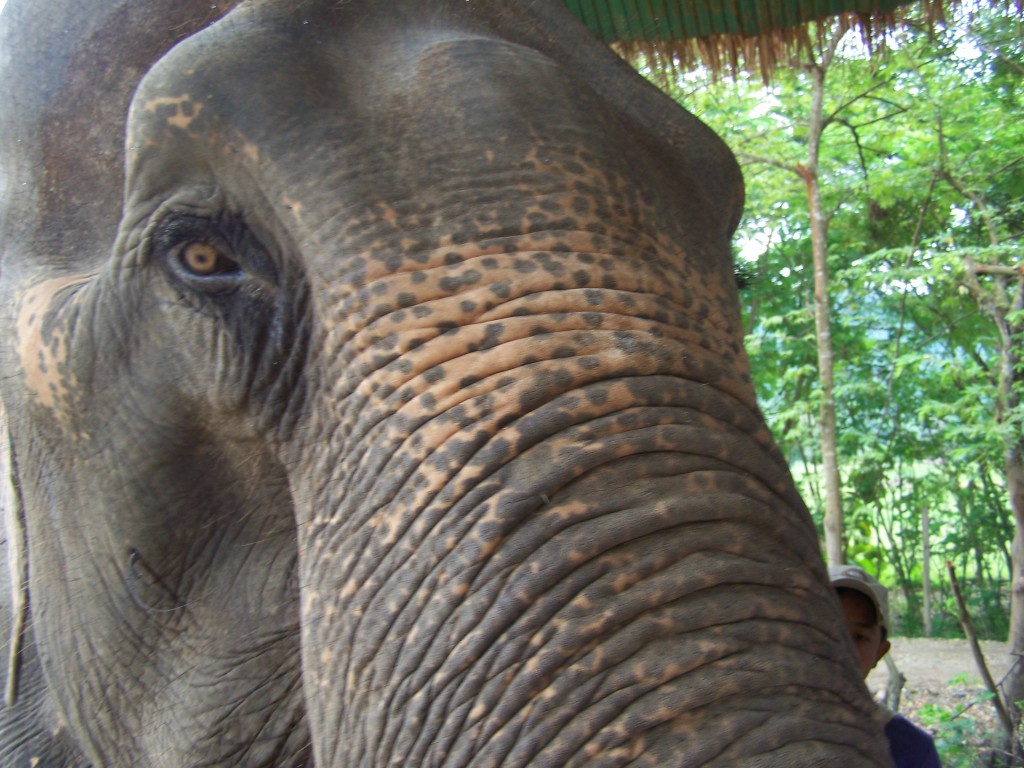
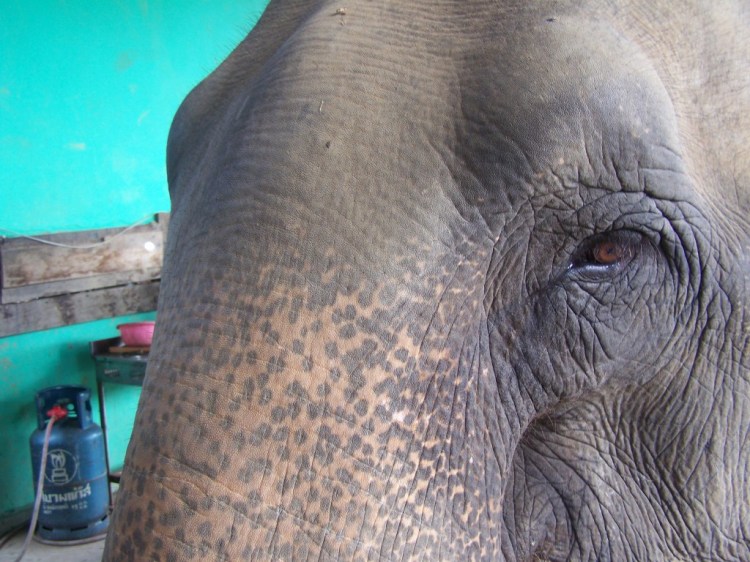
The pink speckled trunk of a lucky Asian elephant at Elephant Nature Park.

I will never forget the first time I reached my hand out and touched the pink-speckled trunk of an Asian elephant. Towering over me, this beautiful girl stood, flapping her large ears in the late summer heat of Thailand. She stood in front our little group of volunteers, all of us nearly speechless at our first elephant encounter, blinking her long-lashed eyes and curiously darting her trunk between our hands, searching for fruit.

I spent a week with her, and 35 other elephants, at the 200-acre Elephant Nature Park, a place where elephants who are victims of the elephant tourism and illegal logging industries are able to live their lives out in peace, without ever having to do another trick, give another person a ride, or haul heavy timber to the point of collapse.

The ENP is an elephant rescue and rehabilitation center in Northern Thailand. Here, you can volunteer and visit to help. The park provides a natural environment for elephants and other animals.

At ENP, guests can visit for a day, overnight or volunteer for a week or more.

Obviously, ENP hasmade a huge impact in my life and my writing. I have spent a lot of time since I returned to America in late September 2011 educating people on why they shouldn’t ride elephants and patronize other elephant tourist attractions, as well as informing readers on humane options that let people get close to these creatures without causing them further harm.

Do you want to help save Thailand’s elephants?

For details on how you can help Elephant Nature Park, please click here.

If you know someone planning a trip to Thailand, tell them about Elephant Nature Park and the opportunity it provides.

This post is a part of the ongoing Travel Bloggers Giveback series, a unified movement of bloggers giving back by posting stories about their favorite charity organizations. You can join the conversation on Facebook, as well as help spread the word by sharing this post, re-tweeting it and using the hashtag #tbgb, Stumbling and leaving a review and more. Help spread the word about all of these very special and worthy organizations.

Cultural Tips for Thailand

“Chang, Chang, Chang,” we all sing, our shoulders tucked into our noses and our one arm hanging to depict an elephant trunk.

It’s nighttime, and Jack and Chai have called us up to the conference room to teach us about Thai culture and the Thai language.

The first thing that sticks in my head? Elephant in Thai is “Chang.” Just like the beer I have grown to love with the white elephant against the forest green background.

But, there’s more we learn. Much more.

Thailand is a predominantly Buddhist culture, therefore it differs greatly from what most Westerners are used to.

Going up those stairs? Take your shoes off.

What’s it called when you put your hands together in front of your face? And, what does it mean?

The Wai is this prayer-like gesture you see everywhere in Thailand, accompanied by a bow of the head. It is done as a sign of respect to royalty, monks, elders, family, employers and those socially equal or greater than the person who is doing the Wai-ing. But, it’s more complicated than that. There are a few variations of the Wai based on the level of respect to show a person. Jack explains there are four levels of the Wai — thumbs at the bridge of the nose for royalty and  monks; thumbs at the tip of the nose for respected elders; the most common, thumbs at the chin for an employer or person of greater social status; and thumbs at chest level for friends and those on the same social level. However, should someone Wai you, the response is the last variation — chest level. The Wai is used to say in greeting, departure and as a “thank you.” Get all of that?

Don’t use your feet to point. Seriously.

In Thai culture, feet are considered dirty and pointing with your feet is disrespectful.

I was standing with Chai after we had our Thai culture class and was horrified when, in coversation, there was something on the ground, and I pointed at it with my foot (which was in a shoe). The lesson from the night before replayed in my mind, and I ducked my head in embarassment, offering a quiet apology for my faux paux.

If you’re in a Buddhist temple/sitting in front of a statute or with Buddhist monks, sit in the mermaid position with your feet pointing away from them.

This goes back to the belief that the feet are the dirtiest part of the body. Sit with your knees tucked to your side and the soles of your feet pointing away from the statue or monk. When I was being blessed by the shaman and was sitting in a permanent Wai during my time, the mermaid position became very uncomfortable. If you can lean your weight on your arms a bit, it shouldn’t be as bad. But, keep this in mind should you want to be blessed during a longer ceremony.

Don't wear your bathing suit in the water.

Keep your clothes on …

The first time we went to bathe elephants, Jack asked us to please respect Thai culture, which is to not show skin. So, for the week, we bathed elephants wearing clothing.

I was shocked when I got a massage one evening and an older couple came up to the room to receive massages, too. The recipients of the massages were all laying on mats, fully-clothed. The woman took off her pants as she sat down, showing her underwear to the entire woman. The woman from the nearby village who were giving us our massages giggled nervously when she laid down, ready for her treatment. It got even worse when the man took off his shirt, explaining it was too constrictive for him and “this” was better.

It was all I could do not to pop up from my relaxed state and throw their clothing back at them and explain to them they needed to keep their clothing on.

But take your shoes off.

Feet are dirty (so be sure to keep them clean), but shoes are even dirtier. Remove them when going into homes, schools, small shops and more. A general rule of thumb? If you are about to enter somewhere and there are shoes outside of the door, follow the leader and take yours off, too.

Don’t get too into touching.

Kissing and hugging aren’t the norm in Thailand. You will see people holding hands — couples, friends of the same and opposite sex — just don’t get too touchy. It can make people uncomfortable. Also, never touch a Thai person’s head. And, if you are a woman, do not touch a monk. Ever.

Be polite.

This is a good rule to follow, regardless of where you are. Always put your best foot forward and be a glowing representative of your country. Thai people are charmingly polite and seem to always have a smile on their face.

What other Thai culture tips can you provide? Have you ever accidentally done one of these things? Share your stories!

Planning a trip to Thailand? There are plenty of options, including your very own Thailand rental to enjoy all the country has to offer. For more information about this option, click here.


Escape of the Week: London’s Big Ben

London’s Big Ben is recognized the world over. Located within the historic Palace of Westminster grounds, Big Ben is the name for the bell of the clock, but is also used to refer to the entire tower.

Did you know it is the largest four-faced chiming clock and the third-tallest free-standing clock tower in the world (according to Wikipedia)?

At more than 150 years old, Big Ben is one of the must-visits while staying in London.

If you’re a resident of the UK, lucky you —  you’re able to climb the 330-plus steps inside the tower to the top! For the rest of us, we get to take photos and imagine (or ask our UK buddies) what the interior of this iconic tower looks like.

Have you visited Big Ben? Have you been inside?


I am thankful for …

Thanksgiving is my favorite holiday of the year. It’s the time when I get to come home from wherever I am, and spend precious moments with my parents, my brother, my gorgeous little niece, and my friends from childhood and beyond.

It’s the time of year when I bundle up and head East to breathe that icy air into my lungs so deep it hurts. It’s the time of year when Mom and I hit the shopping mall to take advantage of those Black Friday deals, and I always swear through clenched teeth I will never participate in another Black Friday shopping experience again.

But, more than anything else, Thanksgiving is a time of year where I relish those special moments I have with the people I love. Where I give thanks for the years of blessings I have had, and look forward to the next year of blessings.

In honor of my favorite holiday, I am going to take a break from the grind. I am going to actually take some time for myself and not write, not post, not do anything but be in the present for the next few days.

So, enjoy Thanksgiving if you are in America. Hug your family tighter. Spend an extra few minutes at the dinner table sharing stories. Be sure to tell the people you love that you love them and are thankful for them.

And, if you need a breather from family time, or whatever, here are some of my favorite posts that highlight moments in my life I am so thankful to have experienced.

Instantanoues Enlightenment on the Adriatic — what happens when you meet someone who changes your life forever?

Traveling the World to Say ‘Thank You’ — tracking down that someone who changed my life, to tell him he changed my life. Spoiler: it ends with a kiss.

I’ve Always Relied on the Kindness of Strangers — finding the beauty in getting lost in a foreign country.

I Blame My Blog … and Twitter — this new family I have is amazing!

‘Twas the Nigh Before London — sometimes the hardest things in life are the best … and lead you to a better place (like traveling the world)

Love, life and loss … while on the road — words could never do justice for how thankful I am for my grandmother and her endless love and support. My cheerleader. My biggest supporter. My inspiration to write my book.

Escape of the Week: Birds on A Wire — HOME. My family. My friends. Sometimes, that’s all you need to make everything better.

See you next week, when I’m back in the desert.

Happy Thanksgiving! Eat until you have to unbutton that top button!

I’m not full of it, I’m shoveling it

I wake up early on my first day — as soon as the light begins to sneak through the tiny cracks in the wood, and the more than 100 dogs begin to bark their “hellos” to their cat neighbors and the elephants start making their noises out my window.

I’m too excited to sleep any longer.

That, and I really have to use the bathroom. There was no way in hell, at 4 a.m. when I first woke up, that under the cloak of darkness and the loud chirping of insects, I was willing to risk stepping out onto the crickety wooden platforms and trek to the bathroom. I don’t know what’s out there in the dark, and I wasn’t prepared to swallow my fear that first early morning. What if some wild jungle beast attacks me and my screams are drowned out by nature?

After a quick shower, I head to the compound to meet everyone for breakfast. Over breakfast, I explain to Pam my high hopes for my first chore at the park — pooper scooper duty.

When I first signed up to volunteer at Elephant Nature Park, whoever I told about my plans would ask me (without fail) what being a volunteer entailed.

My go-to response? “Basically, I am shoveling shit for a week.”

I’m prepared to do some heavy lifting.

So, when we met at the volunteer shelter following a delicious breakfast, I am a little bummed to see my first task at the park would not be Ele Poo Duty, but working in the Elephant Kitchen.

Our volunteer group is split into three — poo, kitchen and cutting corn.

My group heads to the elephant kitchen, a huge part of the compound that houses tons and tons of bananas, watermelon, pumpkins and more. It’s got row after row of shelves stocked from floor to ceiling with fruits for the elephant inhabitants to eat.

One small little part of the Elephant Kitchen

Shannon, a long-term volunteer in charge of prepping all of the food, explains our morning. First, we wash pumpkins, then chop them, then ration out bananas, then make mushy banana balls with the overly ripe bananas for the older elephants who can’t chew the fruits whole anymore.

We start an assembly line from one end of the kitchen to the other, passing along pumpkins and dumping them into a huge basin filled with water to clean them.

We’re about 10 minutes into the task when Jack comes up.

“We need one more person to come and shovel.”

Ohmygosh. Shoveling!

“D, you were saying you wanted to go shovel poo, you should go,” Pam says.

So, I ditch the pumpkin dunking and head to the volunteer shelter to get a pair of gum boots on. It’s not raining, yet, but the last thing I want is to wear flip flops and be knee-deep in mud or poo or anything.

The gum boots are gross, covered in dirt from previous uses. And, they’re wet. I don’t even have socks on, but I decide nothing bad can happen to me by shoving my feet into dirty boots. And, if something does happen, like coming down with some rare and random jungle foot rash, I certainly won’t be the first it happens to.

I squash my feet in the boots and head out to the shelters to go help the group already shoveling.

My new shoes for the week. Gum boots.

It feels gross. 

I can feel the mud scratching my bare feet in the boots. Swimming in dampness.

I shake it off.

You’re shoveling shit, D. It’s what you’ve been talking about for months!

When I meet everyone at the shelter, I jump in, grabbing a pitchfork and scooping up the balls of fiber.

Elephant poo isn’t like other animal’s poo I’ve seen. For one, it’s roughly the size of a grapefruit, and it doesn’t smell (what does smell is the urine). Compromised entirely of fiber, thanks to their veggie diet, it’s pretty light to lift. We don’t just scoop poo though. There’s husks from corn. Entire bunches of bananas that have been swallowed hole or flung away, discarded.

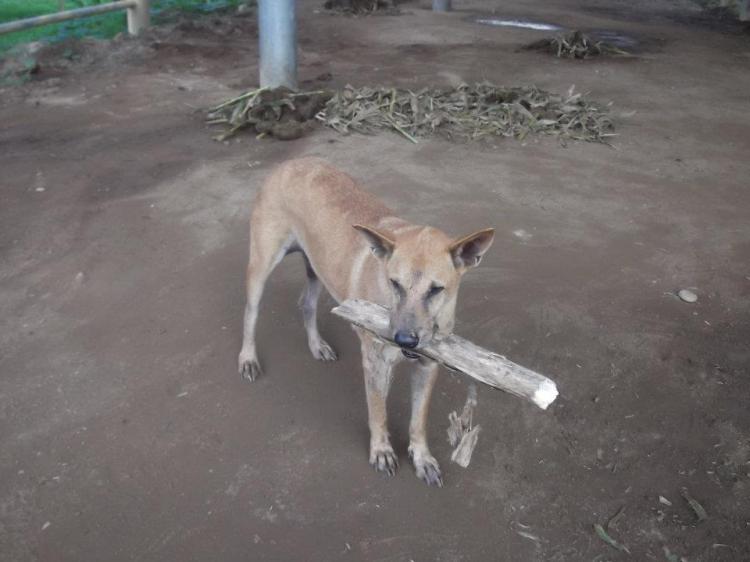
As we progress from shelter to shelter, about 10 dogs follow us. I immediately take a favorite — a thin boy who runs around with a stick in his mouth, but never lets us take it from his mouth and play fetch. We dub him “Stick” and laugh every time he runs by us, keeping us company but never getting too friendly.

The favorite pup, Stick. Photo: Sarah Bird

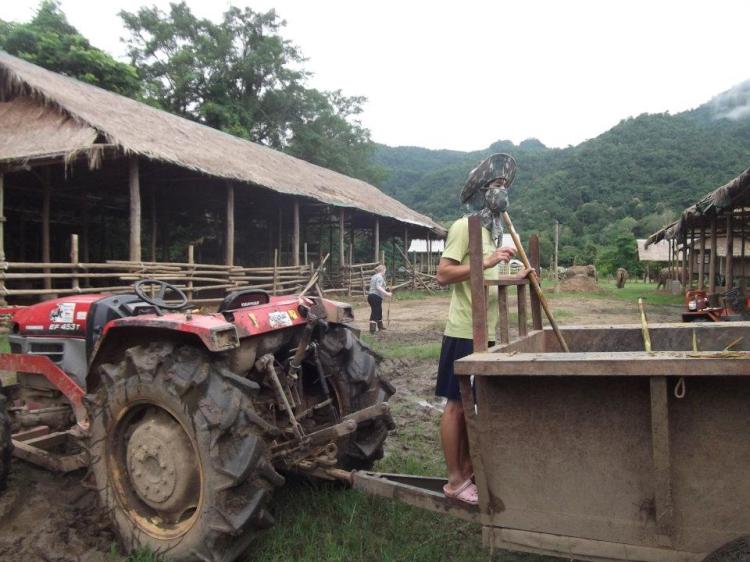
We fill up quite a few tractors full with poo, husks and more — each time Chai, our other volunteer coordinator, drives away to dump it in the compost — we take a breather and hang out with elephants.

Chai and the tractor. Photo: Sarah Bird

The best thing about our morning job shoveling? It’s fun. Yes. Fun.

Our group is chatty, and we laugh and joke and get to know each other as we shovel. We take turns, scooting aside when huge piles are flung onto the tractor so we don’t get covered. We help each other out, sweeping husks of corn onto shovels. We relieve each other when necessary.

We start to become a family that morning.

Our final stop of shoveling is the medical center where we meet two landmine victims, Sri Prae and Malai Tong. They have to stay in the shelter during the rainy season, otherwise their injuries will become infected.

A dogs eye view of the Medical Shelter

I don’t want to look at their injured feet, but I can’t help it.

Malai Tong stepped on a landmine when she was being used in the illegal logging industry. Unlike most victims of landmines, she still has the front portion of her back right foot and can bare weight on it. After the injury put her out of logging, her mahout took her to the streets of Bangkok so she could gain sympathy (and tourist dollars) begging. When the government began to crackdown on the street begging there, they relocated to another province, but the money wasn’t coming in. That’s when her mahout decided to sell her.

Malai Tong, snacking before being treated by the vet

Lek found Malai Tong distraught at the Surin Elephant Round-Up, an event that brings elephants to a central location from all over the country and highlights their importance in the Thai culture, in 2005 and brought her to the park. (The Round-Up also features tricks and performances where people can see for themselves the results of the torture they must endure for tourists.)

Sri Prae, the other elephant being cared for in the shelter, is a sweet girl. Like Malai Tong, Sri Prae was injured when she was being used in the illegal logging industry. Her front left foot went down on a landmine. For two years, she was in recovery, and now she can walk on it, albeit with difficulty. While we are advised not to really approach Malai Tong, we are given permission to walk up to this elephant and pet her trunk and feed her. She stands there, her eyes sparkling, as we all shower her with affection.

Sweet, sweet Sri Prae

For a brief moment, we stand there, petting her, leaving the few piles of shoveling to wait. 

It’s so easy to get wrapped up in Sri Prae and her gentle ways. Her heavy breathing as we scratch her. The light flapping of her ears. Her curious trunk that reaches out towards us in search of fruits.

We finish shoveling quickly and head to unwind for a few before lunch and our afternoon activities. After all, we’ve got a tour of the park after our next Thai feast.

And, I can’t wait.

Escape of the Week: I amsterdam

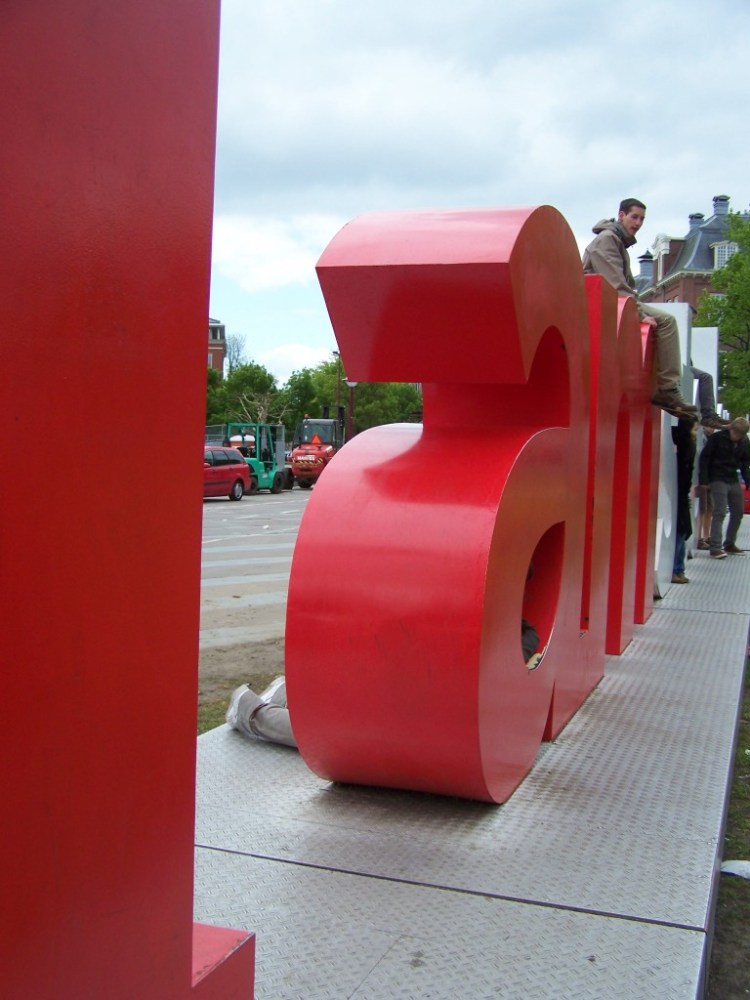
“I amsterdam.”

Travelers from all over the world, including yours truly, have made an obligatory pilgrimage to the site. After a particularly taxing day of medical scares, my friends and I made the trek to “I amsterdam.”

Now known the world over, the “I amsterdam” installation was designed as more than a tourist attraction. Did you know it was created as a branding tool for the city? According to it’s Web site, it is designed to promote “Amsterdam’s promise, diversity and wealth of opportunity … “

While I was unaware of any of this when I visited the iconic red and white spot, I did notice how incredibly popular it was.

It didn’t capture my attention for too long … with a city full of really interesting museums, gorgeous parks and coffee shops, it was hard to keep me there beyond taking a few photos. I did think it was cool, and loved the way people could climb on the sign (as evidenced in this shot), but would I go again? Probably not.

Have you been to “I amsterdam?”  What was your experience there?