Editor’s Note: The following is a guest post from Endri of Trip and Travel Blog. If you have an Escape of the Week you would like to contribute, please send me a message. Thanks!
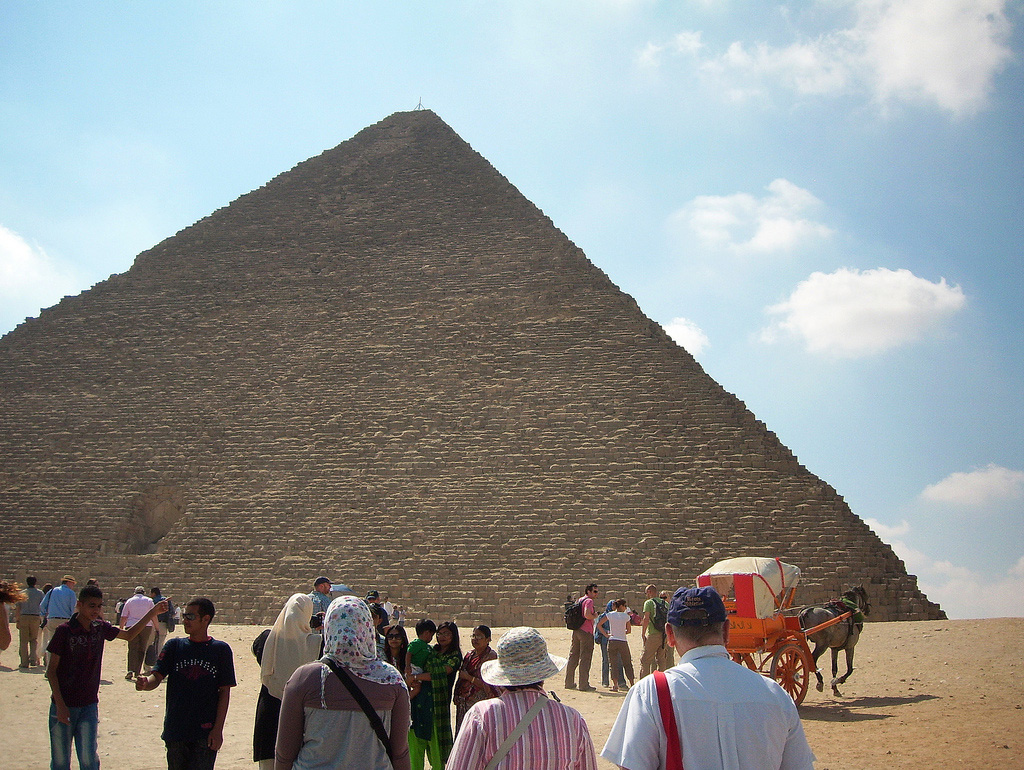
There is an allure to Egypt – the hazy sun high in the blue sky, above a sea of desert and history. It’s easy to step back into time, thanks to a visit to the pyramids.
It’s safe to say no trip to this fascinating country could be complete without stopping at the Egypt pyramids — the historic remains of Giza.
By the time the ancient Greeks called it one of the Seven Wonders of the World, the three great pyramids of Egypt had already been standing for more than 20 centuries.
Since ancient times, many assumptions have been made about their purpose … barns built during the time of Pharaohs …. Hiding places for treasures … places of worship … astronomical observatories.
Today, we know better. They were created to house the tombs of the country’s ancient kings.
Archaeologists have identified about 130 pyramids in Egypt, most of which, however, are just piles of stone that have lost their edge.
Be sure to check out the terrace of royal tombs, leveled by human hands, measuring 1500 meters from north to south and 2000 from west to east. They stand, on average, about 40 feet above the valley.
The interior of these buildings were built with strict attention -- Egyptians believed without a worthy home for their dead kings, they could not achieve immortality.
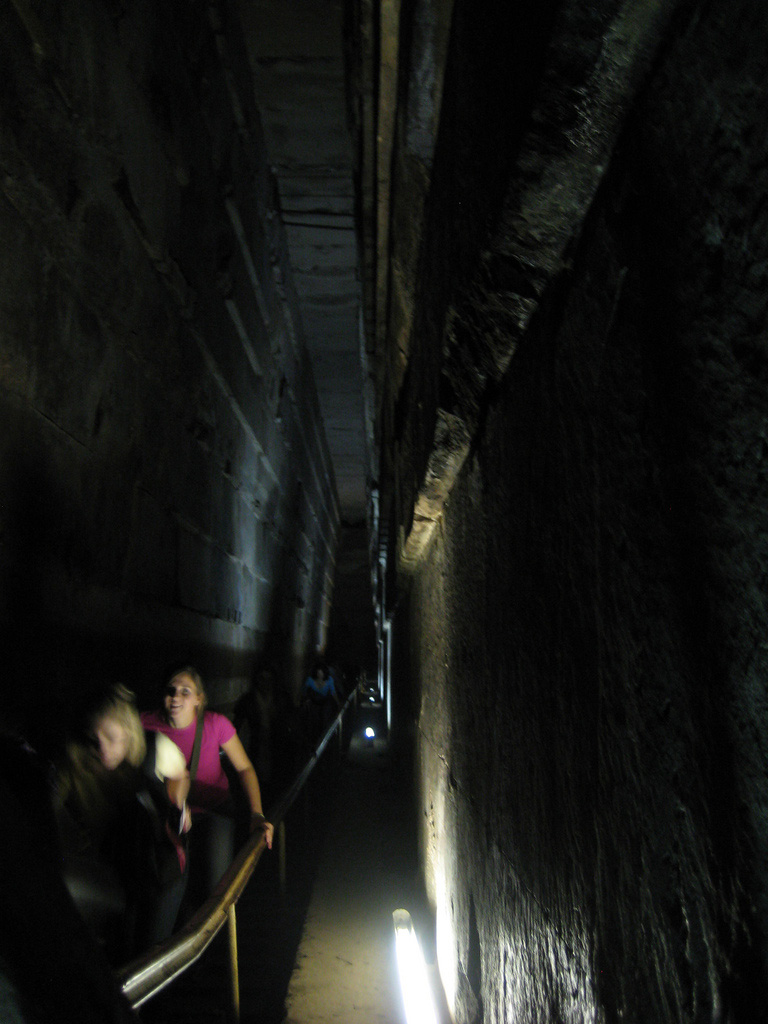
Also, explore the interior of some of these structures from ancient Egypt. The original architects took care to make it difficult to access the pyramids to prevent raids of the tombs.
Chephren’s Pyramid is easily recognizable from a distance because of its “hood” – the polished stone, thanks to the original coating, only remains intact on the top.
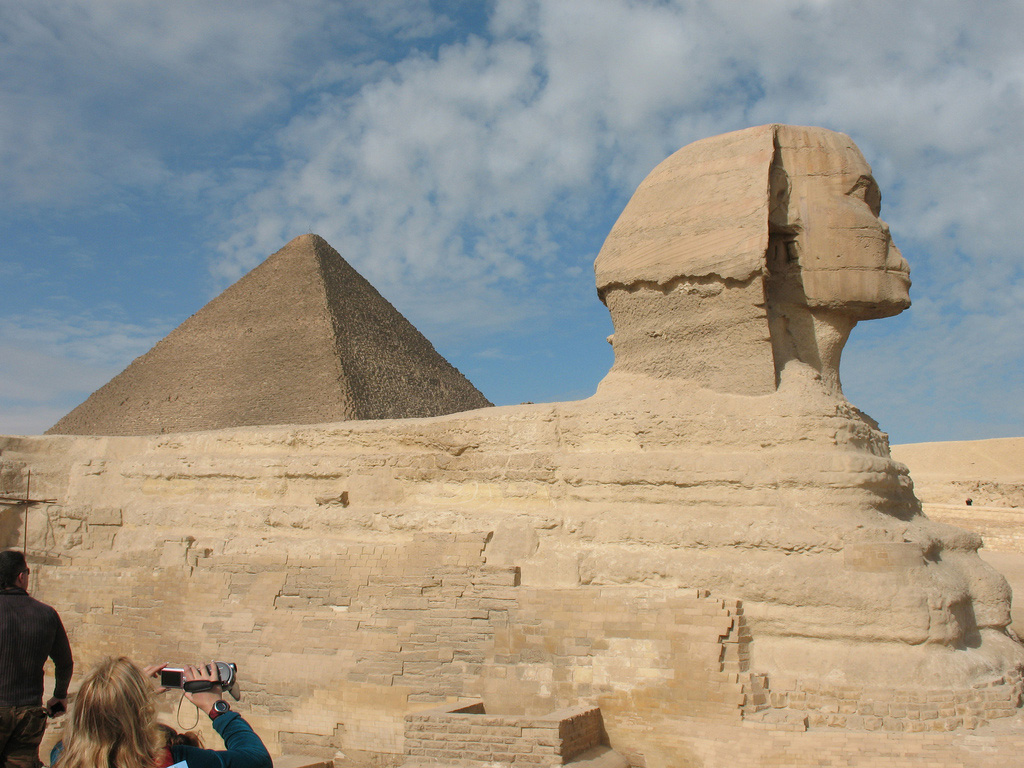
You've seen this before ...
The Sphinx, located east of Chephren, is a lion with a human head. It is 57 meters long with a height of 20m. On the head bears the royal headdress and on the forehead it has the “uraeus,” the sacred serpent that has deep ties to Egyptian mysticism.
When to go to the pyramids of Giza:
Taking into account the summer heat can reach the “far too hot” mark on the thermometer (think 35-plus degrees Celsius), the summer is not the best time to head out to explore these sites. If the dead of summer is the only option, hit the Giza plateau in the early morning.
The best time of year to visit these ancient monuments is in the spring and autumn, when temps are mild and the crowds are thinner thanks to the off-season.
Getting to Giza:
Flying into Cairo is the easiest. Some of the most spectacular pyramids are just outside of the city. Here, with the backdrop of Libya, rest the three superb pyramids of Chephren, Cheops and Mycerinus, along with the awe-inspiring Sphinx.
For those headed to the Red Sea, hop on a tour that flies visitors straight to the Giza plateau.
About the author: Endri, from Trip and Travel Blog, provided this post. The Web site is a place where Endri, along with others, share their feelings and prepare for their next trip. The goal of the site is to provide travel information ranging from luxury options to cheap solutions and everything in between so every traveler can have their best travel experience.
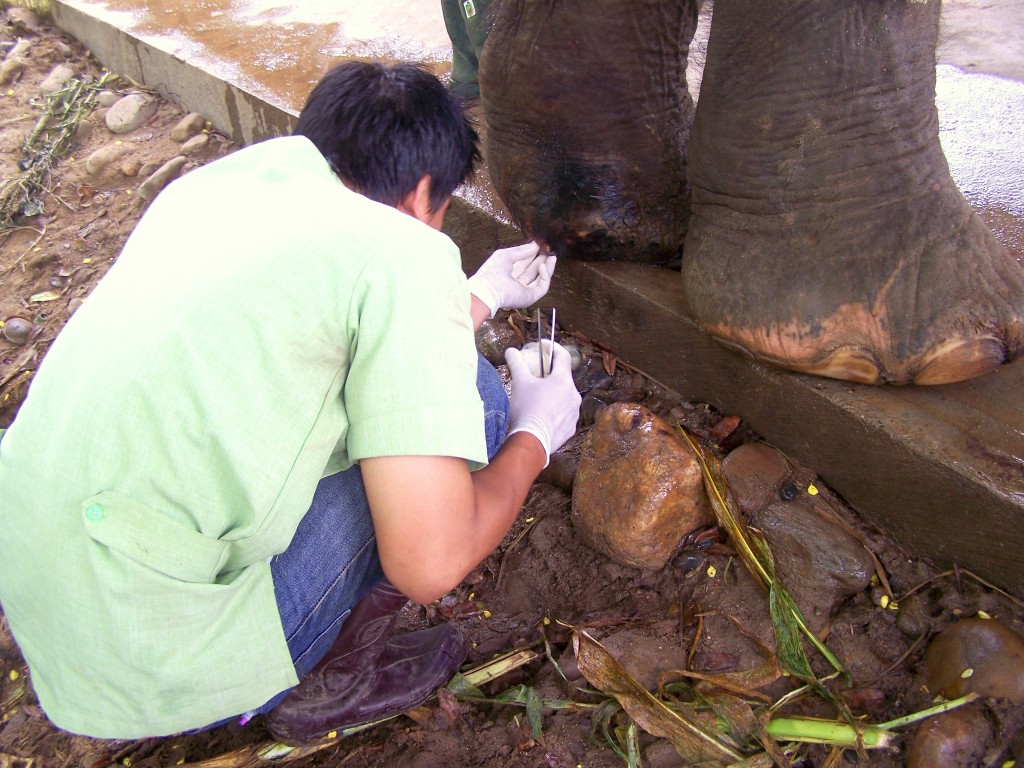
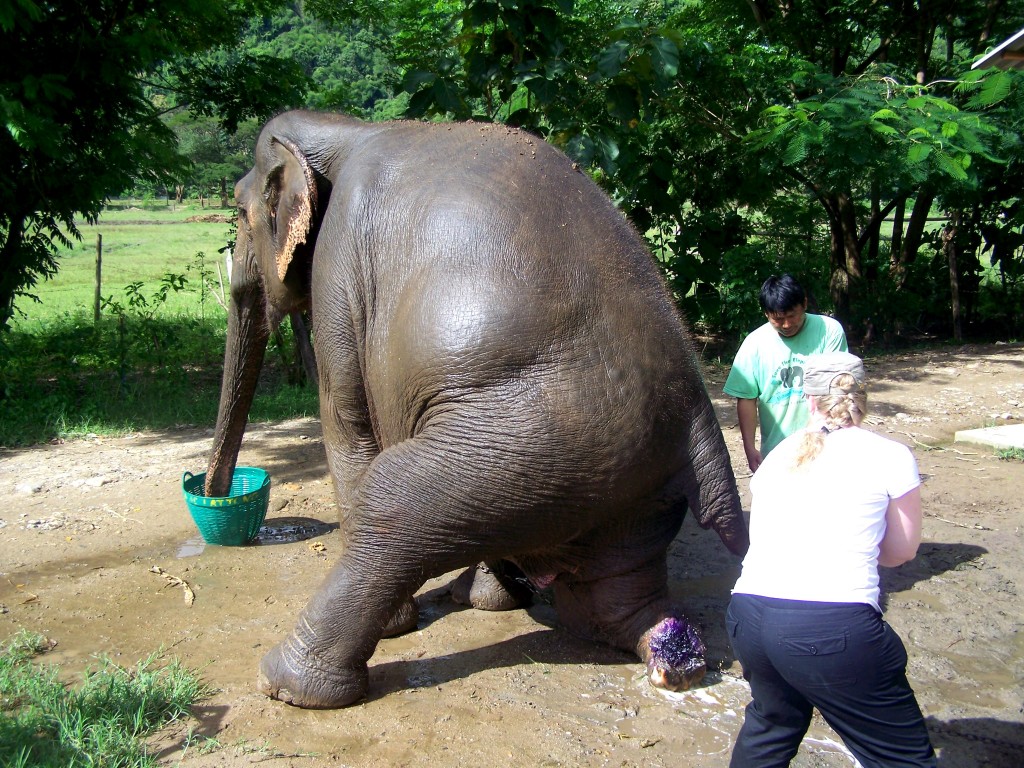
I stand, along with three other volunteers, watching one of the Elephant Nature Park’s veterinarian’s squirt antiseptic into the mangled foot of Sri Prae.
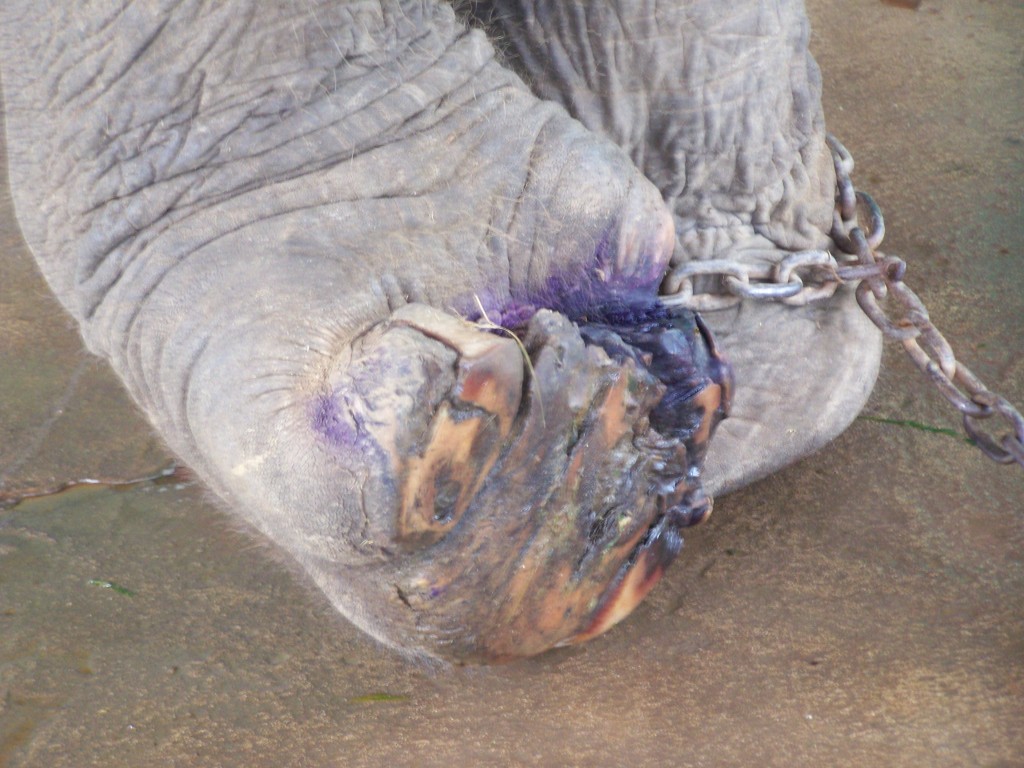
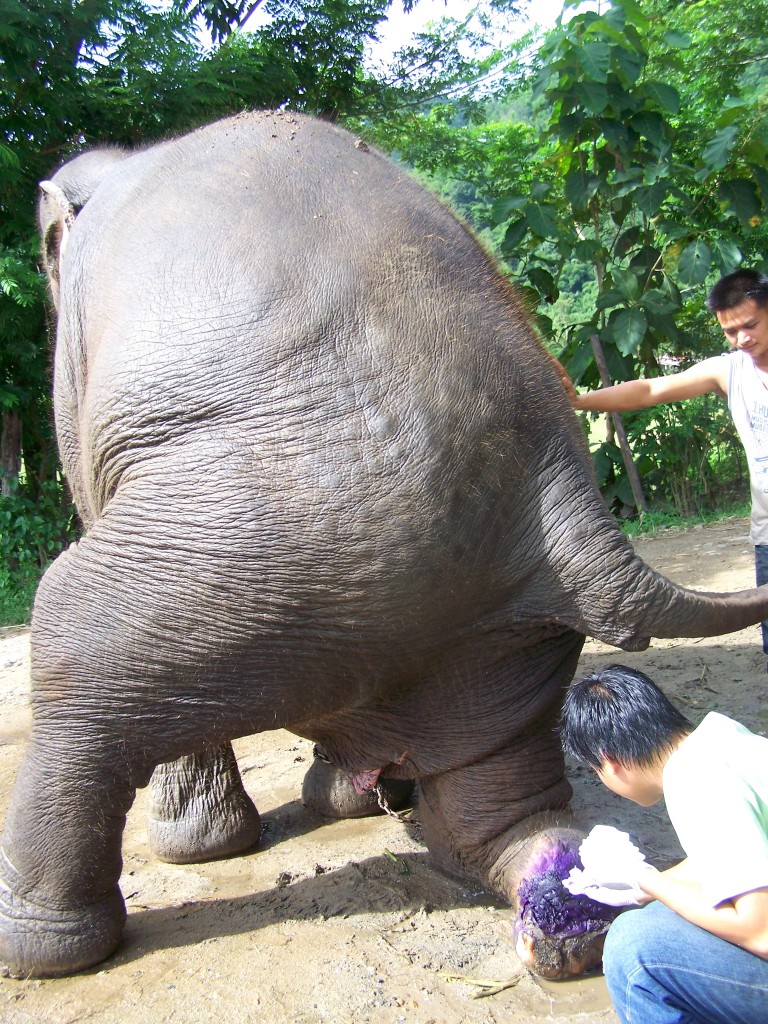
It is purple, covered in medicine to keep it from getting infected. And, it’s disfigured, partially blown off after accidentally stepping on a land mine years back when she was in the illegal logging industry in the Tak province of Thailand.
The results from stepping on a land mine in Tak province of Thailand.
The first time I saw her foot, I winced. But now, after a few days of staring at it, the sight of the purple and the bit missing don’t bother me anymore.
Today, on our second-to-last full day at the park, four of us are shadowing one of the park’s vets, a young Thai, who not only cares for the injured and sick elephants, but also all of the park’s other animals, including a rabbit with a skin condition thanks to the humidity and rain, a horse who was hit by a car and now has a prosthetic leg, and other creatures.
After a morning mushing overly ripe bananas and fashioning banana balls for the senior elephants, re-organizing some of the tons of ready-to-eat bananas and delivering food to the feeding platforms, it’s time to spend a couple of hours with the vet.
We meet at the green medical hit to gather vet supplies before we embark on the rounds.
The hut is where the two victims of land mine explosions — Sri Prae and Malai Tong — spend the rainy season. The two can’t risk infection on the soppy, overly saturated ground so the shelter is their home during the wet days.
The happy Sri Prae.
Sri Prae stands calmly, flapping her ears and lightly swinging her truck around looking for food.
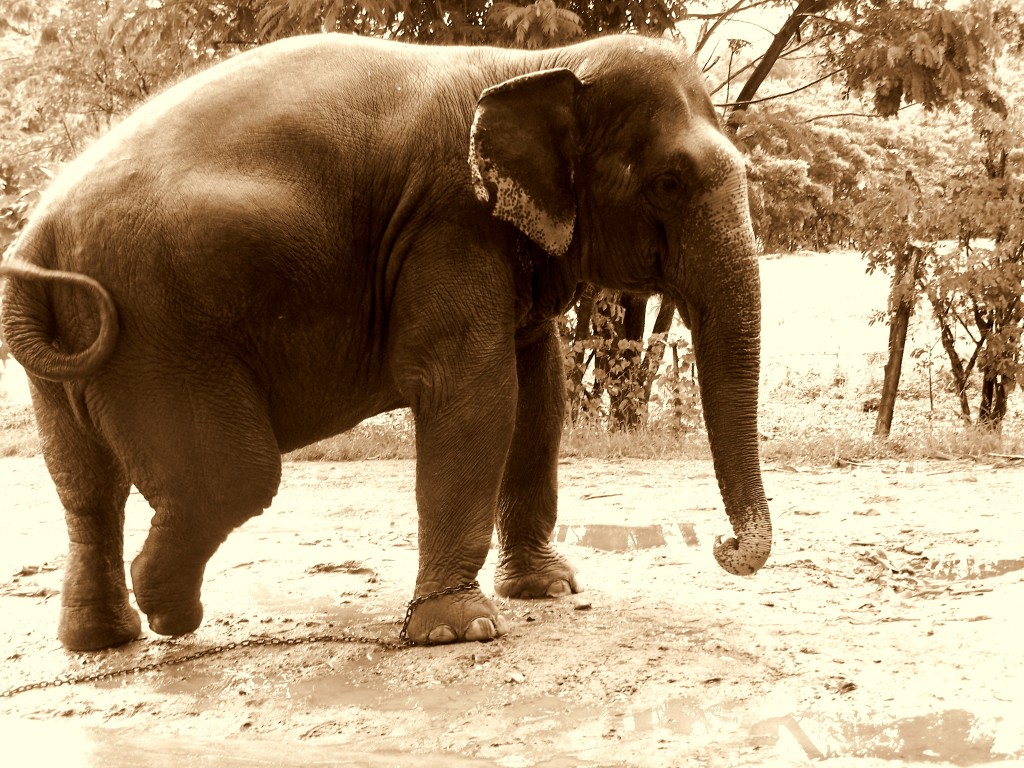
Malai Tong doesn’t put weight on her injured foot.
Malai Tong is the opposite. She’s missing a portion of her back foot and it dangles as she shifts her weight from front foot to front foot. She sways, looking agitated.
These two girls are fortunate elephants — although their feet are no longer whole from the blasts, they have come out relatively unscathed.
Sadly, a couple of hours away, at the Elephant Hospital in Lampang, there is a male elephant who isn’t as lucky. He’s fighting for his life after stepping on a mine when he crossed the border into Burma/Mynamar the week before.
One of the volunteers journeyed to the hospital earlier in the week to see how his treatment was going. When she returned and I spoke with her, she was visibly shaken and reported heart-breaking stories of the injured elephant.
We start our rounds with Mae Tee, the first elephant I met at when I arrived at Elephant Nature Park.
Armed with a bucket filled with gauze, antiseptic and other necessary instruments, the vet crouches down low, next to her foot.
The vet cares for Mae Tee.
It has an ongoing abscess from her days trekking, and it needs to be cleaned. He sticks a giant swab of cotton into the wound, and then pulls it out the other end.
Normally, I can’t handle watching something like that. Yet, today, when he moves the cotton up and back in the wound, pulling it through the two openings in the abscess, my eyes are glued.
She stands there quiet, not moving.
I guess she’s used to being cared for.
Then, we return to the medical hut to clean up Sri Prae and Malai Tong’s feet. Today is their last day under the shelter, tomorrow they are free to leave. For Malai Tong, that’s great since she has a little family that has been created. Sri Prae hasn’t made any friends yet, so there’s hope she will begin to at least make a girlfriend once she is released from treatment.
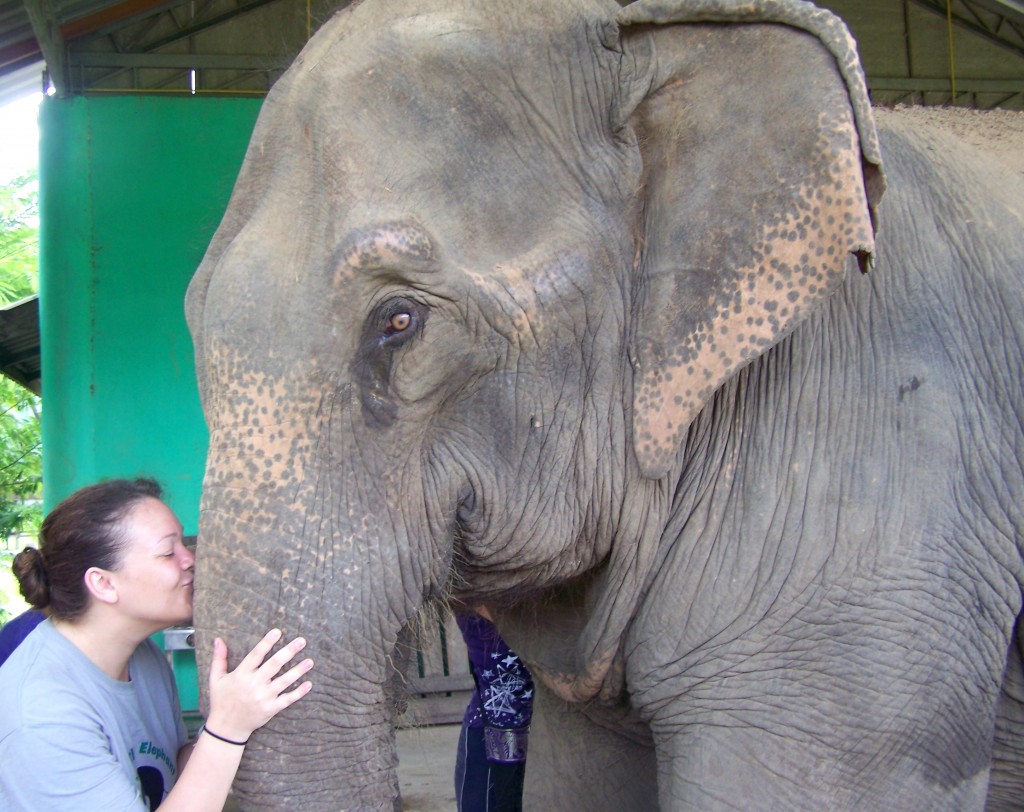
Smooching the leathery trunk of Sri Prae.
As the vet cleans her foot, the four of us stand in front of her, stroking her trunk, scratching the side of her face, feeding her fruit. I even sneak a kiss on her trunk.
Then, it is on to Malai Tong.
Nearly on cue, she crouches down and lifts up her back foot so the vet can clean it out.
Malai Tong doesn’t need much coaxing to kneel down so her wound can be cleaned.
“Do you want to try?” he asks us, handing off what used to be a part of a Super Soaker but is now a used to clean wounds.
One-by-one, we dip the plastic squirter into the bucket and then release the liquid onto her foot. She sits perfectly still, letting each of us care for her as she dips her trunk into a bucket of food in front of her.
Food solves all.
A volunteer helps clean Malai Tong’s foot.
It amazes me how willing she is to be cared for, even if she is being bribed with whole bananas and watermelon halves.
When we finish with her, we all gather together and help the vet fold gauze, then it’s time to go.
Walking back towards the compound in the mid-afternoon, the sun’s rays creep out from behind the gray for the first time since I’ve been here. I turn around and survey the scene. Everything is glistening, light bouncing off of the rain-soaked blades of grass.
I smile to myself, thankful for every moment I’ve had thus far at Elephant Nature Park.
Less than a two-hour drive from the rolling hills of Rwanda’s capital, Kigali, is Volcanoes National Park. Also known as Parc National des Volcans, it spans 77-miles in the Virunga Mountains.
The park is home to five of the Virunga Mountain range's eight volcanoes.
Bordering the Democratic Republic of Congo and Uganda, Volcanoes National Park is made up of lush rainforests, volcanoes … and gorillas.
It was the first park created in Africa and has overcome struggles to become the tourist attraction it is today. In 1992, it became a battlefield for the Civil War, halting it’s tours because of the dangerous times. It did not open to tourists again until 1999, when it was once again safe for visitors to explore the mountainous region.
Today, visitors come from around the world to catch their own glimpse of a family of mountain gorillas in their natural habitat. With eight family groups in the park, each day guides take visitors on treks up to high altitudes so they can enjoy an hour watching the families interact with each other. Treks to and from these animals can last anywhere from one to four hours, depending on the family’s location.
There are many rules to remember when trekking for gorillas, such as staying more than 7 meters from them at all times.
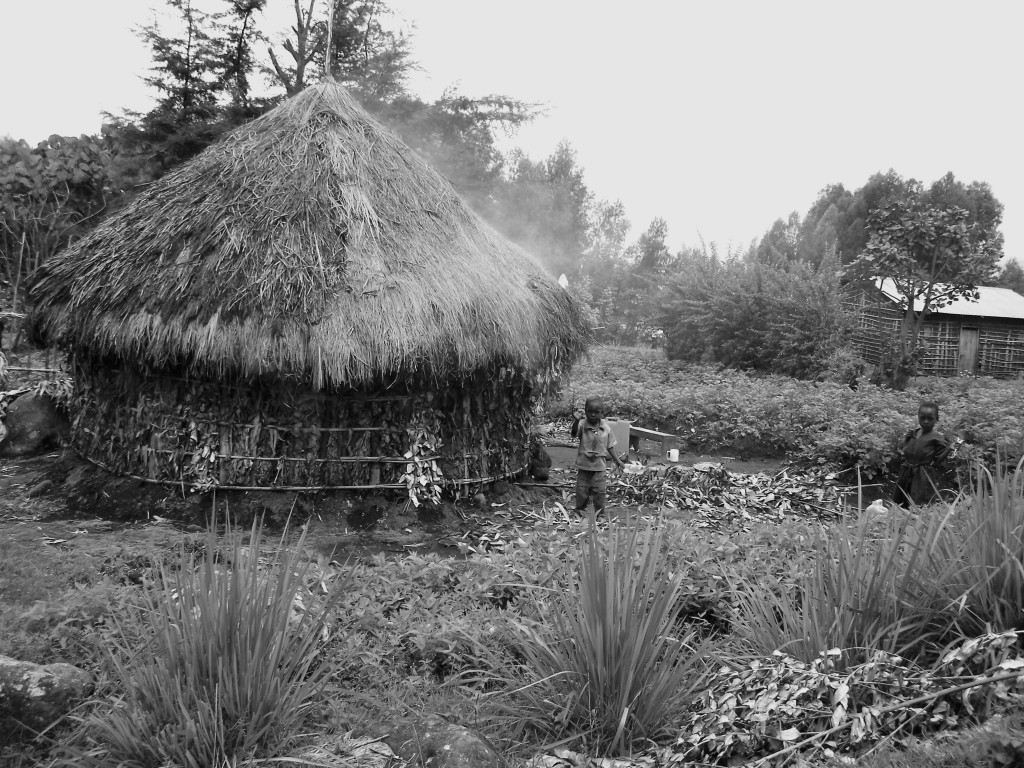
The treks begin with a climb through farmland.
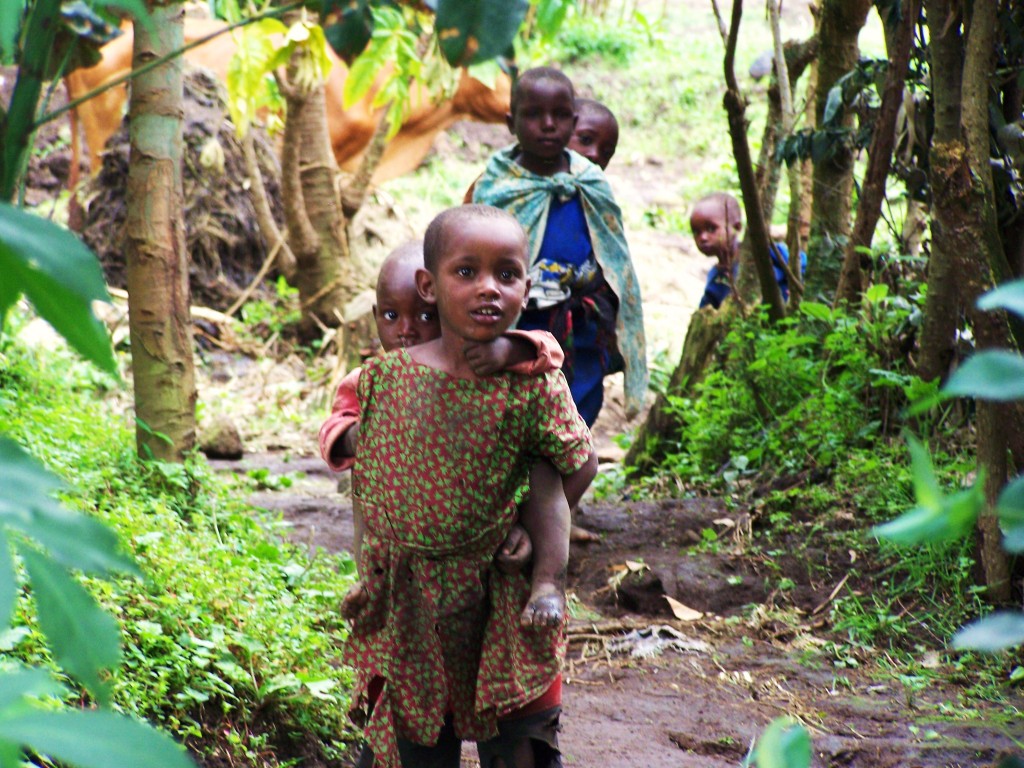
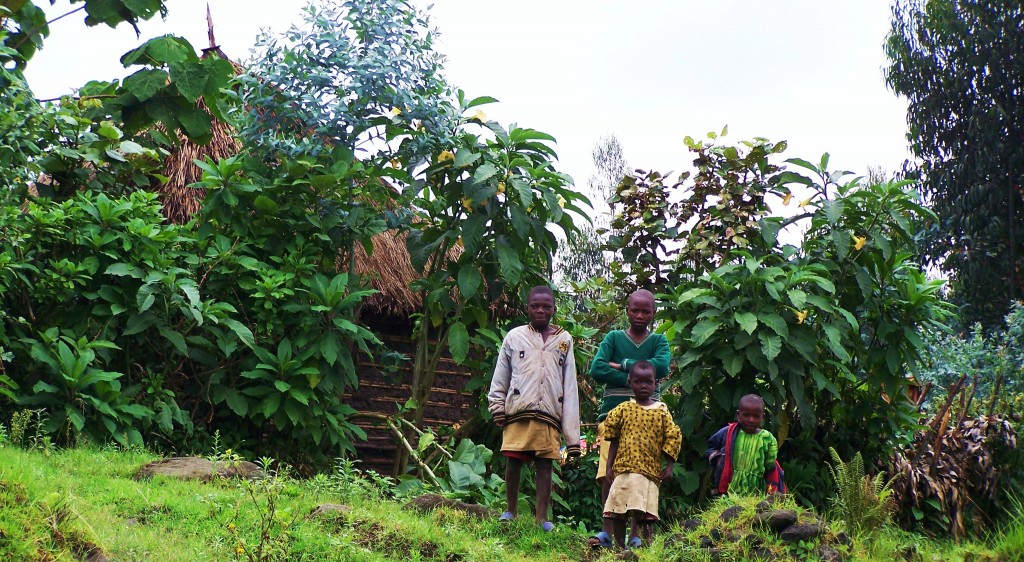
En route to the next leg of the journey, children emerge from their huts and working to watch the tourists.
One little boy stands back from the others, watching trekkers from a distance.The farmland, dotted with huts, provides an up-close look at life in the country.
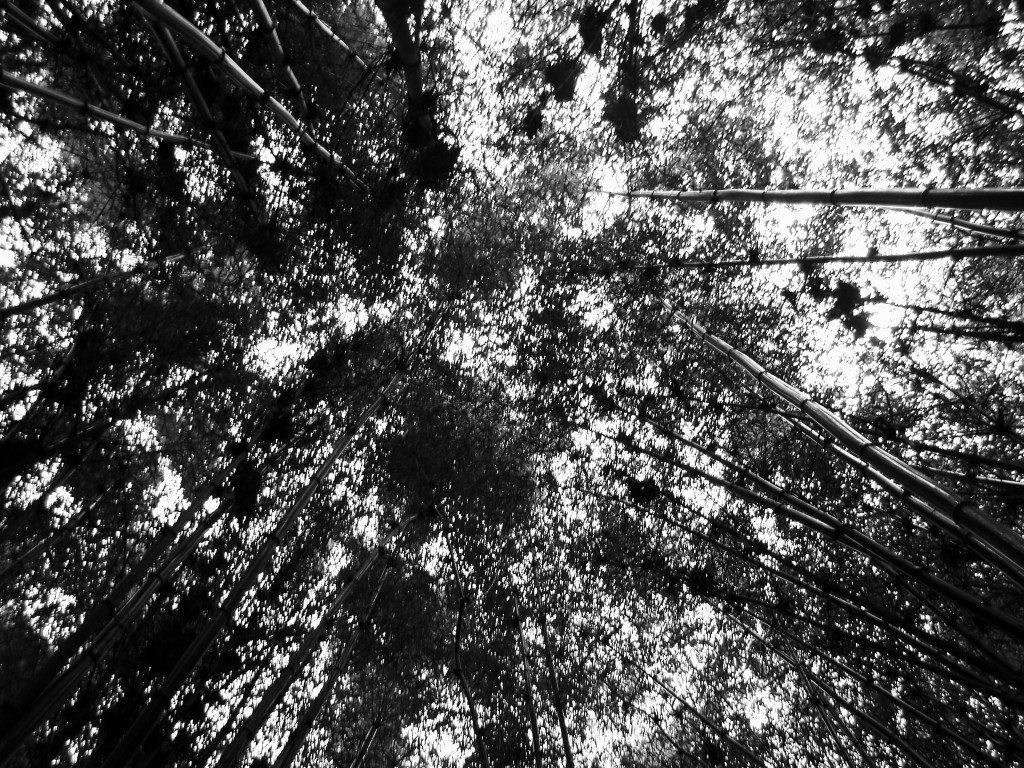
After the farmland, trekkers enter the thick bamboo forest, where day turns to night and shoots tower high into the air.
The bamboo forest makes up 30 percent of the park's area.
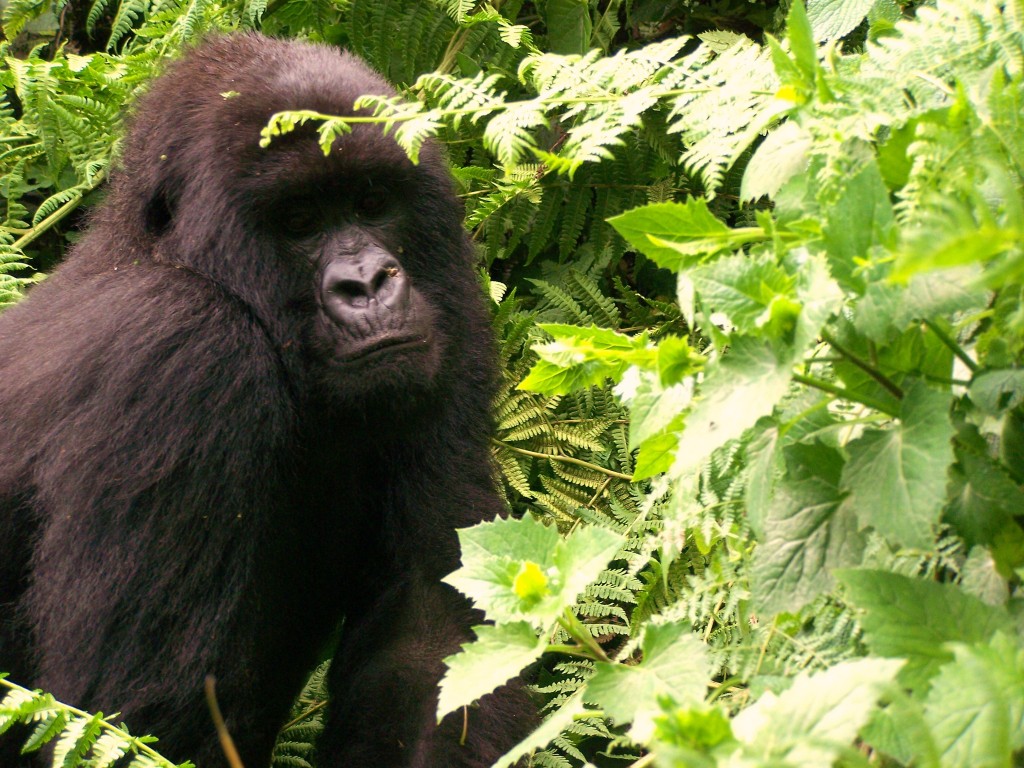
And then … after a strenuous trek … come the gorillas.
The park was home to renowned gorilla research Dian Fossey. She dedicated her life to these creatures and is buried nearby the park's research center.
A gorilla poses for the camera.There is only one silverback in a gorilla family, and he's the one in charge.A mom and baby survey their habitat.
Planning a trip?
Only 64 visitors are given permits (which cost around $500 each for non-nationals) each day to trek for gorillas. To request a permit, people must go through the Rwanda Tourism Board and make reservations. For more information, e-mail reservations@rwandatourism.com.
For those trekking, it is important to pack right. Sturdy shoes and long pants (to protect against ant bites and nettles) are a must. Comfortable clothing (that can get dirty) and layers are ideal, as the climate will change from the base to where the gorillas are located.
Ruhengeri is located near the park and offers a variety of lodging options for different budgets.
Want a first-hand experience? Click here to read about my trekking adventure.
How do you get from place to place? There are plenty of options to get around, like deciding on a cheap car hire on holiday.
Thick, leathery gray legs covered with a layer of thick, wet, chocolate-colored dirt, surround me.
At first, I am apprehensive.
On all sides of me are six-ton elephants. Capable of plowing me over.
I look over to Lek, the founder of Elephant Nature Park, with my eyebrows raised.
We’ve learned we’re not supposed to be in the path of these giants, and here I am. Not only keeping step with them, but flanked by them.
“It’s OK, it’s OK,” Lek assures Pam and I as we keep our eyes fixed on the animals around us. “We are a part of the herd right now. They won’t hurt us.”
In normal, volunteer park life, we are not part of the herd. But, this afternoon is special. Lek has invited Pam and I to walk with her through the elephant’s habitat, an experience most don’t have while here.
We’re shadowing Lek as she makes her afternoon rounds with the main elephant families. Two babies, loads of aunties, nanas and moms.
The afternoon happened on a whim.
“Do you want to come with me on my walk?” Lek asks Pam and me following a presentation she has given to our group about the atrocities of training elephants to pain. The two of us have hung back, discussing our frustrations with the tourists down the road riding elephants as we speak and trying to figure out how we can help educate visitors to Thailand set on enjoying these magnificent creatures.
I look at Pam and our eyes light up.
How in the world could we ever say no to such an opportunity to walk the park with Lek?
My mind drifts back to the first time I saw Lek, earlier in the week.
Under a thin mist of rain, she had walked out into the field and kept step with the Faa Mai, the pudgy baby elephant she’s bonded with.
The two look like an odd-coupling, but behave like old friends out for an afternoon stroll.
Lek and Faa Mai, the first baby to be born from the Elephant Nature Park herd.
Lek walks with her hands on her hips, dwarfed by the baby, who reaches around to touch her with her trunk.
Today, I get to witness the beauty of Lek’s friendship with these elephants first-hand.
As we begin our journey into the elephant’s habitat, we’re trailed by about 10 dogs who are Lek’s shadows. It’s clear — these adopted dogs love Lek as much as the elephants love her. I follow after Lek the same way they do — hanging at her heels. My heart is full of admiration for a woman who is nearly single-handedly taking on the elephant tourism industry in a country where it is one of the biggest selling points.
The families hang out under a tree, waiting for fruit.
The three of us head out into the elephant’s habitat — a grassy field with thick brown puddles from the rainy season that is causing flooding in other parts of the country. We quietly stroll up to the family, which is snacking on fruit a mahout shakes from a tree. None of them are related, except mommies and children, but an entire make-shift family has blossomed.
The beauty of elephants embracing the inherent structure of family and adapting to create their own.
Chang Yim and mom, Dok Ngern
Pam and I stand back at first, unsure of what to do or how to behave. Jack’s warnings of standing in front of them echo in my mind, so I try to sidestep their bodies. But, with so many of them, it’s nearly impossible not to stand in front of one of them.
Lek produces a bag of bread, and suddenly, we’re surrounded. Trunks come from every angle as they grapple for a piece of the fluffy snack. Talking to them softly and scratching their searching speckled trunks one-at-a-time, she delivers the pieces to them.
Baby elephant Faa Mai and her family surround Lek.
This is unreal.
When the bread is gone, the three of us sit among the long blades of grass for awhile as Lek talks about the park. Then, we hear commotion from a mahout.
The baby elephant, Faa Mai, waddles away from her mahout, wrapped in the garden hose.
One of the baby elephants is tangled in a green hose, as if she has taken it and spun in a circle, lacing it around her legs. She waddles with it for a moment, playing, and then her trunk wraps around the part still attached to the house and pulls it from the spout, causing a slow trickle of water to hit the ground.
I can only imagine, this is how a delighted and happy elephant looks as she speeds away from her owner.
She waddles around for a moment, hose wrapped around her pudgy legs, before the mahout can sneak in and remove it from her body.
Then, it’s bath time. The entire family heads to the banks of the rushing brown river.
This is the moment we become a part of the family.
The family begins its walk to the river bank.
Looking around, in between legs, trunks swaying within centimeters of my hands, the gushes of wind from the flapping of the ears … it evokes this happiness I have never felt before.
I can’t help but realize how incredibly lucky I am to be keeping step with these creatures.
One dirty (and cool) elephant.
In the moment, walking with the herd, I am incredibly fulfilled and it stretches from my toes to the tips of the hair on my head.
This is, quite possibly, one of the most amazing moments of my life.
Lek, Pam and I stand back a few feet as the family heads into the water to rinse off. Some of the elephants wade out a bit and just stand in the water, letting it rush over them. Others seem to enjoy it more, plunging their heads and then entire bodies under the water and letting the current carry them down stream a little bit.
An elephant enjoys the refreshing bath.
And, of course, the babies play, splashing their trunks in the water.
It’s not just bath time, it’s play time!
Mommy and baby come out of the water, headed straight for us. Instinctively, Pam and I dart out of their path as they rumble past.
A baby elephant plays as another leaves the water.
“Where are they going?” I ask.
As we turn to follow, their end point is obvious. The huge dirt hill a few feet away where a group of volunteers are digging and making sand bags for a sick elephant.
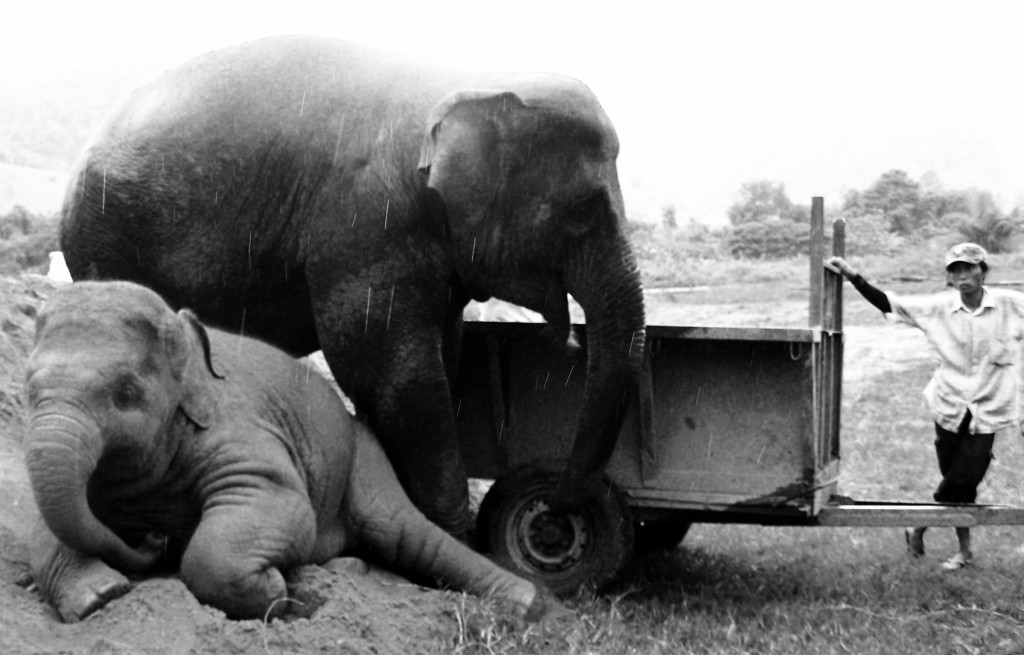
The baby walks up to the truck where the rust-colored dirt is first, flinging a boot into the back of it. Then, she grabs dirt and sprays it on her.
Lek and volunteers look on as elephants enjoy dirtying up again.
Within minutes, the elephants are once again covered in dirt. They are laying in the pile. Rolling in it like dogs.
Rolling in the mud keeps these elephants cool in the tropical heat and humidity.
It’s one of the most adorable displays of animals enjoying themselves I have ever seen.
While one lays in the dirt, another elephant finds more to play with in the trailer.Rain doesn’t stop these elephants from enjoying the dirt pile.
I almost feel guilty when Pam and I head off with Lek again, leaving the other volunteers to continue shoveling.
But, as we walk with the herd, those feelings vanish and are replaced with one of the most exhilarating feelings of elation and bliss.
This trip to Thailand is life-changing, there is no doubt.
As we continue, and the elephants stop to scratch their now dirty bodies against posts and logs to get at itches.
They find an old log to get those hard-to-scratch places.
They slide their enormous bodies against the wood, back-and-forth, back-and-forth, until they move on to the next post, where they once again rub and scratch.
Elephants display satisfaction at quieting their itches.
As we make our way back to the family shelter where all of the volunteers will meet to sit with Faa Mai as Lek sings her lullabies to for her afternoon siesta, we encounter Medo, in her 20s, and her best friend.
She has been sadly disfigured from both logging and forced breeding injuries. At a young age, Medo was forced into illegal logging, and was the victim of a serious logging accident, breaking her right ankle badly. The bone was unable to set and today her ankle is enlarged and irregularly shaped.
After this injury, she was unable to work in the industry and sold to a new owner as a breeding elephant. She was chained to a tree and a bull in musth was chained next to her. According to Elephant Nature Park, under normal conditions he might not have taken an interest in her, but in this case, he attacked her and mounted her. Medo collapsed under his aggression and laid there for two days, until the bull was able to be removed.
But, the damage was already done.
The teenage elephant had a dislocated spine and broken pelvis.
Medo has lasting effects from life before Elephant Nature Park. Photo: Pam Brace
Today, it is impossible to miss her gait and how she can hardly place weight on one of her legs.
But, she is beautiful.
As we walk by Medo, I can’t take my eyes off of her. Her history and abuse run through my mind, and I smile, comforted by her being so close to me, knowing she is no longer going to face any harm.
When we finish our walk, I return to my room, speechless, breathless.
Prague, considered one of the most beautiful cities in the world, is a smorgasbord of style ranging from renaissance to gothic to baroque, contemporary and more.
It’s easy to spend days just wandering the city, taking in the hundreds of churches with spires that pierce the skyline, the colorful buildings on quaint tree-lined streets, the parks set against historic and modern backdrops at the same time. There are plenty of things to do in Prague, that’s for sure.
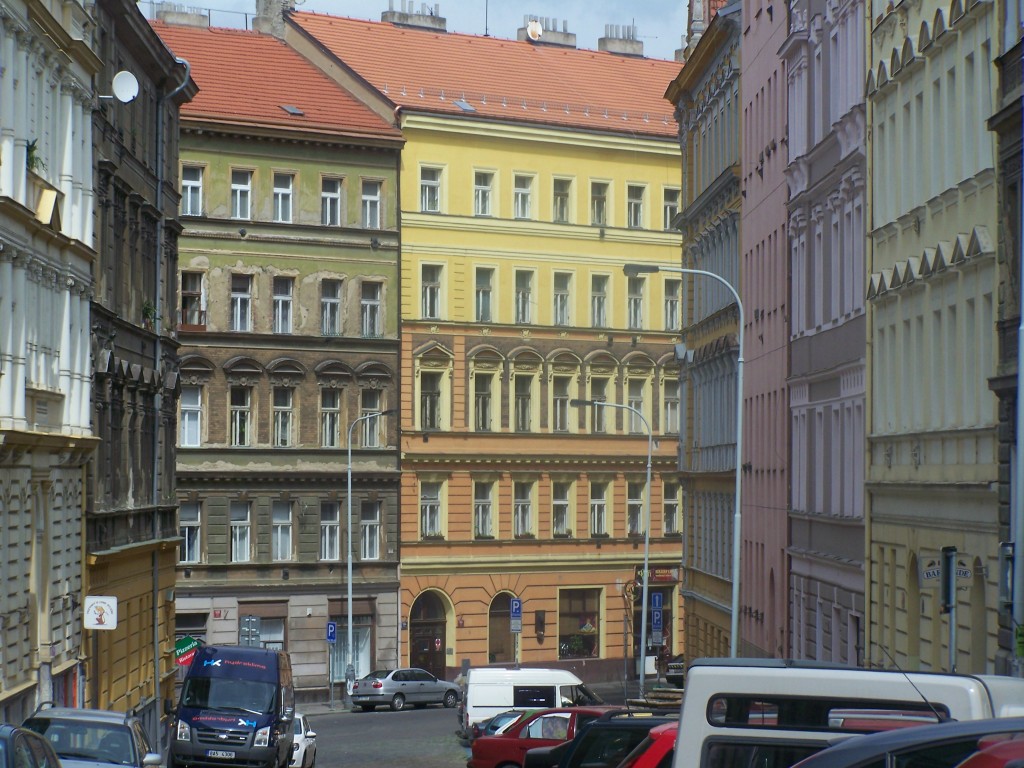
The colorful old buildings of Prague.
Prague is certainly breathtaking.
As it has emerged as a hot spot on the tourist path, the city, which has always been seeped in culture, has taken on an identity as an art attraction. Museums throughout pay homage to a wide-range of works of art, including the Museum of Decorative Arts, The National Gallery, Old Town Hall and Prague Art Gallery, The Fine Arts Museum and more.
But, for those on a budget, simply walking out the door of a hotel or hostel can result in an artistic experience in the pulsing capital of the Czech Republic. Street art and installments are stumbled upon while engrossed in an entirely different exploration in the whimsical Bohemian city.
It’s these little gems that add a certain charm to a city that has already captured the world’s heart.
Love Lock Bridge
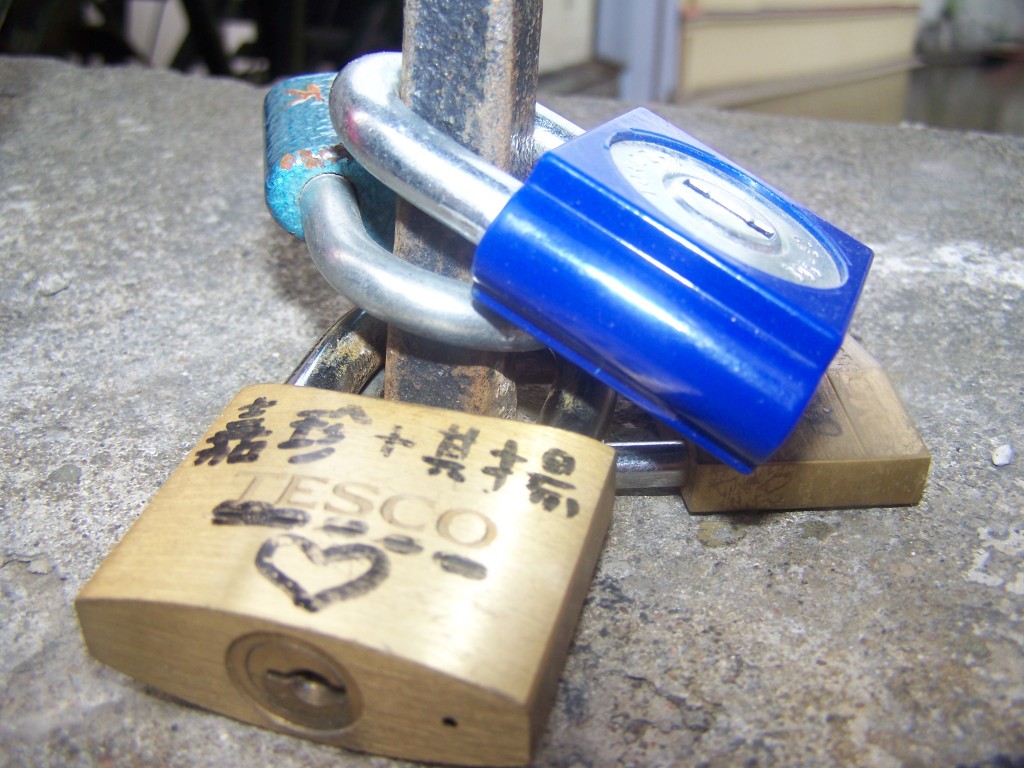
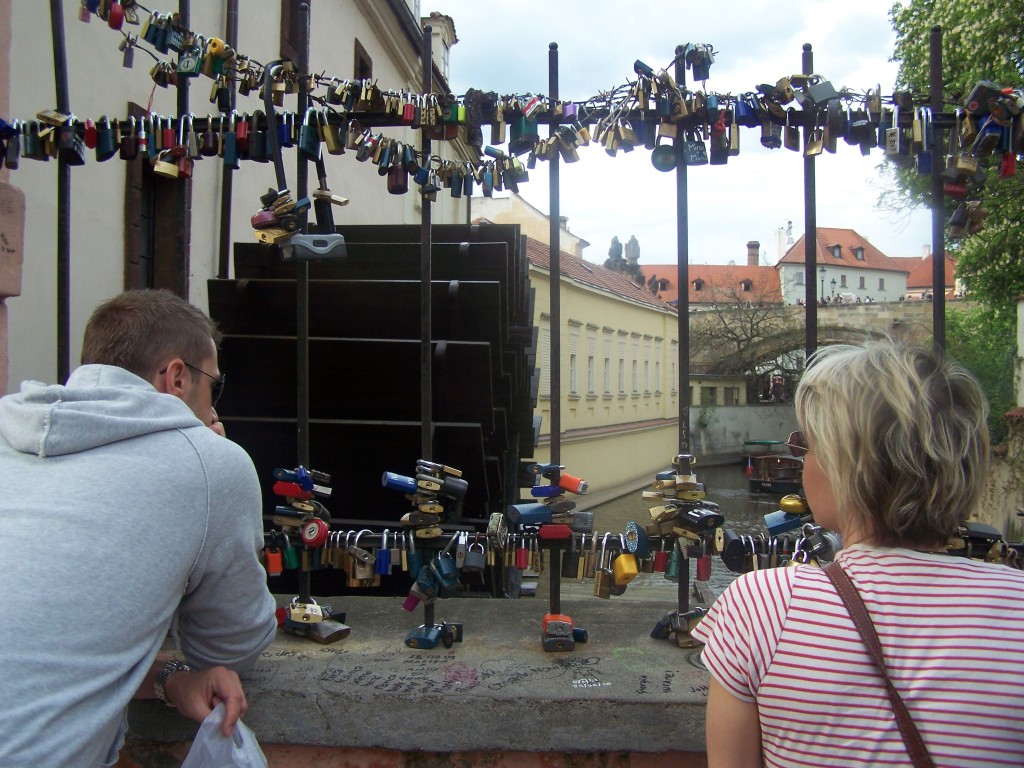
Couples in love make the pilgrimage to this bridge with padlock and sharpie in tow.
Believed to signify the eternal love of a couple, starry-eyed romantics affix their own padlock with their names inscribed on the metal up and down this pedestrian bridge that crosses over the Vlatva River.
Supposedly, clicking the lock on to this bridge (and other similar Love Lock Bridges in Europe) means good luck in a relationship.
With a view of the charming old neighborhoods, the bridge isn’t just an ode to romance, it’s romantic!
John Lennon Wall
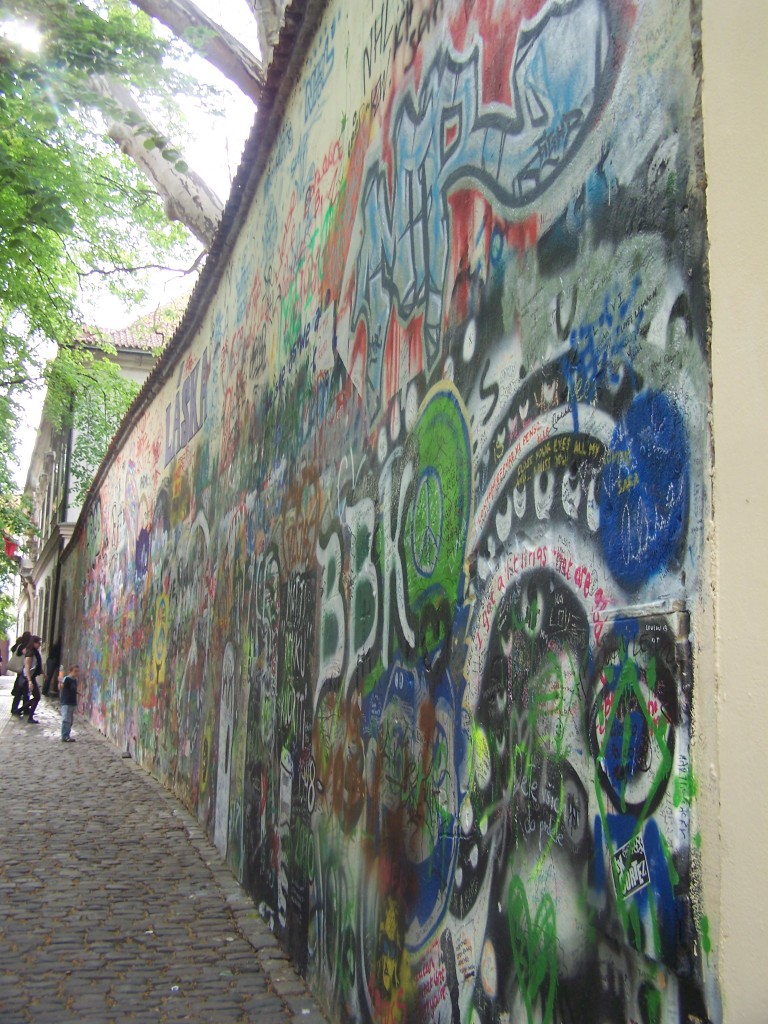
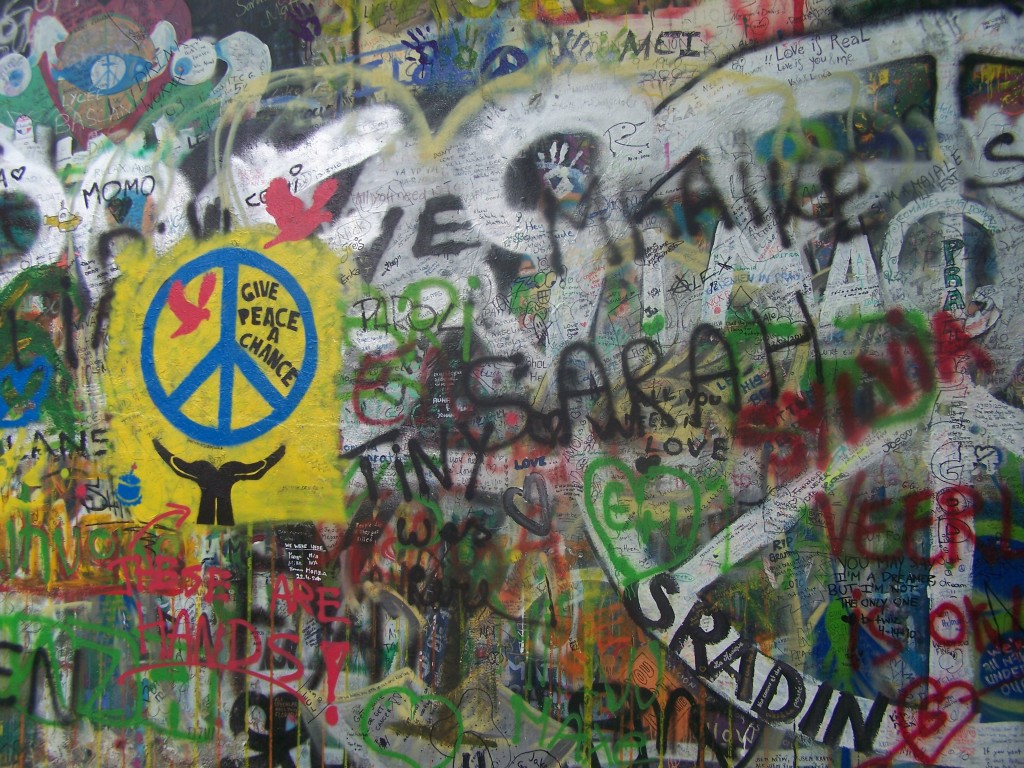
A quick walk from Love Lock Bridge is the John Lennon Wall, a colorful outcropping of graffiti on one long wall in Velkopřevorské náměstí (Grand Priory Square), Malá Strana.
It used to be a normal wall, but then in the late 1980s, when the country was under the communist regime of Gustáv Husák, younger residents began to show their disapproval in the form of writing on this wall. This led to fighting between students and police on the famed Charles Bridge.
The students were described as following “Lennonism,” hence a large amount of graffiti dedicated to the namesake of the movement, John Lennon.
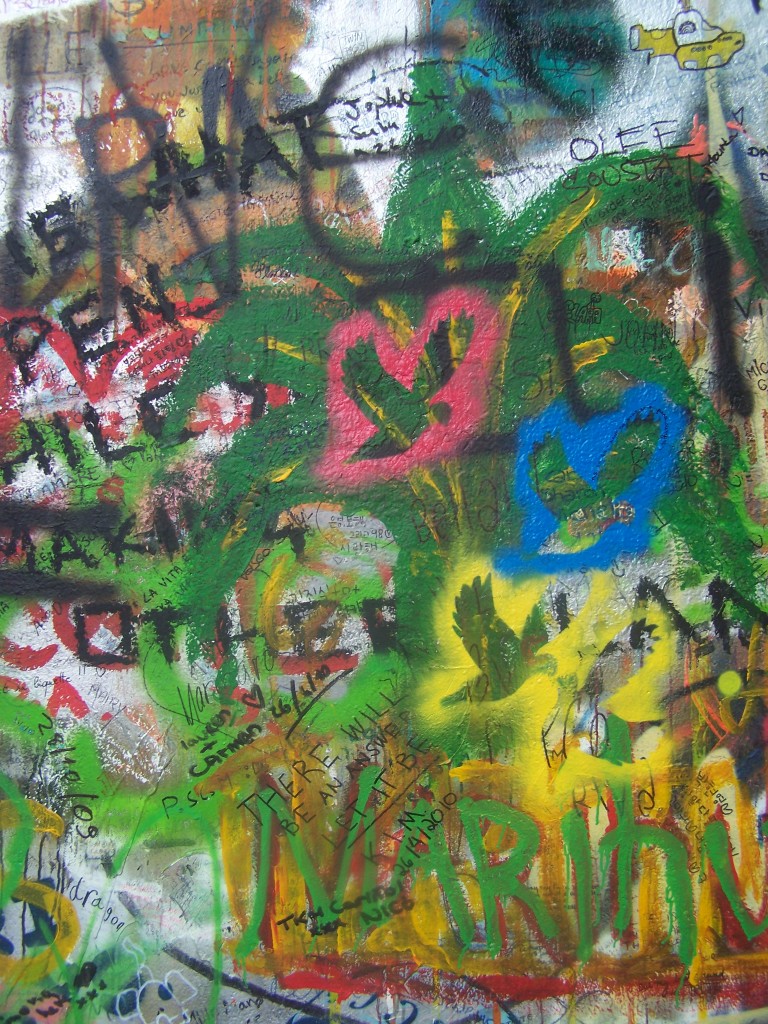
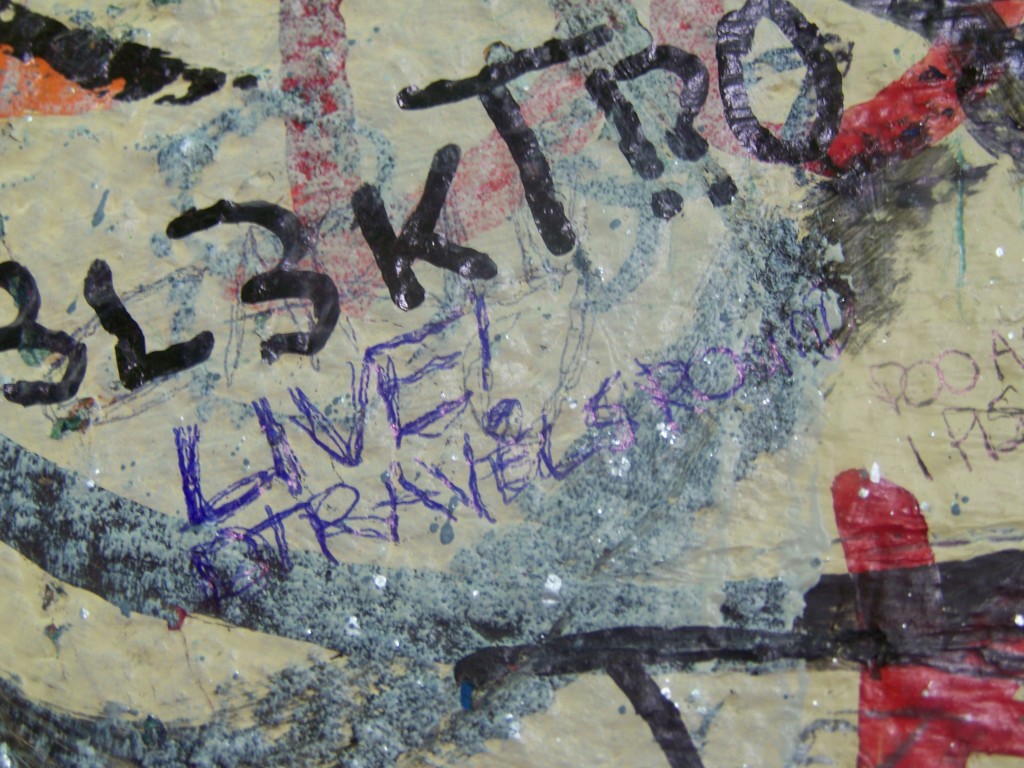
You won’t see the same wall twice. Visitors and locals regularly add their own piece of history to the wall, from Lennon quotes designed to inspire peace and love to their own portraits of Lennon to works of art and everything in between.
For those artistically inclined (and even those who aren’t), grab some paint and leave your own mark on this historic wall. (I only had a pen, but you get the point!)
Revoluce Key Sculpture
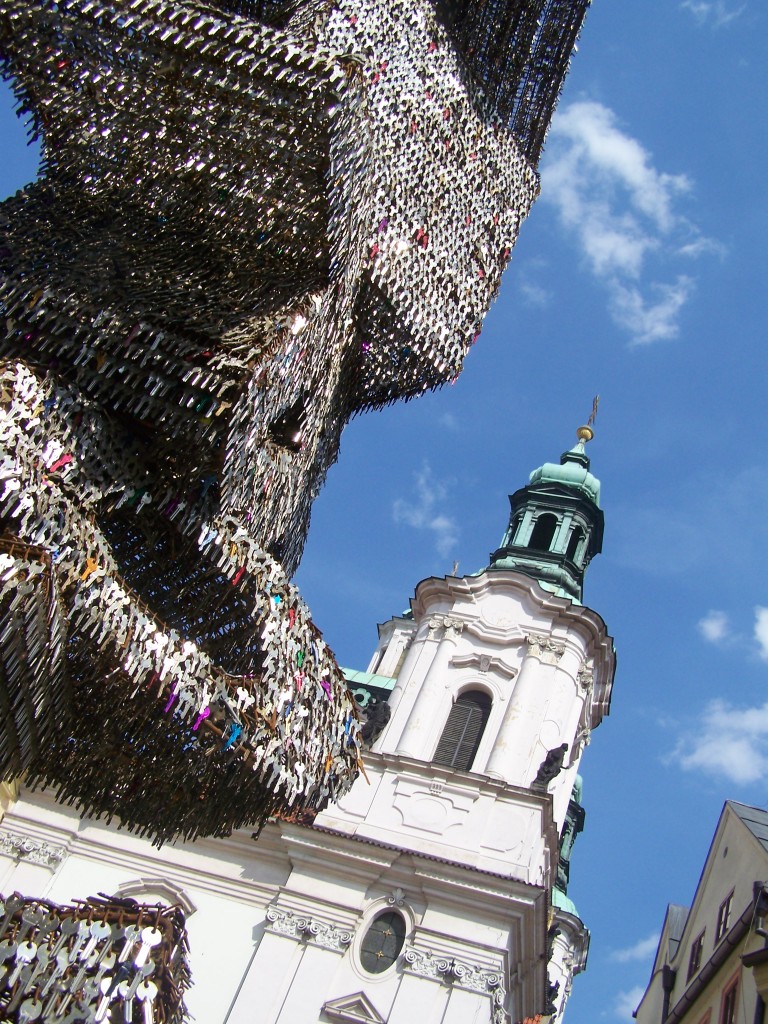
Unveiled in March 2010, the key sculpture was created by renowned Czech artist Jill David.
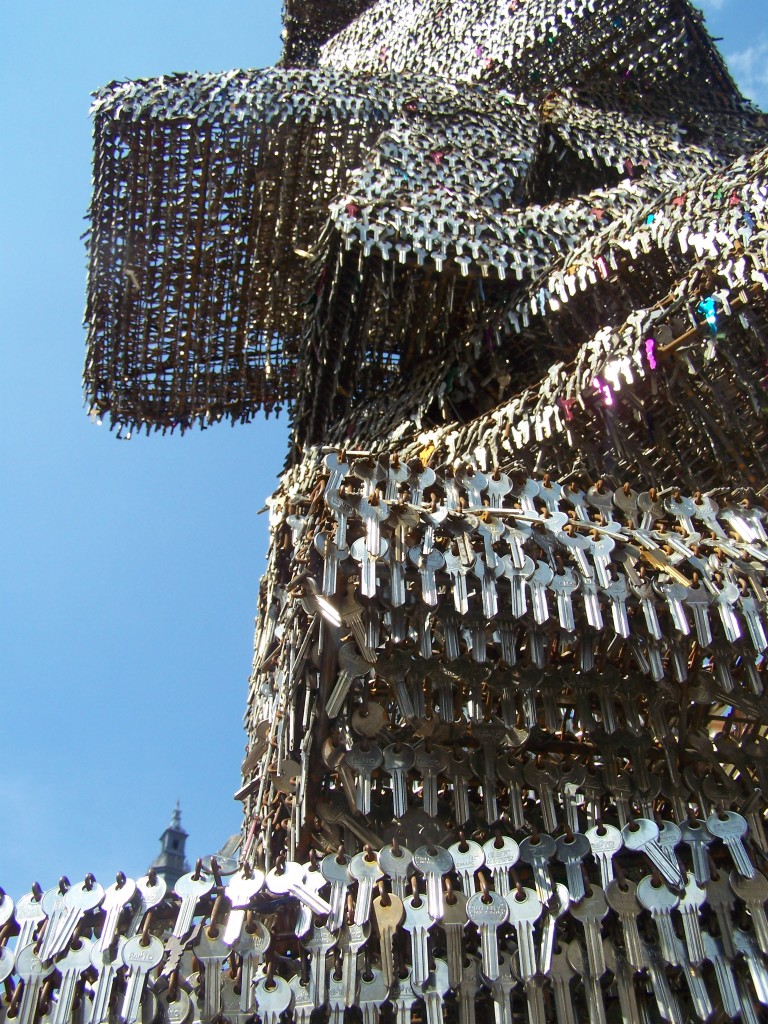
Standing at a towering 6 meters high in Franz Kafka Square, it spells out “Revoluce” (“Revolution” in English) with more than 85,000 keys.
David’s work signifies the non-violent Velvet Revolution which used keys as its symbol. The revolution, which took place from November 17 to December 29, 1989, was a largely student-led protest against Communism.
Have you been to any of these places? Are there other free art attractions you recommend for Prague? Leave your comments below!
I know it looks different, and there’s some getting used to that will happen, but I am so excited to share what I (and by I, I really mean the talented Jesse McFarlane) have been working on since October.
Why the change?
Quite simply, I wanted to expand the scope of my blog and make it a bit more comprehensive. The Adventures of D isn’t going away, it just now has it’s very own section, letting me open the site up to more features, tips, reviews, guest posts and photo essays. This little blog has come along way since October 2009 when I was sneaking posts and plotting my exit from my job and America! I am so proud of what it has become and look forward to where it will go!
It's time for something new.
I am always open to suggestions, so if there is anything you’d like to see on here — maybe details on a particular location, juicy details on cool spots in Las Vegas (or wherever I am/have been), or anything else — I welcome your feedback.
I hope 2012 is filled with laughter, good health and, of course, safe travels.
And, please pardon the interruption … while we work through the new site, things may get a little messy. 🙂
Well, Happy 2012 a few days early. While everyone is either dragging themselves into work for the short week, or spending time on a lil’ holiday, I figured now is the time for some fun travel stories. I’m not doing a “Best of” this year, but when the opportunity to participate in the A-Z post came up, I decided it would be a fun little read (plus, a nice trip down memory lane for me).
So, without further adieu, the A – Z’s of D’s Travels ‘Round! (PS — there are five of my favorite bloggers tagged below, so at least scroll down to see other bloggers you should definitely check out in 2012).
A: Age you made your first international trip
Don’t get mad, Canada. I totally heart you, but I’m not going to count you as my first international trip since back then, I didn’t even need a passport to cross into your beautiful, clean country.
Therefore, travel back with me to 1995. It’s summertime. I’m an actress with dreams of winning an Emmy for playing the part of drama queen in a (now canceled) soap opera on ABC. Despite being located in the middle of a cornfield, my high school, Magruder if you really want to know, is 1 of 10 schools chosen to participate in the first ever high school leg of the Edinburgh Festival Fringe.
We receive the packets announcing this opportunity to perform in a play “over there” and I somehow manage to convince my parents it’s the best thing in the world for me to do. So, half-a-year later, I’m getting stamped into the United Kingdom. We stop at Buckingham on the way, then fly on up to Edinburgh. I grace the stage. It does not result in any acting contracts, but it feels damn good. Then, we bop back down to London for a few days before we return to Maryland.
Quick trip. Bitten by the travel bug.
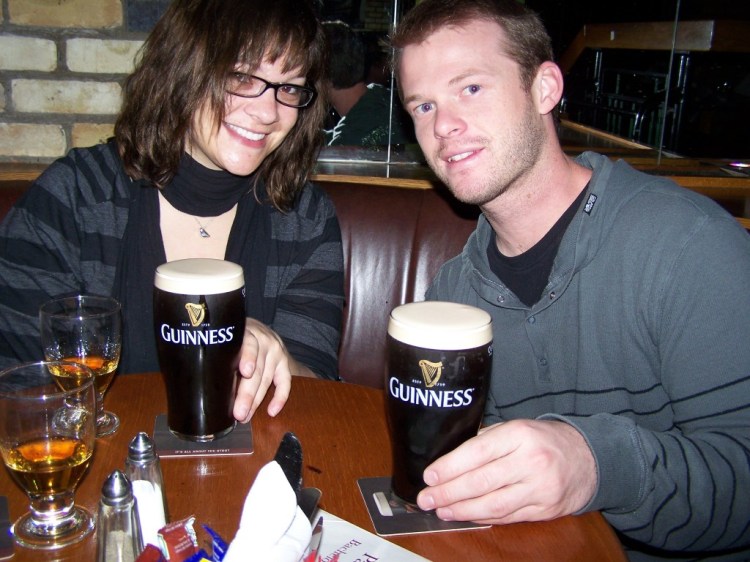
B: My first Guinness in Ireland.
B: Best (foreign) beer you’ve had and where
Well, B is not easy at all. I’m going to go with Guinness. In Dublin. At St. James Gate. Yeah. I didn’t like Guinness, or Jameson, for that matter, until I landed in Dublin. Then, my German – Russian – Romanian – Polish self became a bit o’ Irish at first swig. Love.
C: The brilliant and delightful Chef Maria Jose San Ramon at Monastrell
C: Cuisine (Favorite)
I’ve had some of the most amazing food in the world in Spain, courtesy of Chef Maria Jose San Ramon of Hospes Amerigo’s Monastrell. In fact, the entire time I was a part of #blogtripf1 (thank you, Land of Valencia for the amazing opportunity to see the region!), I ate well. Nay, damn well. I even wrote a post over at Matador Network on all of the damn well eating I was doing.
Other than that, I was a sucker for the fresh fish, homemade EVOO and jugs of wine in plastic bottles made by store owners in Croatia, particularly on Solta, a little slice of island heaven on the Adriatic.
D: Destinations. Favorite. Least Favorite. Why.
I operate in life without favorites, which is weird because, as my friend Katie says, I am in love with the hyperbole. When people ask me my favorite place, I spout off a list. Which is the same list I am going to spout out now, only with brief explanations.
Madrid: Vibrant, alive city with easy transportation. If I could live anywhere in the world, Madrid or anywhere in Spain would be the top of my wish list.
Berlin: Holy crap, the amount of culture, art, eco-friendly living here, just blows me away. I love the little nooks and crannies I discovered and the history. There’s something about WWII that really intrigues me.
Sarajevo: This one makes people scratch their heads. But, for me, seeing a city that is still so scarred from ethnic cleansing and a brutal war be so alive now, just warms my heart. The people here are friendly and kind. And, I just fell in love with the city.
Split, Croatia: Split is where my life changed. And, along with its beautiful Adriatic beauty, holds a very special place in my heart.
Least favorite? Now, that’s much easier. Turkey. Not because the country isn’t awesome, because it is. But, because I had a hell of a time there. Between a hotel owner and a restaurant worker who didn’t understand “no” means “no,” to nearly dying in an attempt to paraglide, Turkey beat the crap out of me. Would I go back? Yes. However, the first experience did one big number on me.
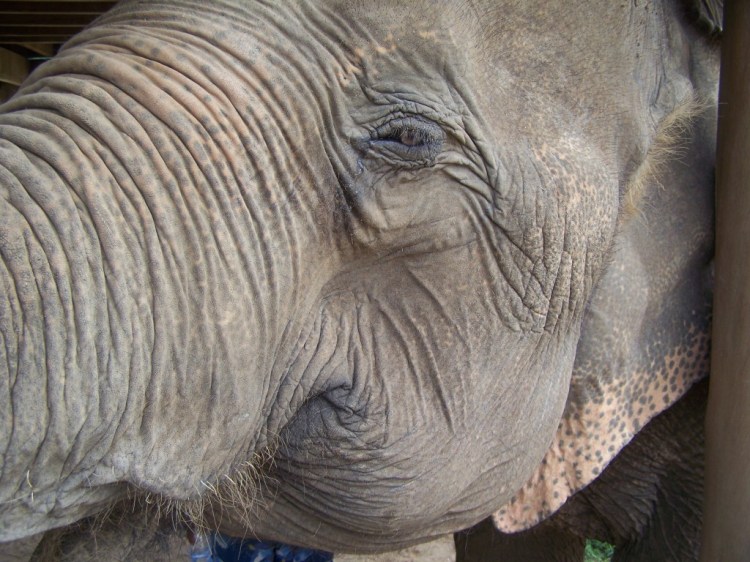
E: Living with elephants for a week at Elephant Nature Park.
E: Event you experienced that made you say ‘Wow’
Ah, one event that made me say “wow” is difficult, to say the least. That being said, the first thing that comes to mind would be the first time I fed elephants at Elephant Nature Park, just north of Chiang Mai, Thailand. At ENP, the elephants get to live the rest of their lives without having to give rides, perform in circuses or paint (if you want to know why you shouldn’t support such outlets, click here). I spent a week with these elephants and it was magical, life-changing.
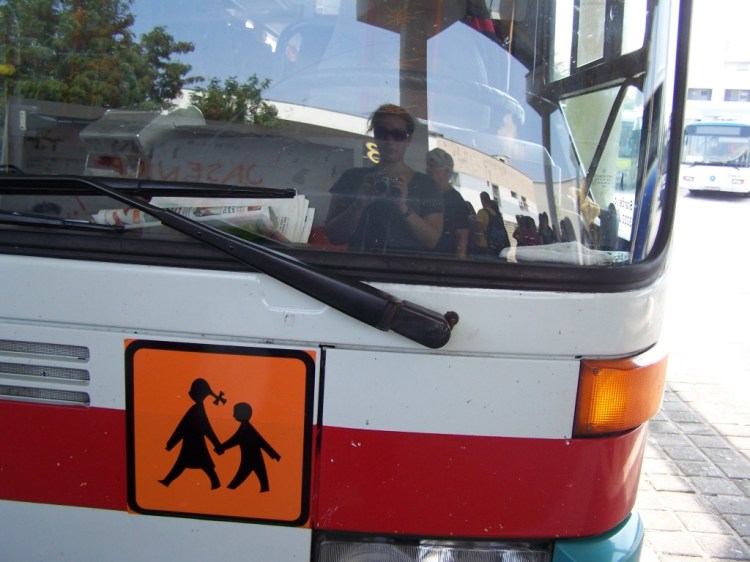
F: Train or bus? I don't know ...
F: Favorite mode of transportation
I like planes because they get me to places fast. But, I like buses and trains because I can see the world at the ground level instead of thousands of feet up in the air. Of the two — buses or trains — which do I like better? It’s a toss up. I think it’s safe to say that in Western and Central Europe, I like the trains. But, in the Balkans, where they are unreliable and late, I opt for buses.
G: Greatest feeling while traveling
There are so many feelings I experience when I travel. But, the most spellbinding is the one at the beginning — the idea that anything is possible. Travel is an unwritten story, and I have nearly full control of what I want those blank pages to be filled with.
H: Hottest place I’ve traveled to
I’ve been to a few hot places. Europe in the summer, with no air-con is dreadful. I remember dripping, dripping, dripping sweat in many Eastern European hostels. The worst was in Istanbul and later in Varna. Being in a dorm room, with no air-con, in the dead of summer in thick summer heat is absolutely horrible.
On a completely different level, Chiang Mai during the rainy season was really hot. And humid. It was impossible to walk out into the Sunday Night Market without sweat trickling down my face and soaking my clothing. I know. Attractive.
I: Incredible service you’ve experienced and where
The people in Thailand are so kind, so considerate, so attentive. One instance that comes to mind was my recent visit to Chiang Mai. I found a spa and went to get a foot massage. At the end of the hour, my masseuse sat me in a stool and told me she was going to do my arms to. The reason? She had no other customers and wanted to be nice. Yup. Great service.
J: Journey that took you the longest
Oh lord! The most recent long-haul trip was the longest I have ever experienced. Thank you, United, for the awesome itinerary. It went something like this:
– Flight from Las Vegas to San Francisco: Delayed on runway one hour. Two hour flight.
– Flight from San Francisco to (surprise) Narita, Japan: Delayed one hour. Nine-and-a-half hour flight. Five hour stopover. Which was not on my itinerary.
– Flight from Narita to Bangkok: A little more than six hours. Plus, overnight at the Bangkok airport. So, another six hours.
– Flight from Bangkok to Chiang Mai: One hour.
THEN, on the way back, it was less painful, but still sucky.
– Flight from Chiang Mai to Bangkok: One hour.
– Flight from Bangkok to Los Angeles: Fourteen-and-a-half hours. Overnight at LAX — an additional six hours.
– Flight from Los Angeles to Las Vegas: One hour.
Yuck.
K: Hand-carved elephants at Elephant Nature Park
K: Keepsake from your travels
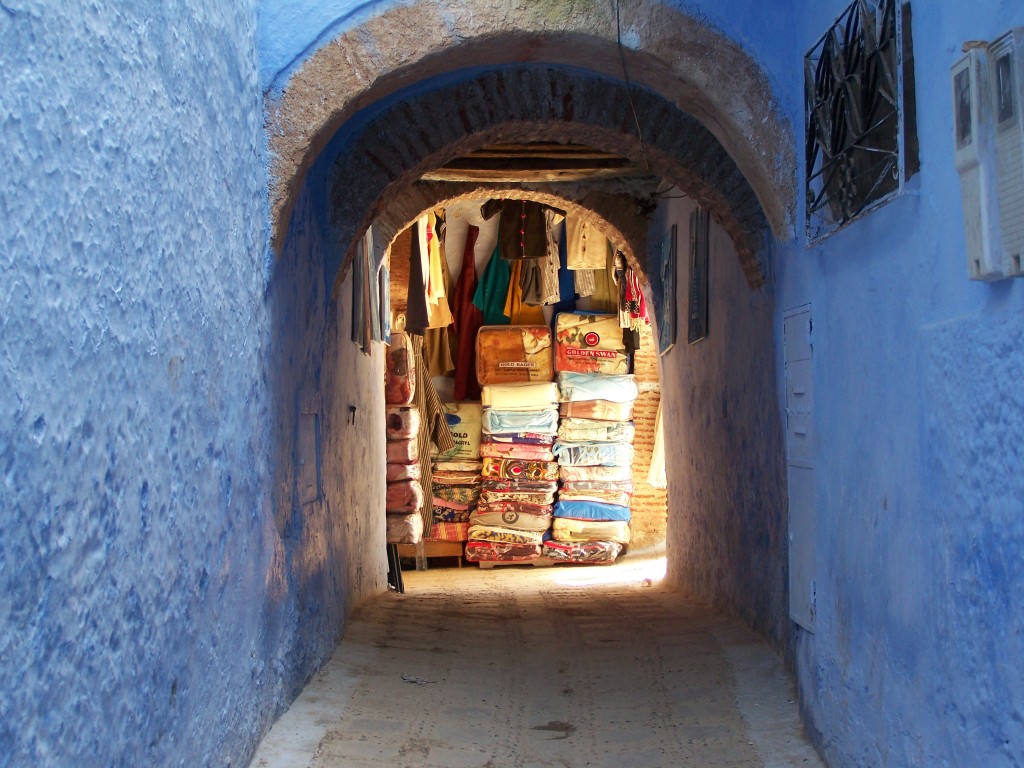
Because most of my travels are longer-term, I don’t really buy a lot of things. When I do, they are special and remind me of special moments. I have a bracelet with the Madrid Metro map plastered to it. I have a little carpet I bought in Chefchauen, Morocco. I have hand-carved wooden elephants done by mahouts at Elephant Nature Park. Those are probably the things that mean the most to me and conjure up detailed memories — the thoughts, the feelings, the smells, the atmosphere — of the moment I was in when I purchased each of them.
L: Let down sight. Why and where?
The biggest let down for me was Dubrovnik. Every traveler I spoke with when in Croatia sang such high praises of the city. Yes, it is absolutely magnificent, beautiful, charming … but it is also crowded and expensive. After spending a lot of time in the other cities in Croatia, Dubrovnik was my last stop on vacation and it was so built-up that by the time I got there, it wasn’t nearly what I imagined it to be.
M: The moment I fell in love with Spain.
M: Moment where you fell in love with travel
I can’t recall the first moment I fell in love, but I can recall a moment I was reminded of why I travel. After a day of traveling from Galway to Dublin to Madrid, I arrived at my hostel after dark. Filled with warnings about the city and getting my bag slashed, I arrived to the hostel after dark. My little private room had a balcony overlooking a bustling plaza. I flung open those doors and was greeted with the most magnificent view of the square, glowing with colors, pulsing with people. It was magical. And, in that moment, despite all of the negatives I heard about the city, I was enamored.
N: Nicest hotel you’ve stayed in
Kismet Dao in Brasov, Romania. It rocked. Free beers. Free nights if you stay a certain amount of time. Great staff. Chill travelers. Free breakfast. Common room with hundreds of movies to watch. A basement to party in. A backyard with a grill. Awesomeness.
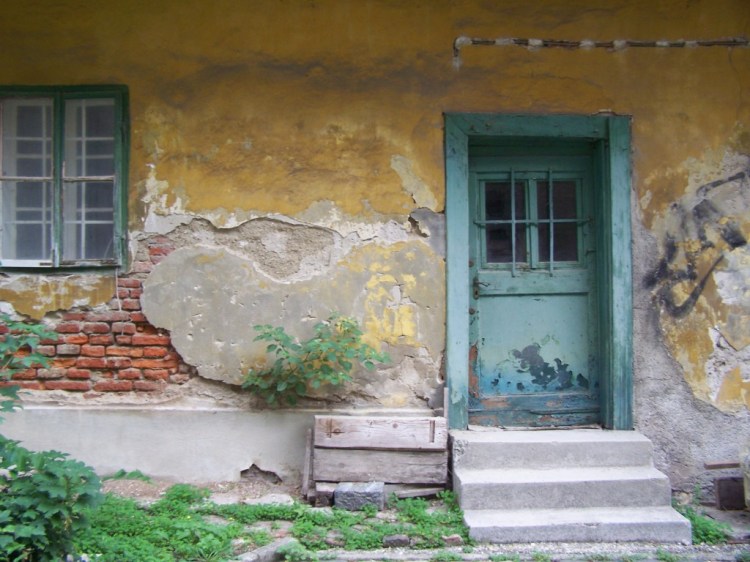
O: I can't stop snapping shots of doors and windows.
O: Obsession. What are you obsessed with taking pictures of while traveling?
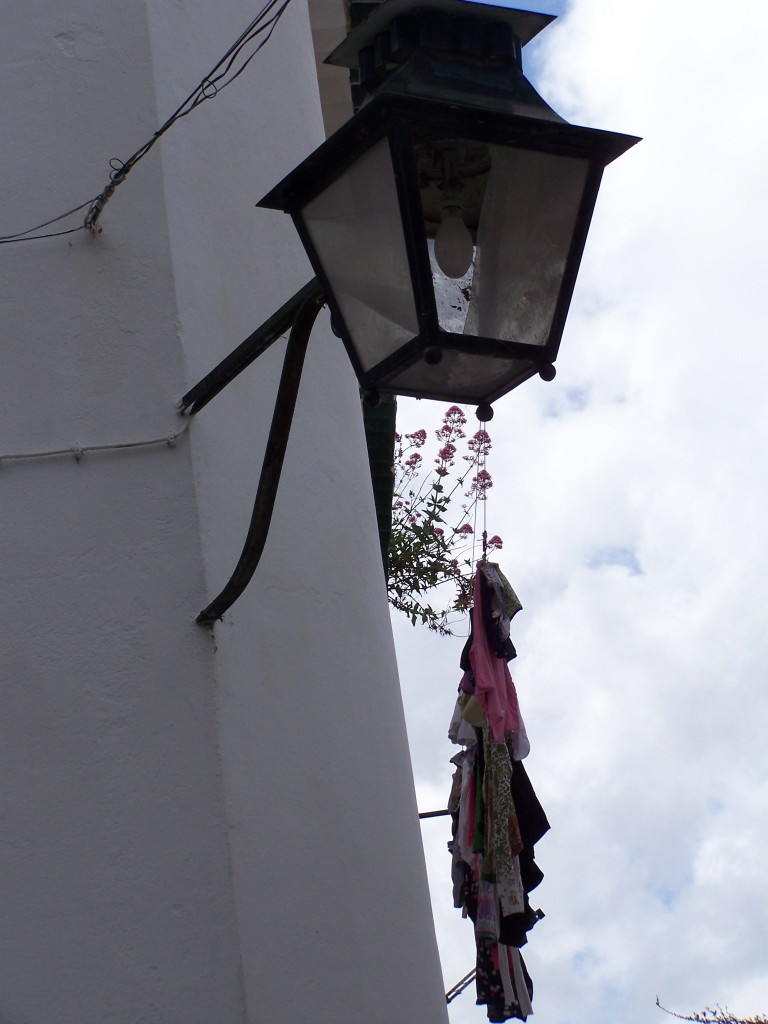
Doors, windows, street lamps and clothing hanging from clothing lines. I am pretty sure I could do quite a few essays of just these images. They tell stories landscapes and normal shots of places can’t.
P: Passport stamps. How many and from where?
This passport has UK, Ireland, Spain, Romania, Hungary, Poland, Czech Republic, Spain, Belgium, Rwanda, Belgium, Turkey, Bulgaria, Serbia, Montenegro, Bosnia, Croatia, Germany, America, Thailand, America. I think. There might be a few more from train/car travel over borders, but I don’t remember.
Q: Bran's was a quirky let-down.
Q: Quirkiest attraction you’ve visited and where.
I don’t know how quirky it is, but Bran’s Castle in Romania was … interesting. They removed all of the old furniture and replaced it with antiques instead.
R: Recommended sight, event, or experience.
Pay to have a guide in Auschwitz. Take SA Guesthouse’s tour of Sarajevo. Madja’s Guest House’s tour of Mostar in Bosnia and Hercegovina. The free alternative tour in Berlin. They all rock and all are historic and fascinating.
S: Splurge. Something you have no problem forking over for while traveling.
It depends on my mood. Sometimes, it’s a good meal. Sometimes, it’s a bottle of wine. Other times, it’s just for the privilege of enjoying “free” wifi at an outdoor cafe with a cup of coffee or a Coke Light. Oh, and tours of places that really move me, like the ones I took in Bosnia.
T: Touristy thing you’ve done
The historical free tour I took in Berlin that took us to Checkpoint Charlie. Oh, and running through the Lourve so I could snap a photo of Mona Lisa but not sticking around the museum because it was so crowded with school children I thought I would pass out.
U: Unforgettable travel memory
So many! Kayaking in circles in Spain. Falling off a cliff in an attempt to paraglide in Turkey. A night of sultry flamenco in Granada. Teaching English in Spain and living with locals there. Bonding with elephants at Elephant Nature Park. I could go on and on.
V: Visas. How many of them and for where.
Turkey.
W: Wine, best glass while traveling and where.
Croatia. My last night of my trip. Sitting by myself at a restaurant enjoying homemade noodles and a view of Zadar’s harbor.
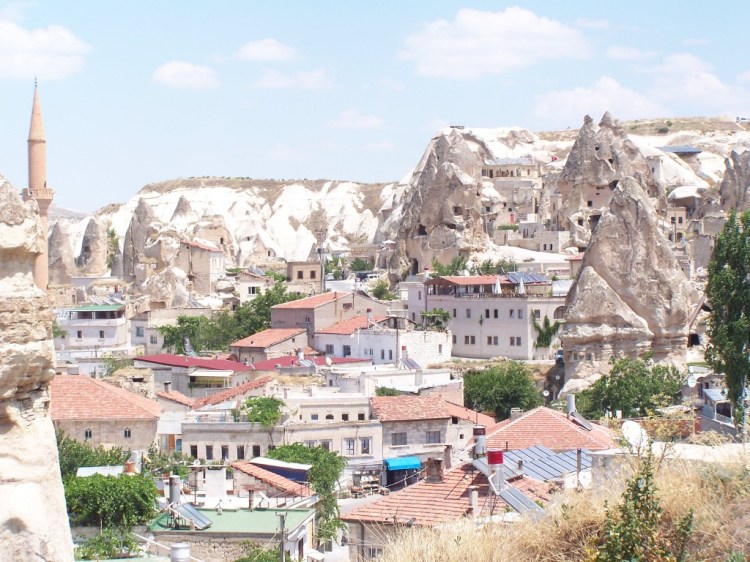
X: View of Goreme.
X: eXcellent view and from where
Coming in to Goreme at sunrise. The reds and oranges turning the fairy chimneys the same color as the sky, and hot air balloons beginning to lift off. Mesmerizing.
Y: Years spent traveling
Collectively? About one year. My longest trip was almost seven months.
Z: Zealous sports fans and where
The F-1 race in Valencia. Hands down. Oh, and every game I watched at bars during the World Cup, particularly the games in Spain with Spain playing. The passion and enthusiasm from those fans turned me into a futbol fan!
Now, the fun part! I nominate the following superb travel bloggers to share their A-Z’s:
Editor’s Note: This is a guest post from Dayna at Wanderlusting. Do you have an Escape of the Week you’d like to contribute? Let me know! Dtravelsround [at] gmail [dot] com. Your Escape could be the next Escape!
I expected to enjoy Slovenia. A year ago, I looked up photos and videos of Lake Bled, the Julian Alps, and Ljubljana, excited for the ‘someday’ when I would get there. What I did NOT expect, however, was to fall completely head over heels in love with Slovenia. In terms of rugged beauty, medieval old towns, and that nagging sense that visitors feel — that they are walking inside of a postcard — it rivals any and all of Europe’s better known destinations.
My guidebook told me to go see nearby (and virtually unheard of) Radovljica for the bee museum, which didn’t really sound that appealing to me, but my cousin insisted I pay the town a visit. I am so glad I did. It may not have the tourist draw that Bled and Bohinj do, but it is absolutely perfect for an afternoon of unguided strolling, people watchingand getting off the beaten path a bit.
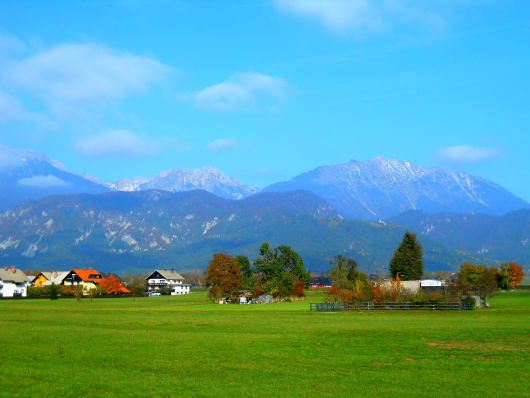
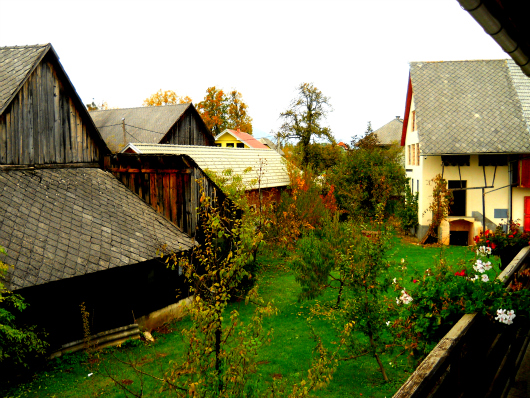
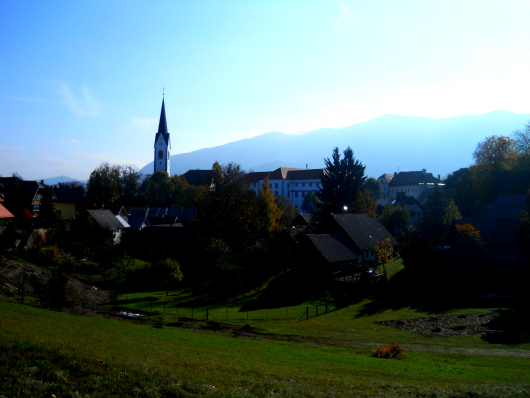
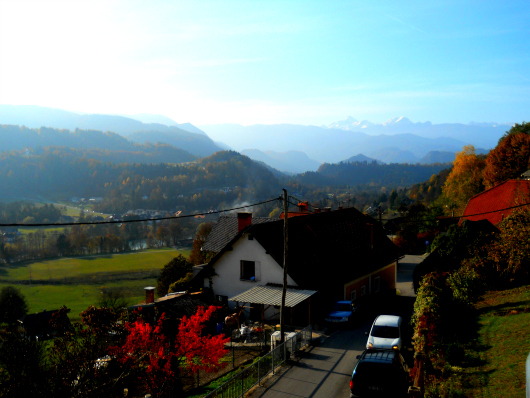
The journey to Radovljica from Bled is as valuable as visiting the town itself, especially in the autumn. Traditional Slovenian houses, fields and forests of every color and the surrounding Alps make it a visual treat.
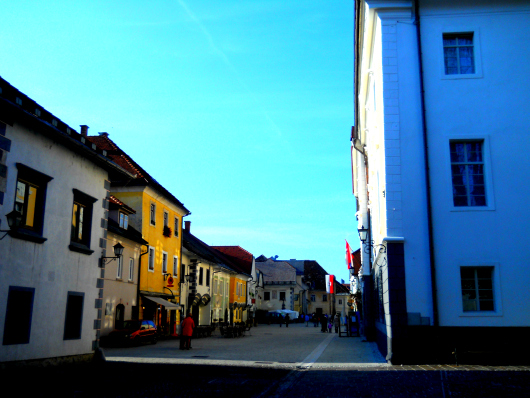
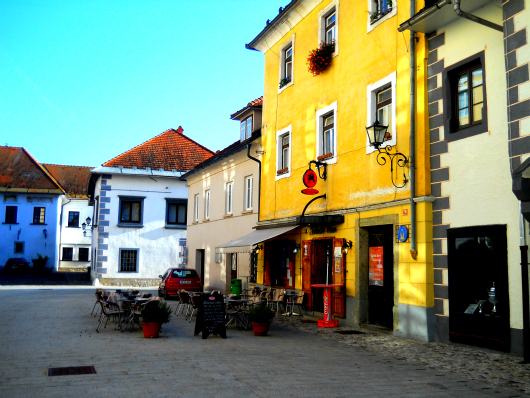
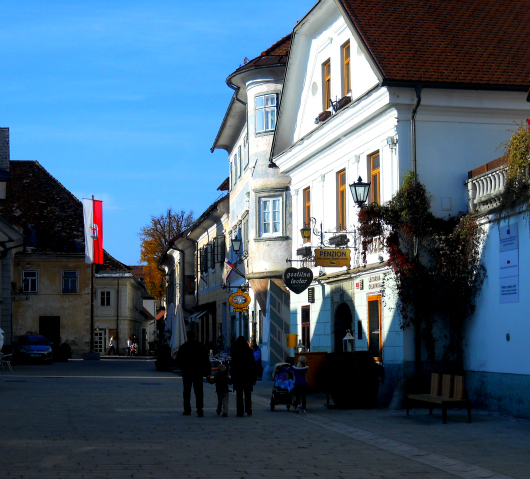
After peeking around a few corners, I was greeted by a restored and wonderful Old Town dating back to medieval times, locally dubbed Linhartov Trg. Being a coffee lover, I was impressed by the sheer amount of cafes in their small town square. On Sundays, as in most of Slovenia, this is the place where locals take a stroll to see their neighbors and
friends.
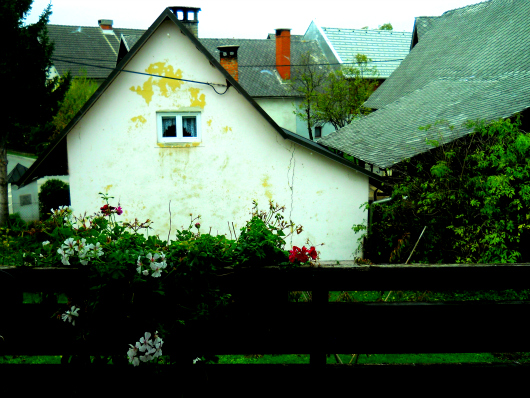
The streets are immaculately kept, as are the buildings themselves. Every corner, it seems, is more inviting than the last. Hanging flower baskets and small orchards are common once you venture a few blocks away from Linhartov Trg.
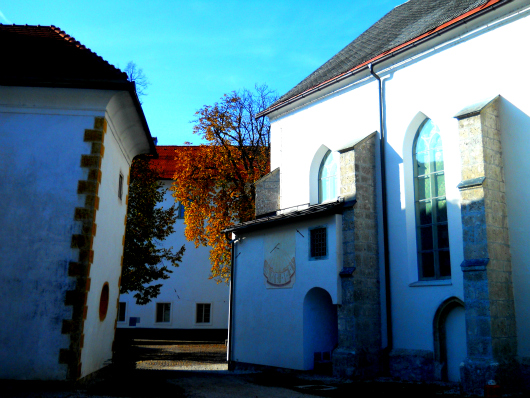
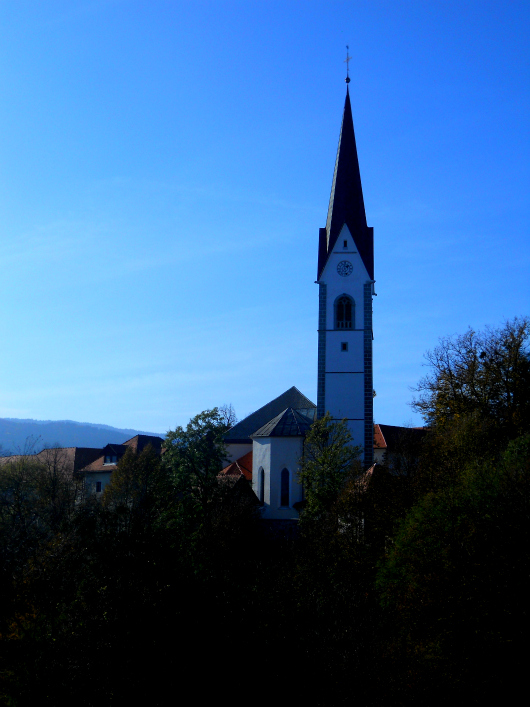
As with most small Slovene towns, the focal point and highlight is its beautiful, Gothic church. The Parish Church of Saint Peter sits patiently on a hilltop overlooking the dense forest, and dates back to the 14th century.
While visitors aren’t allowed inside, they are welcome to explore the grounds, the neighboring parish and take a peek through the church doors at the incredible architecture and ceiling murals.
The best gifts Radovljica has to offer are the many incredible vistas of Mount Triglav and the surrounding Alps, the Sava River and the glimpse at everyday life that is best enjoyed away from the crowds.
Getting There: Slovenia’s biggest tourist attraction in its own right is Lake Bled which is only 5 kilometers away from Radovljica. Buses leave from Bled’s main bus station every half hour, and return just as frequently.
Have you visited Slovenia? What city stood out the most for you?
About the Author: Dayna was raised in Washington State and studied International Studies and Global Development at the University of Idaho, where her interests led her to further explore Islam and the West and African Development. At the tender age of five, she held up an inflatable globe from National Geographic and declared that she would conquer the world and collect whales. She is also a seasoned singer/songwriter, hula hoop dancer, poi spinner, coffee enthusiast and avid lover of travel and useless trivia. Follow her on Twitter; Like Wanderlusting on Facebook.
Most of the time at Elephant Nature Park is spent at the park, caring for elephants and helping maintain the facilities. However, our calendar of volunteer activities clearly shows that on Thursday, we are heading out of the park to do some volunteer work at the village elementary school with the kids.
I love my elephants, but the idea of getting out and into a Thai village really excites me. I know I’m falling in love with the country, so spending time seeing how people live in the small villages rather than the cities really fascinates me.
So, on our fourth day at the park, we board our two white vans with the ENP logo on the side, and head off to the local elementary school.
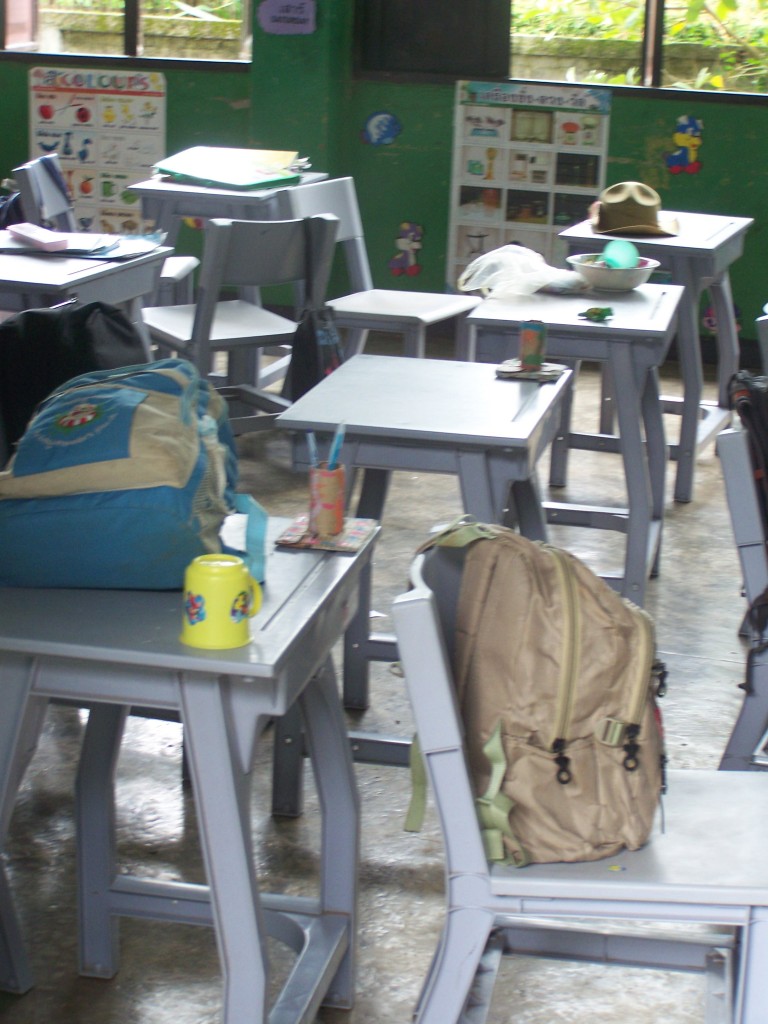
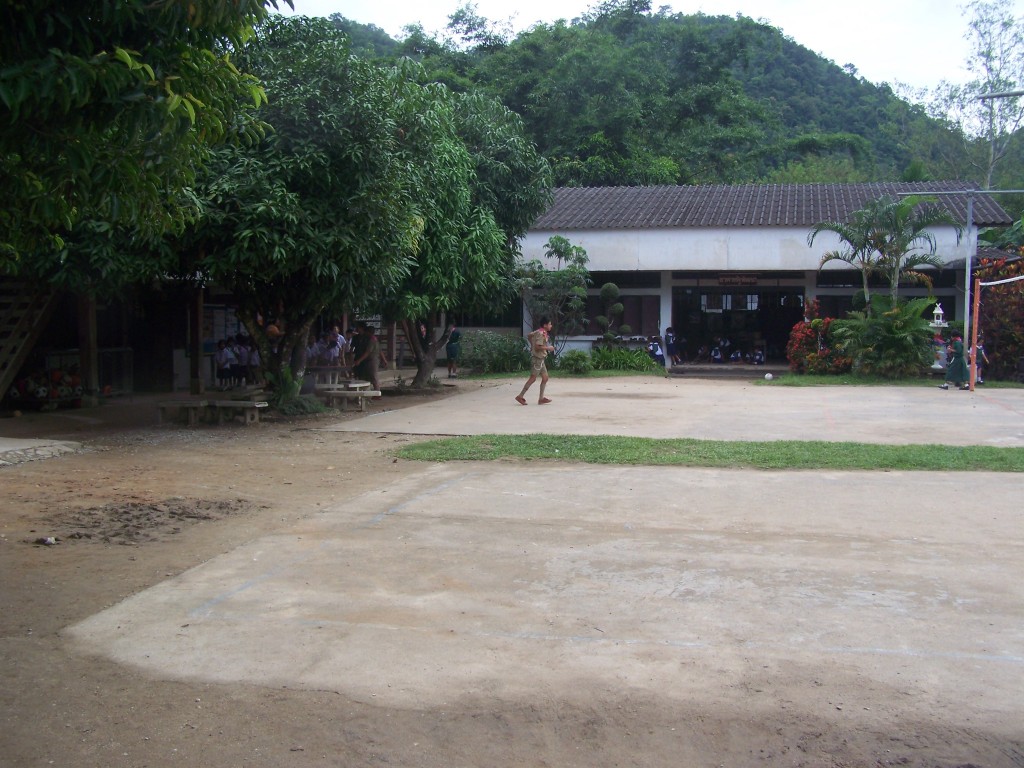
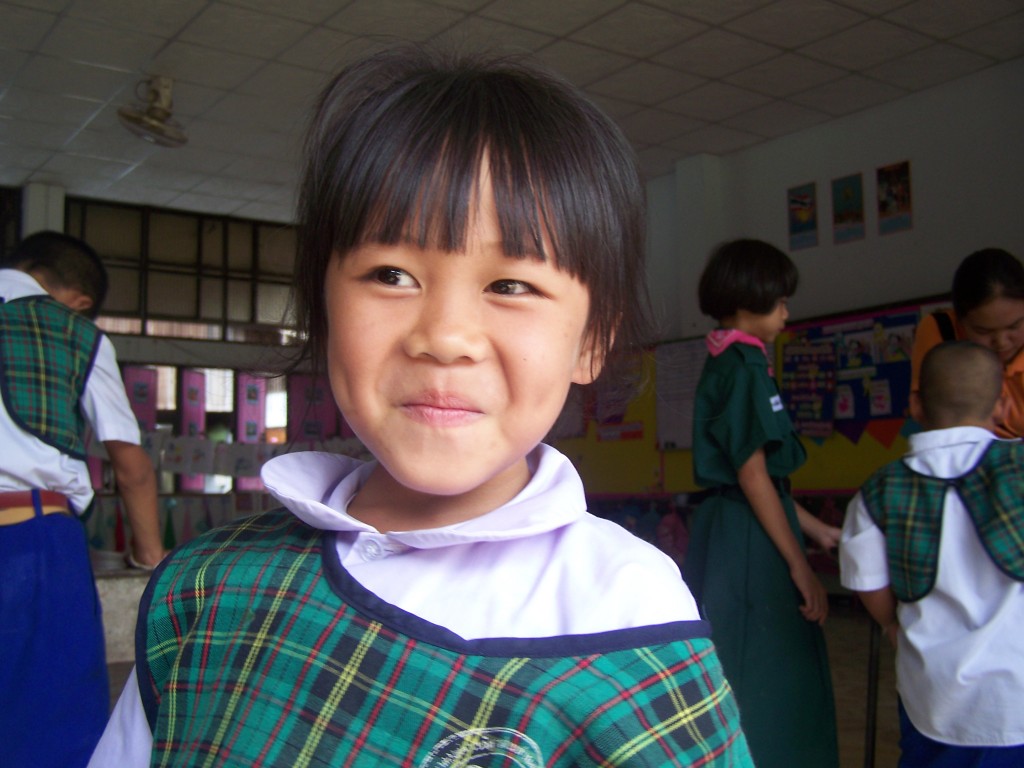
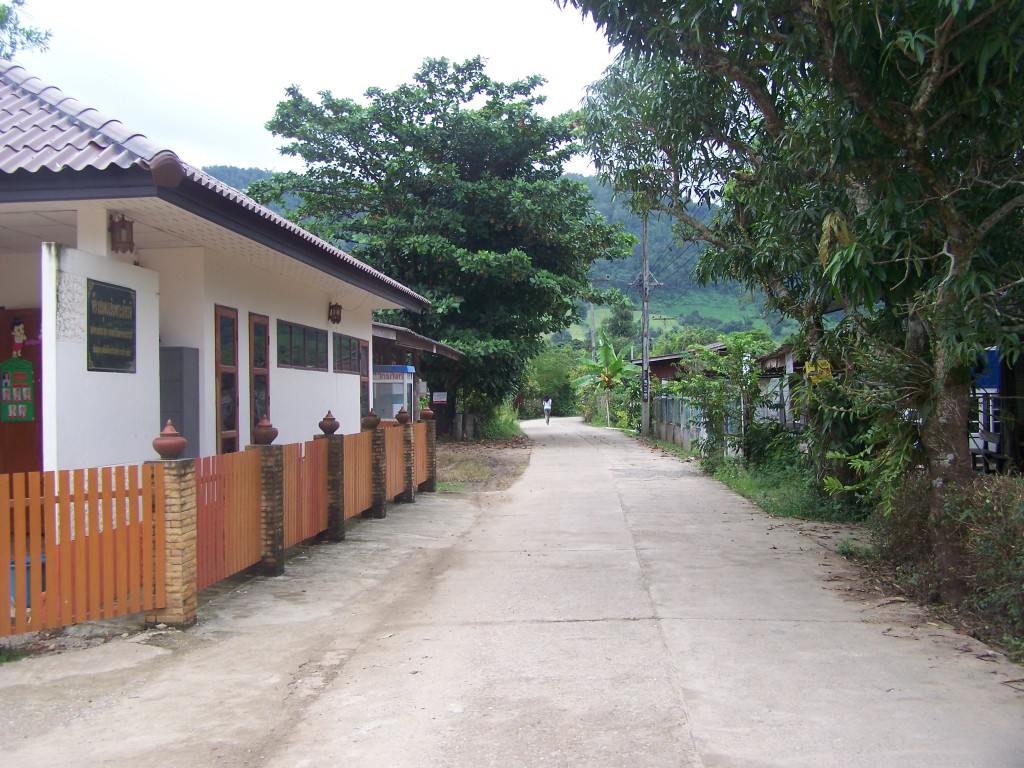
Muangkud School takes only a few minutes to get to from the park. When we arrive, the students, all in uniforms, are either in their class rooms or outside, playing.
Unlike the elementary school I went to, this school is one floor and very basic. It is a U-shape, with classrooms opening into a large courtyard.
That’s it.
The principal of the school comes up to us and begins to tell us about what we are doing.
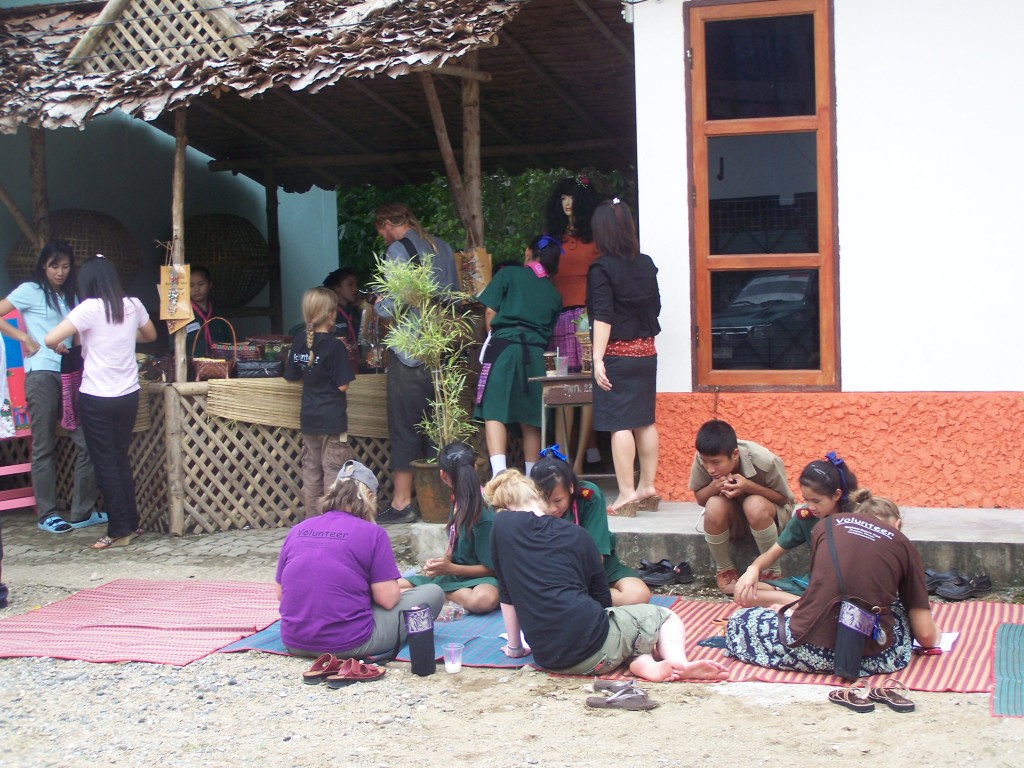
“You can teach them English or play with them over there,” he says, gesturing to two of the rooms. “Over there, you can learn how to weave jewelry, bake sesame balls or get a massage from the students who are training.”
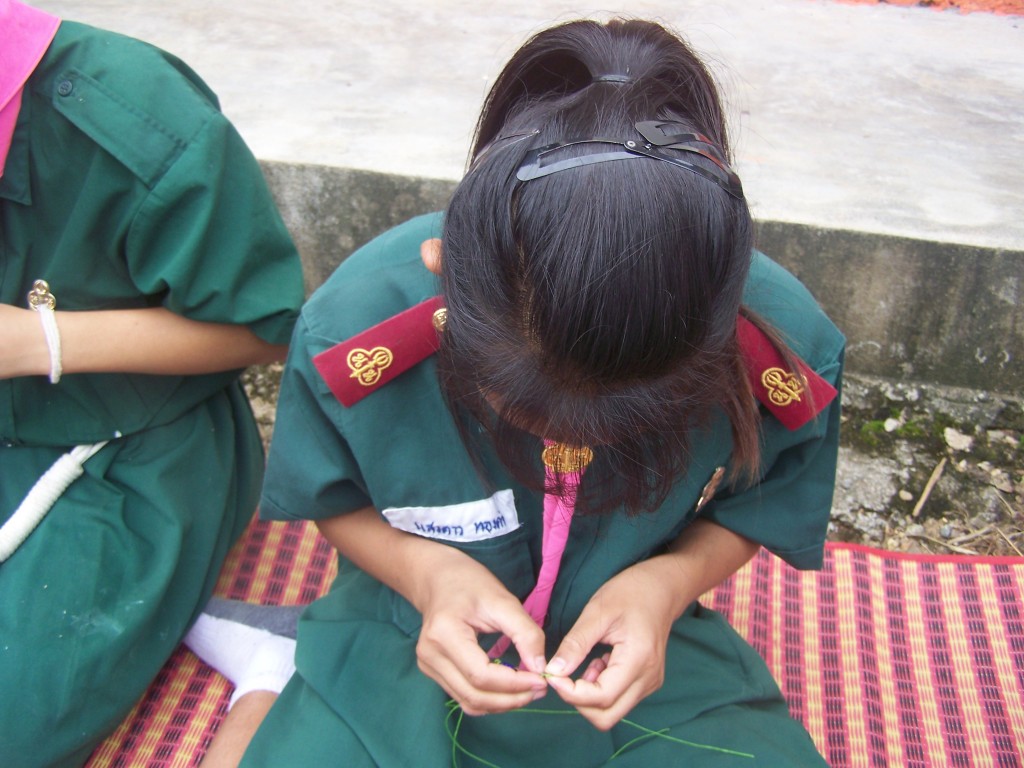
The children take to us immediately. I head over to a mat to meet with a 12-year-old girl who shows me how to weave a beautiful bracelet.
While I sit there, younger kids come up to me, handing me pieces of paper. I look at the paper — on it are volunteers names with the places they are from. I am handed sheet after sheet and write the same thing over and over: I am Diana. I am from America.
One little boy sits with me as I write, placing his tiny hand on my leg and looking over my hand as I scratch out the words in pencil.
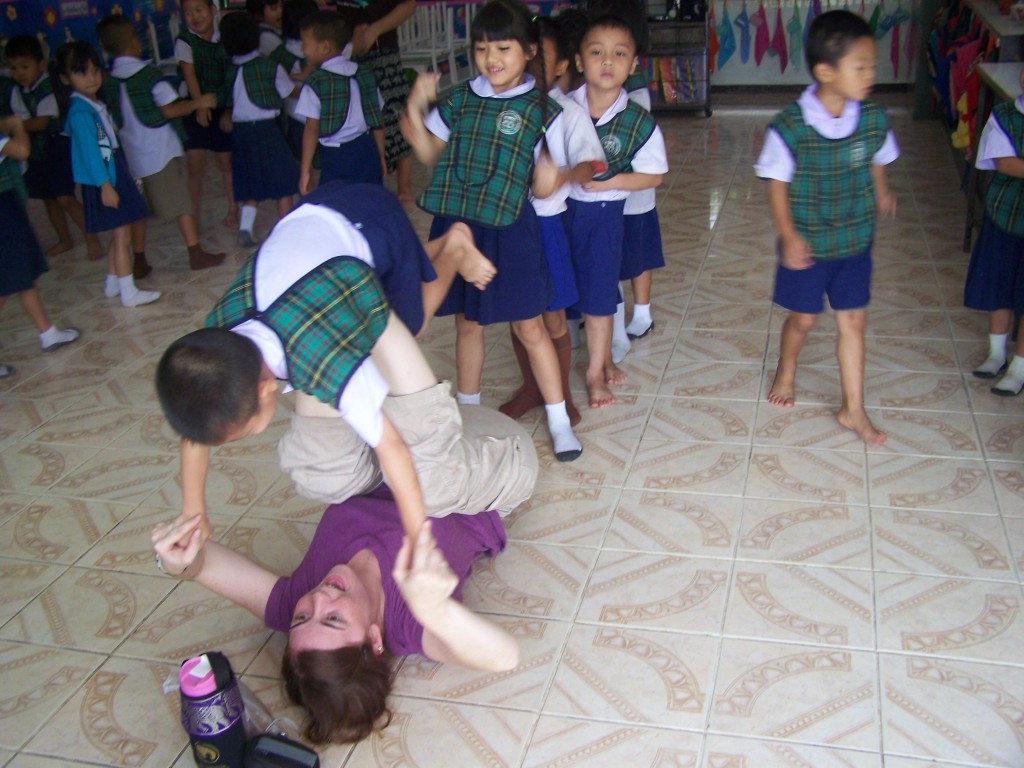
Pam and Steve are covered with kids when I arrive to the classroom of little ones. Pam, laying on the floor, is balancing kids on her legs, extended in the air. Another volunteer, Sonja, is walking around with two girls attached to her hip, one on each side.
I sit down on the floor and am swarmed. The kids are in love with my digital camera. We don’t speak the same language, but it’s obvious what they want: photos.
Of course, I oblige.
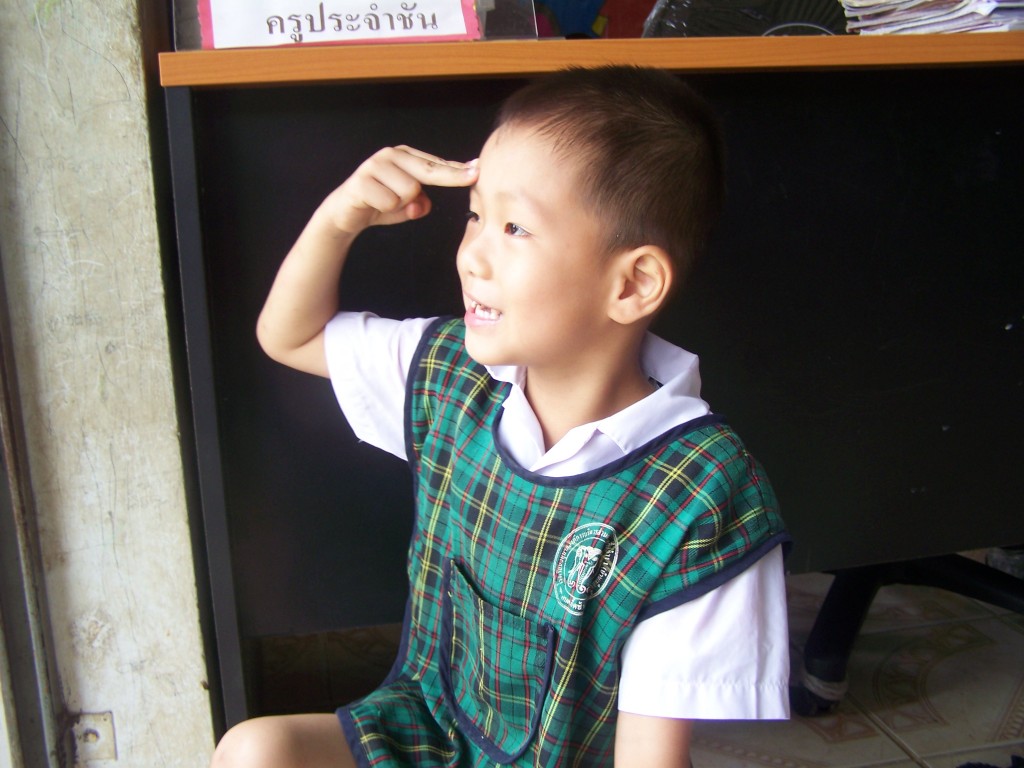
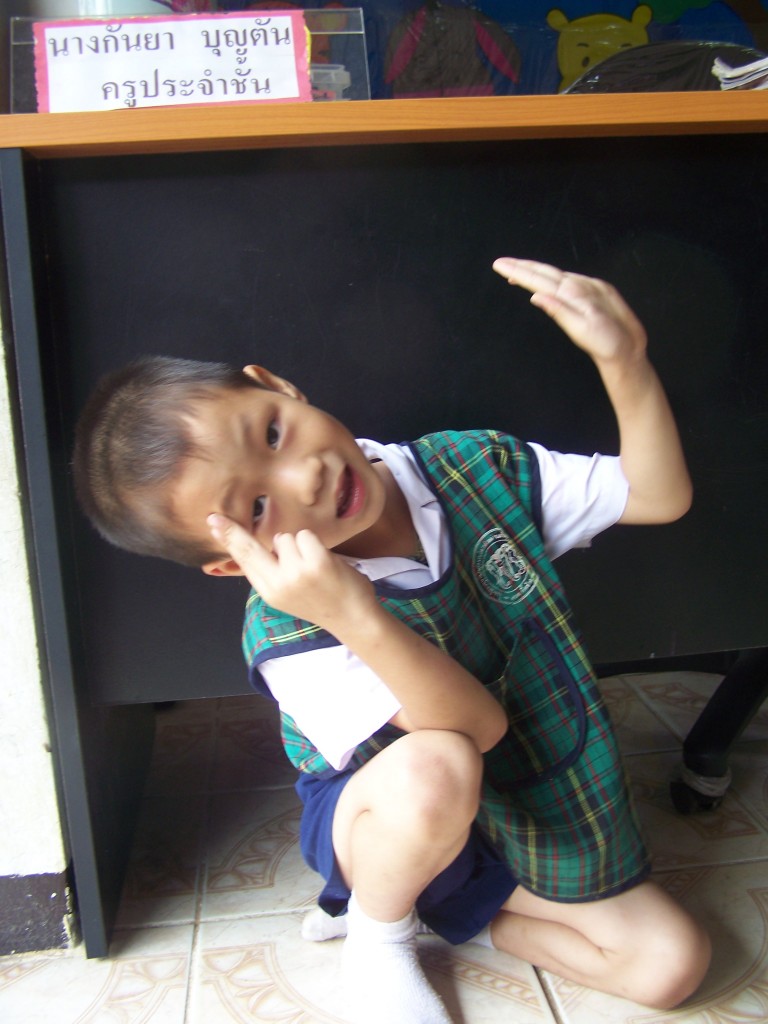
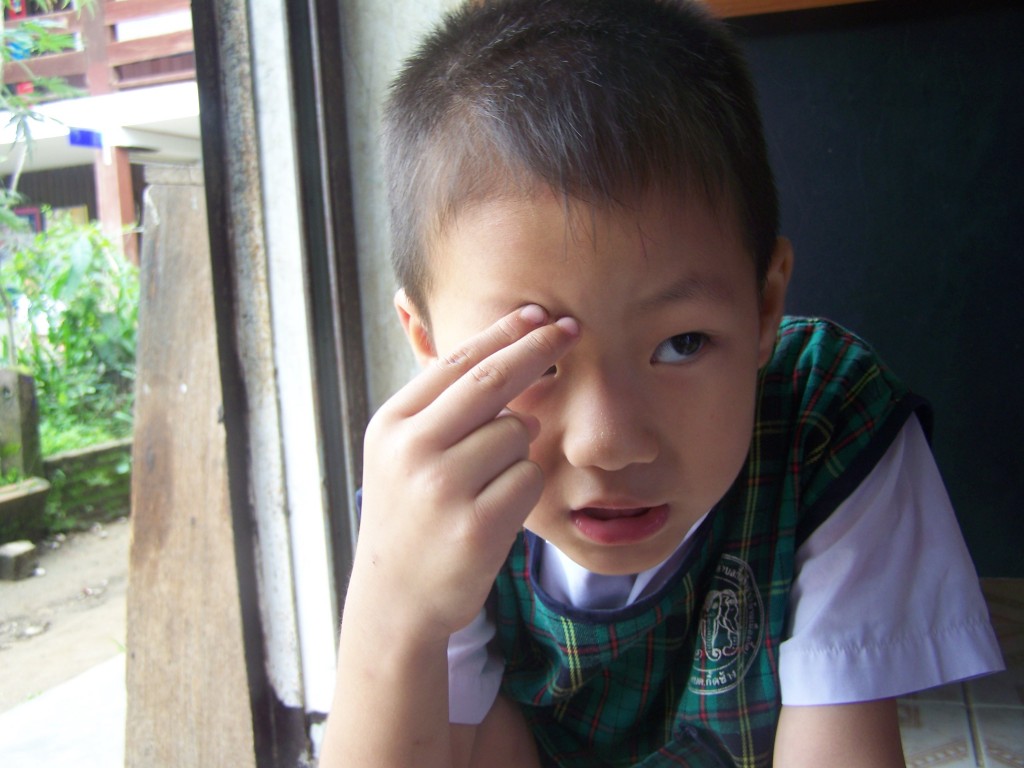
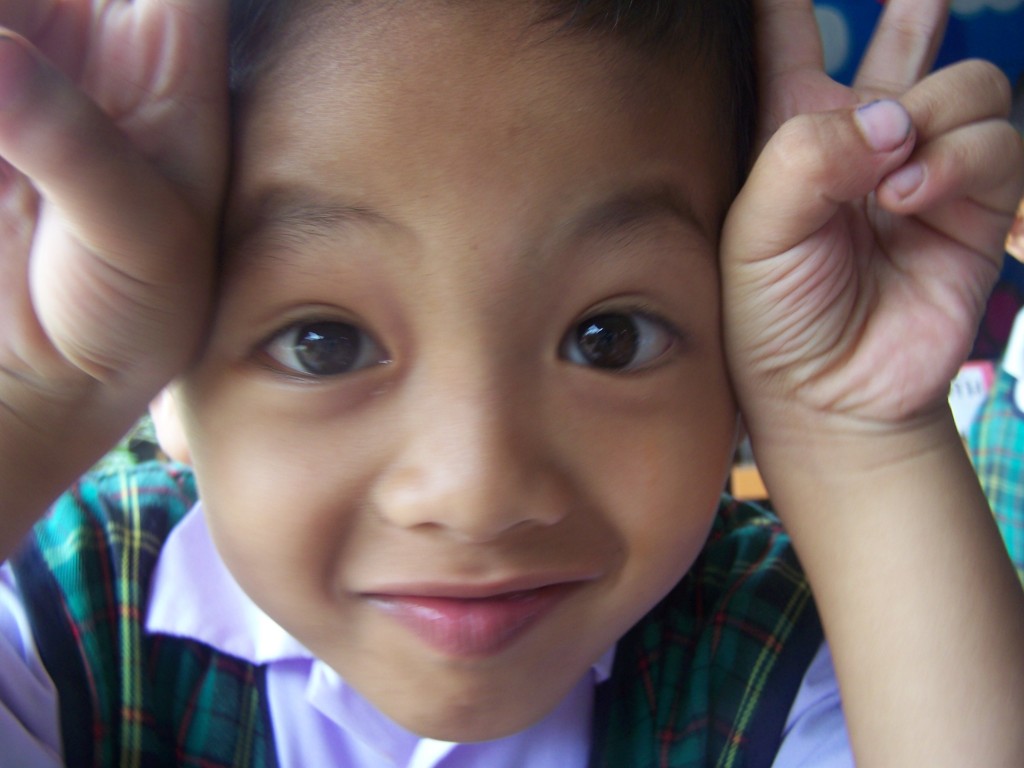
There is one little boy who can’t get enough posing. He stands there, flashing the peace sign, looking gangsta, whatever he feels in the moment, and looks at me anxiously, waiting for me to snap his photo. After each photo, he rushes up to me and stands next to me, looking at the image on the tiny screen.
He’s not the only one who hams it up for the camera. The boys are far more intrigued by seeing their photos than the girls. The girls are being carried around the room or juggled on Pam’s legs.
I stay with the younger kids for a little longer, letting them take my camera and take their own photos, then I head over to the food area and grab some sesame balls and a “milk shake” which is really powder milk with some generic Oreos and ice blended together. And, it’s damn tasty.
Drink in hand, I split off from the group and wander a little down the road from the school. There’s not much around it … just wooden houses and jungle. But, it’s charming and peaceful in it’s own right.
After two hours at the school, Jack and Chai gather us back into the vans and we return to the park. When we get back to the main compound, I am thrilled to see the founder of the park, Lek, sitting at one of the wooden tables and benches.
I’ve been wanting to meet her for days, and now I have a chance.
A quick train ride from Lisbon lies the hilltop town of Sintra. It’s a quaint little town that conjures up memories of times when fairytales were quite possibly real, with its maze-like cobblestone streets, castles and palaces.
Once the summer home of Portugal’s kings, today Sintra offers a place for history buffs to roam the streets and explore all of the town’s nooks and crannies. There are the homes and streets that show evidence of a long life …
For the traveler seeking a place to rest their feet, there are cafes to enjoy the fresh air and scenery.
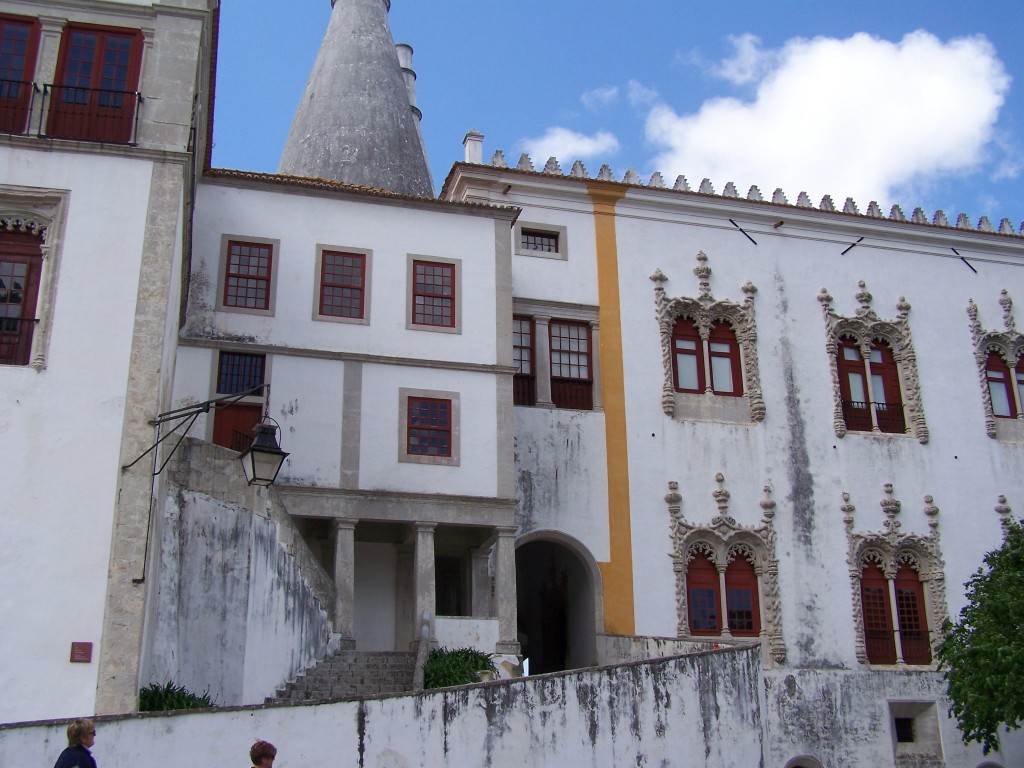
In the center of town, there are plenty of options for culture. The most popular option (and largest) is the sprawling Palacio Nacional de Sintra, a UNESCO World Heritage Site and a medieval royal palace that is a focal point of Sintra.
There are also views of the Atlantic Ocean. On a clear day, it is very possible to imagine seeing all the way across to the other side of the world. (My favorite view is actually at a Chinese restaurant near by the train station.)
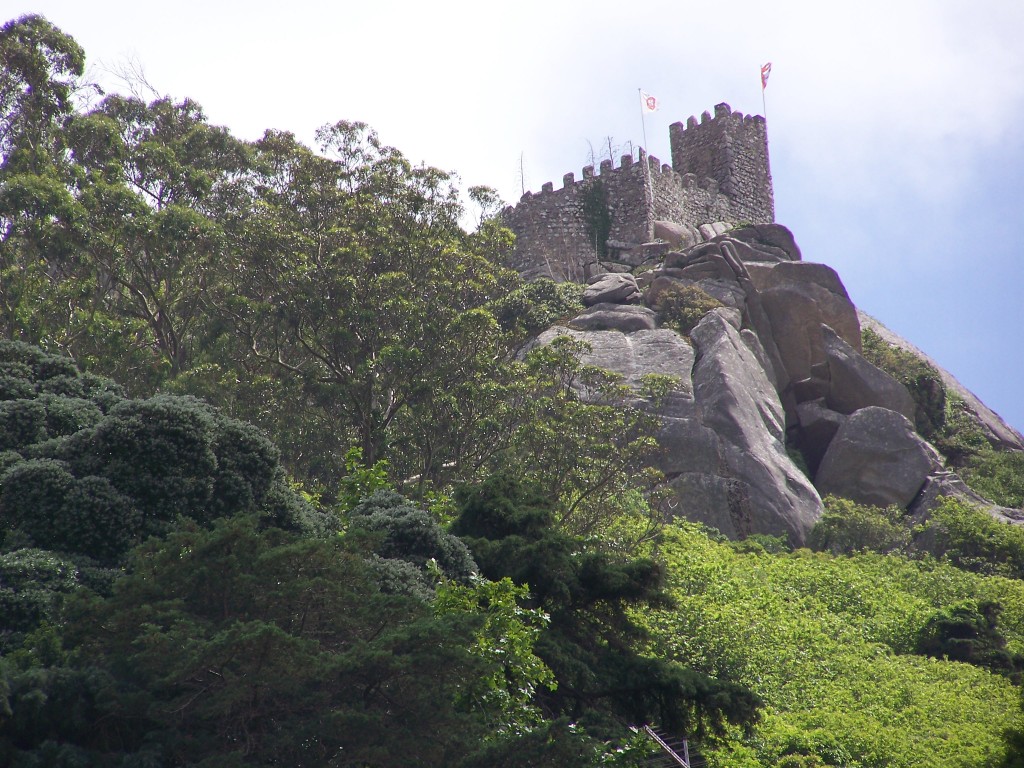
At the top of the town, there are the eighth century ruins of Castelo dos Mouros and Palacio de Rena. You can reach them either on foot (it’s a good 3 km hike up to the Castelo and another bit to the Palacio) or via bus (buy a day pass) to the top of the forested peak.
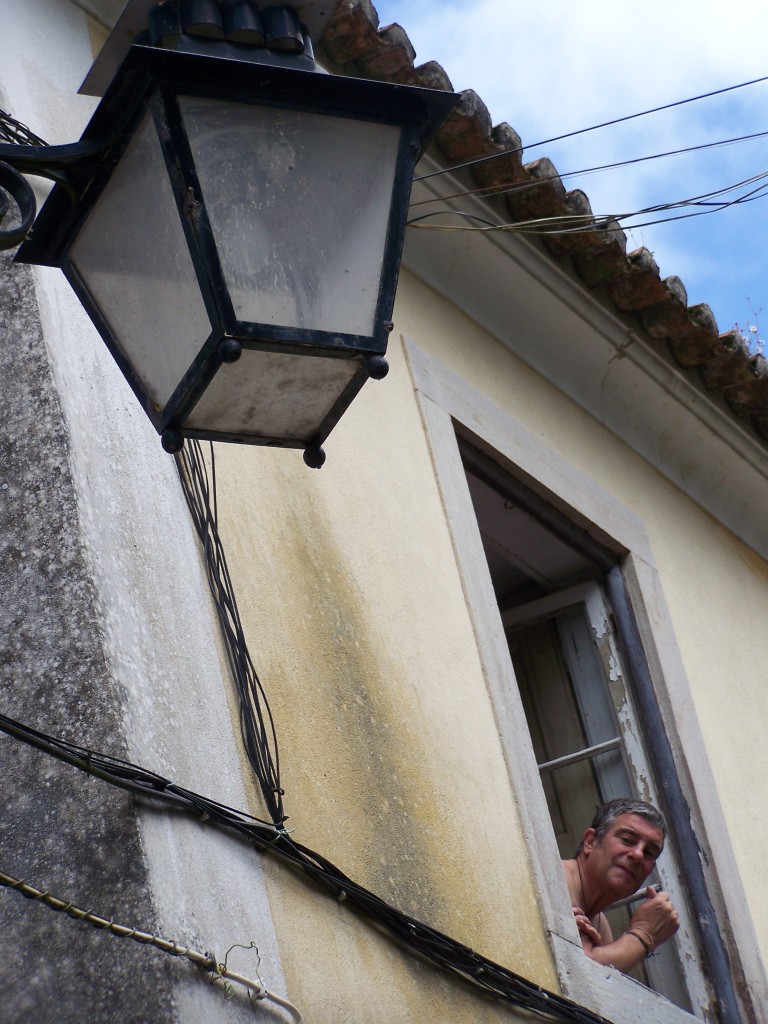
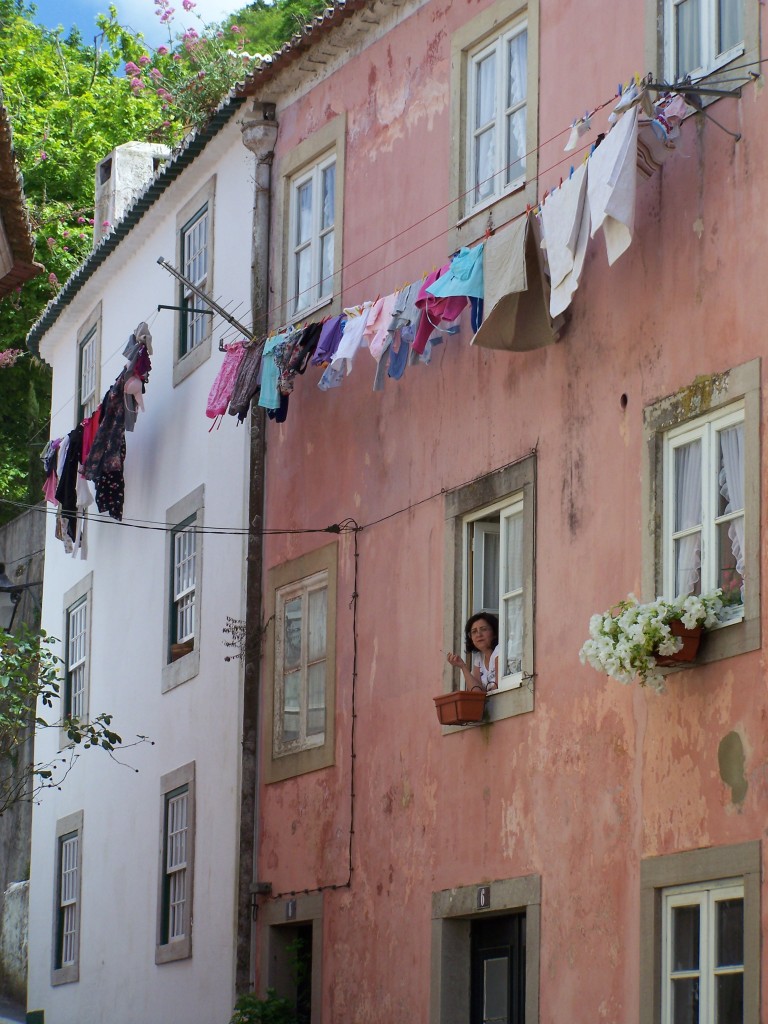
In Sintra it isn’t uncommon to find someone with their head jutting from an open window, taking in the sights and sounds of the world outside.
This friendly man stopped me on the street below and asked me to take his photo …
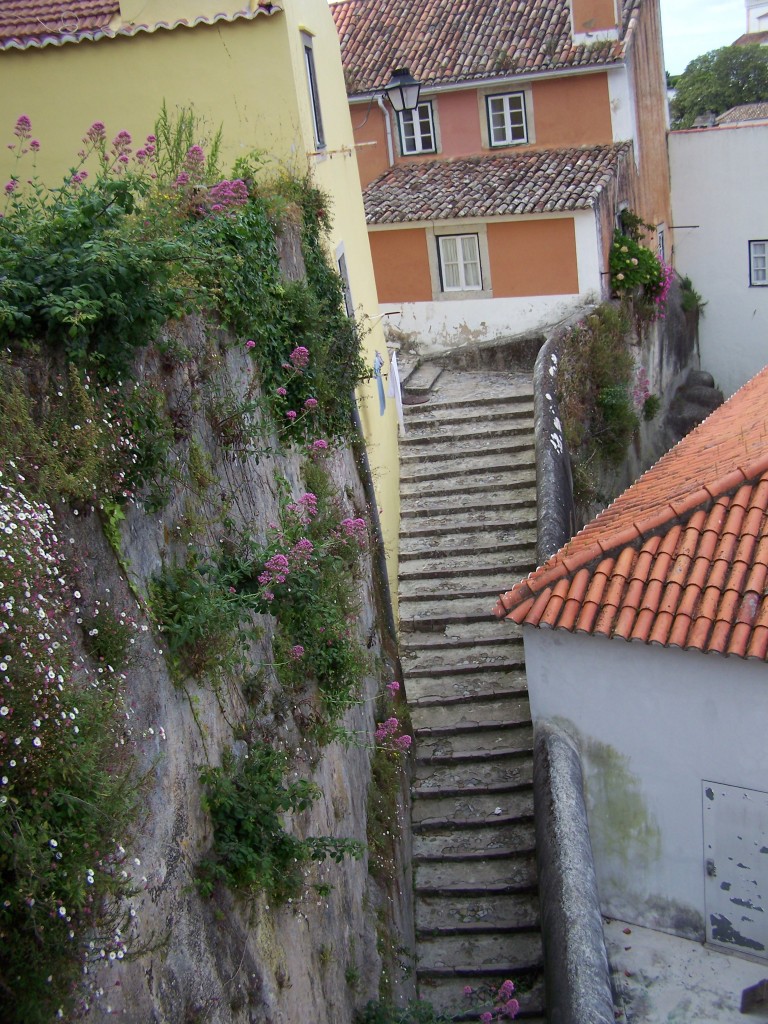
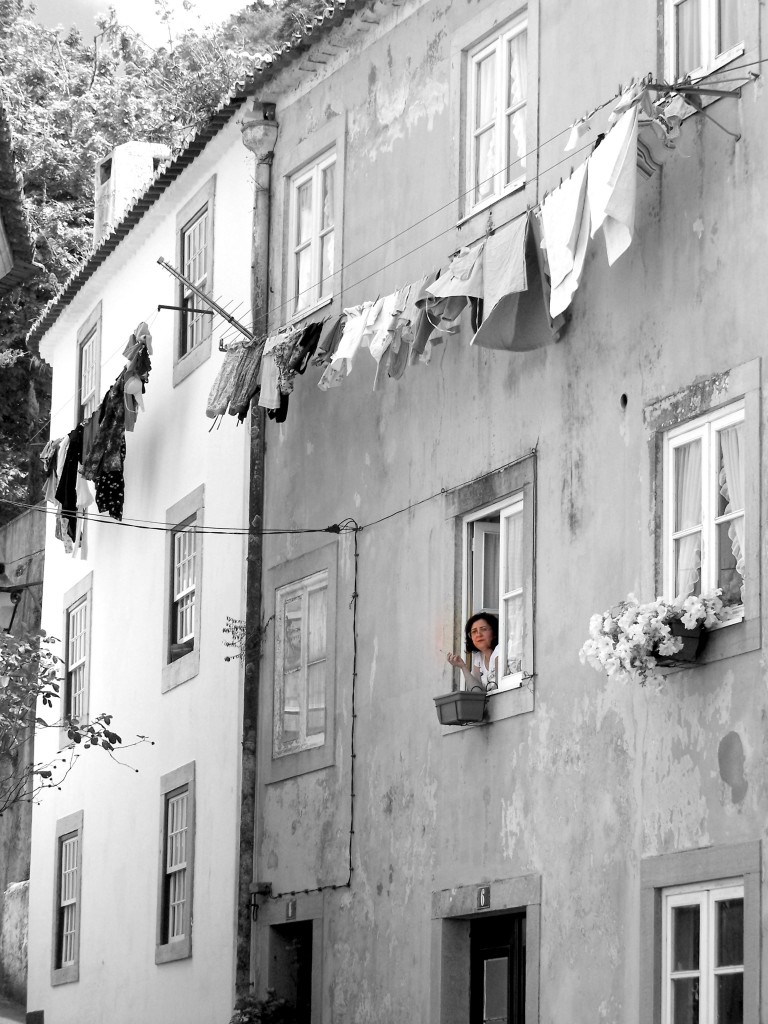
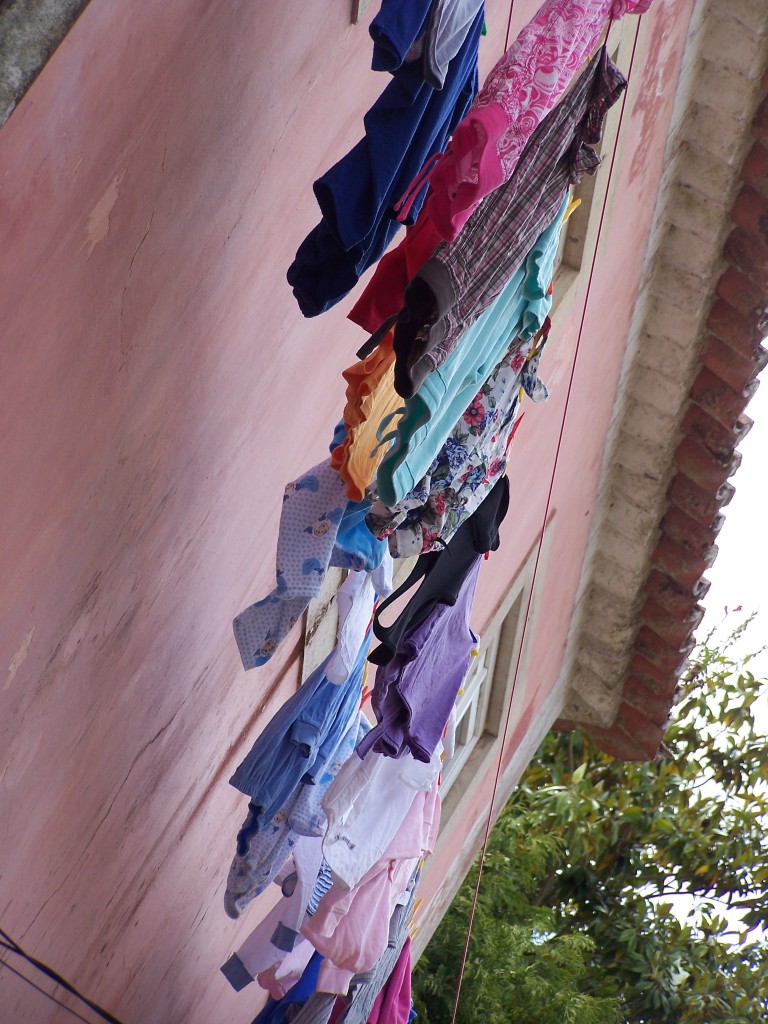
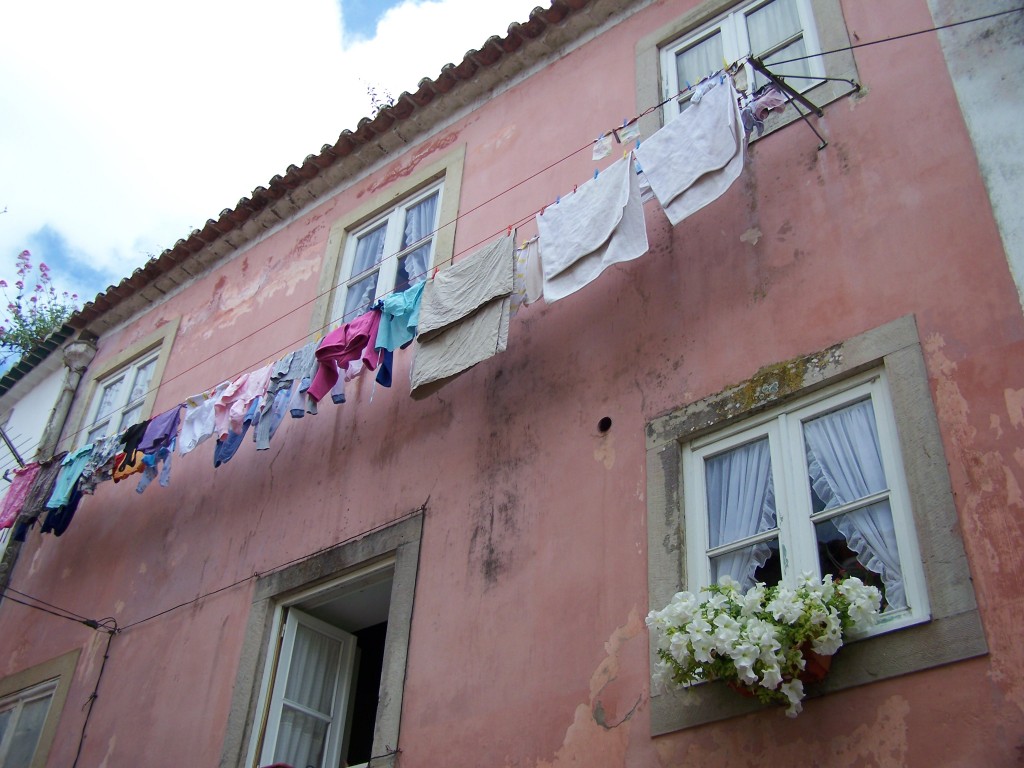
And then, there is my favorite thing to do — wander around the maze of narrow cobbelstone streets, taking in the homes awash in bright colors … and the display of clothing drying on lines strewn between windows and buildings.
Getting there: From Lisbon, hop on the train (there’s one every 15 minutes) to Sintra at Rossio station. The ride is about 40 minutes and shouldn’t cost more than a couple of euros.
Sadly, I was sick when I visited Sintra, so there was no hiking up to the ruins. Have you had a chance to visit Sintra? What was your experience?
Traveling ’round? If you want to check out another city where fairytales echo in your mind, check out Edinburgh. Stay at a hotel in Edinburgh’s city centre and head out to explore the magic of this gorgeous Scottish city.




































 D Travels 'Round