Editor’s Note: The following is a guest post from Nancy Sathre-Vogel. If you are a writer and interested in providing a guest post, please contact me.
Does our brain change when we travel?
I’ve read a lot of blog posts throughout the blogosphere about how travel changes people. People talk about becoming more comfortable in their skin, about an increase in confidence, and more knowledge of the world. There is no doubt – travel does change people. Quite literally.
I doubt most of us realize just how fundamentally we’re changed by the travel experience, but our brains react to our experiences at the cellular level. In other words, your brain structure literally changes in response to your experiences.
Each one of us is born with all the brain cells we’ll ever have – somewhere around 100 billion of them. That’s a one with eleven zeros behind it. In other words – that’s a lot of brain cells.
Those cells are pretty much worthless unless they are connected together, and that’s the job of the dendrites. Dendrites grow in response to challenge and stimulation.
The most crucial job your brain has to do is communicate within itself. Its cells need to “talk” to each other. That’s what the dendritic network does – it sends messages between brain cells.
Let’s take an example. You’ve played video games before right? Remember how hard it was when you first started? How you had to study each and every aspect of the screen and reason it all out to figure out who was going to be where and what the consequences of being there were? It was hard. It was frustrating. It was challenging and stimulating.
Fast forward a few months and you’ve now mastered the game. Now you sit at your computer and play the game effortlessly. It’s like you’re on autopilot and your fingers somehow know what reaction they need to make in response to what’s happening on the screen.
In those months, your brain created a network of connections between your brain cells to facilitate your efforts. Instead of the message needing to scramble from one part of your brain to the other, your body created a network to take the messages directly where they need to be.
Fast forward another couple of months. By now, you’ve mastered the old game and have moved on to another. This time, however, the learning curve isn’t quite so steep and you master the game a bit easier. Blame all the work you did on the first game for that.
What’s happened is that your brain has done the hard work of creating the network. Now, you can call that into play. In effect, you can hijack the dendrites that were grown for the other game, and utilize them to facilitate learning the new game. In essence, you had a “hook” to hang the new information on, so it slotted into your existing framework more easily.
That’s exactly what’s happening when you travel.
The brain is changing ...
The first time you visit a ruin site, you’ll most likely be overwhelmed. So many new pieces of information bombard you – sights, sounds, smells. History, architecture, and lifestyle. You’ll pick up a bit of the information; your brain will grow a few dendrites to process what you’ve learned.
Now you visit another ruin site from perhaps a different civilization entirely. You’ve got the “ruin network” started in your brain, so you’ll slot whatever new information you can into the existing framework. With whatever doesn’t fit, your brain will grow new dendrites to make sense of it.
The extensive dendritic network is hard at work here.
Over time, and hundreds of ruin sites, you will have created an extensive dendritic network in your brain. You’ve got all those seemingly random bits and pieces of information neatly organized within your brain and you “know” it. The information is readily retrievable and can be applied to anything.
Is this all to say that travel is essential to create an extensive dendritic network within your brain? No. As long as you are in a challenging, stimulating environment, your brain will be working to make sense of your surroundings. You’ll be growing dendrites and slotting information into what you already know.
But while traveling, you’re automatically in challenging, stimulating environments rather than having to seek them out at home. So really, heading out to travel may possibly be the easiest way to learn everything. Even “school” stuff.
About the Author:Nancy Sathre-Vogel is chief blogger at Family on Bikes. Together with her family, she spent three years cycling from Alaska to Argentina. Now, she back at home writing books and blog posts about their adventures.
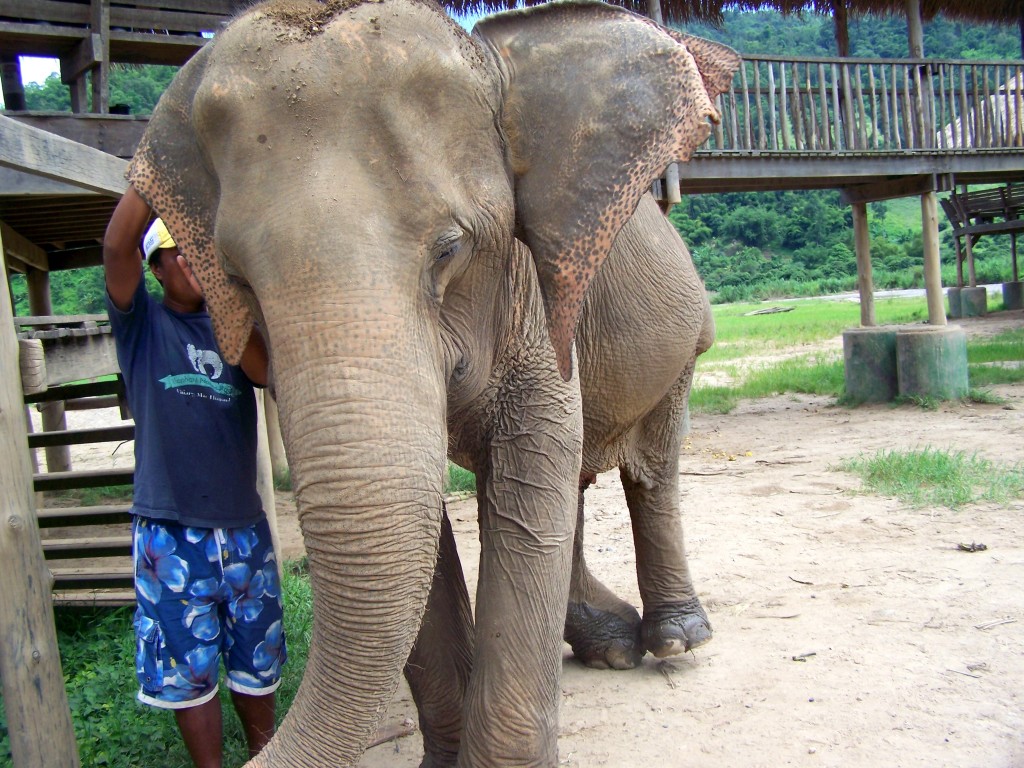
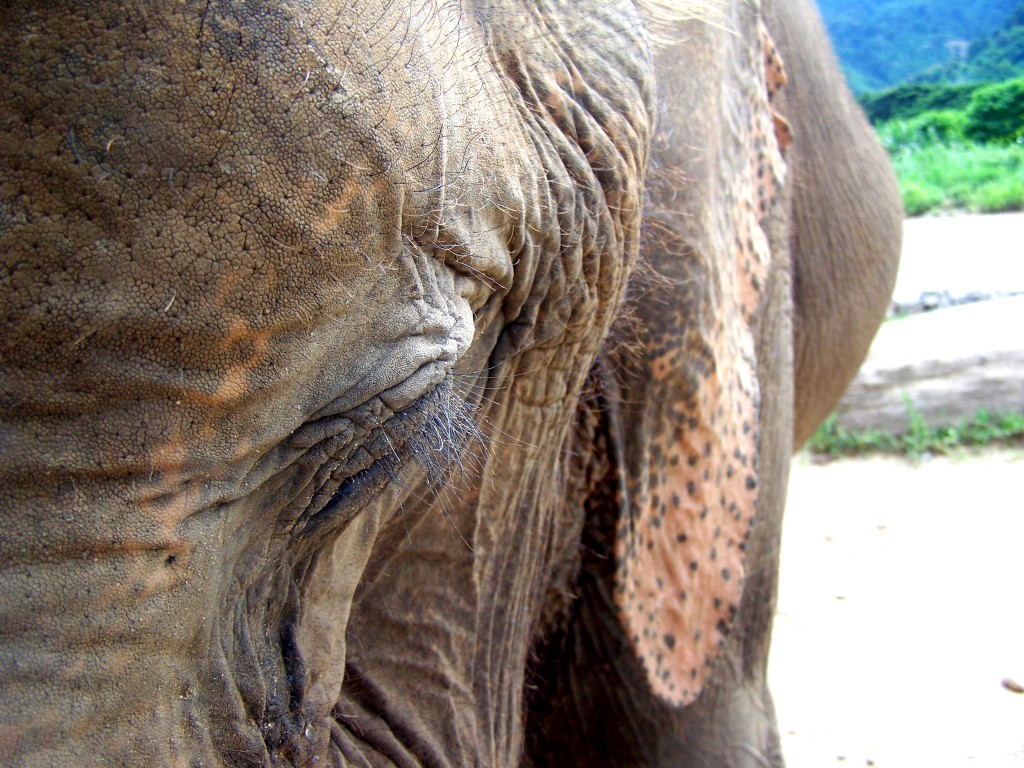
Medo, one of the abused elephants at Elephant Nature Park, rests against a log. Despite her very apparent injuries from past abuses, she is able to live day-to-day at the park.
To say there are a lot of tears on the last day as volunteers at Elephant Nature Park is an understatement.
At least as it relates to me.
If there’s one thing I have noticed during my week as a volunteer at Elephant Nature Park is that I cry. A lot. More than most people. Maybe it’s because my emotions are hard-wired to my tear ducts. And, combined with my love for animals and my admiration for these elephants, along with learning all of the awful things they are subject to in their pre-ENP lives, those tears just flow, flow, flow.
After seeing Mae Sai Roong stand following a day of heartbreak? Tears. Tears. And, more tears.
Dumping the last buckets of water over elephants in the river? More salty goodness down the face.
Saying “goodbye” to the first group of volunteers as they are ushered into the van and taken back to Chiang Mai? Yup. Stupid tears.
Of course, when Lucy and I decide to go spend the last remaining bits of time with “our” elephants on the gorgeous Sunday afternoon, it’s pretty much a recipe for watering of the eyes.
And yet, I do it anyway.
We have our plan: first, we’ll find Medo’s mahout and see if we can go down and see her, then it’s back to the front of the park to see Mae Sai Roong.
I want to see Jokia, too, but Jack says because she is blind, it’s not such a good idea to go and hang out with her. [If you want to read her story, visit the Park’s Web site.]
After we’ve dumped the last bucked of water over the gigantic elephant heads, she and I head to the deck where some of the mahouts are sitting, their elephants below them.
Medo’s mahout sits on a bench above her, watching her as she idly chomps on fruit.
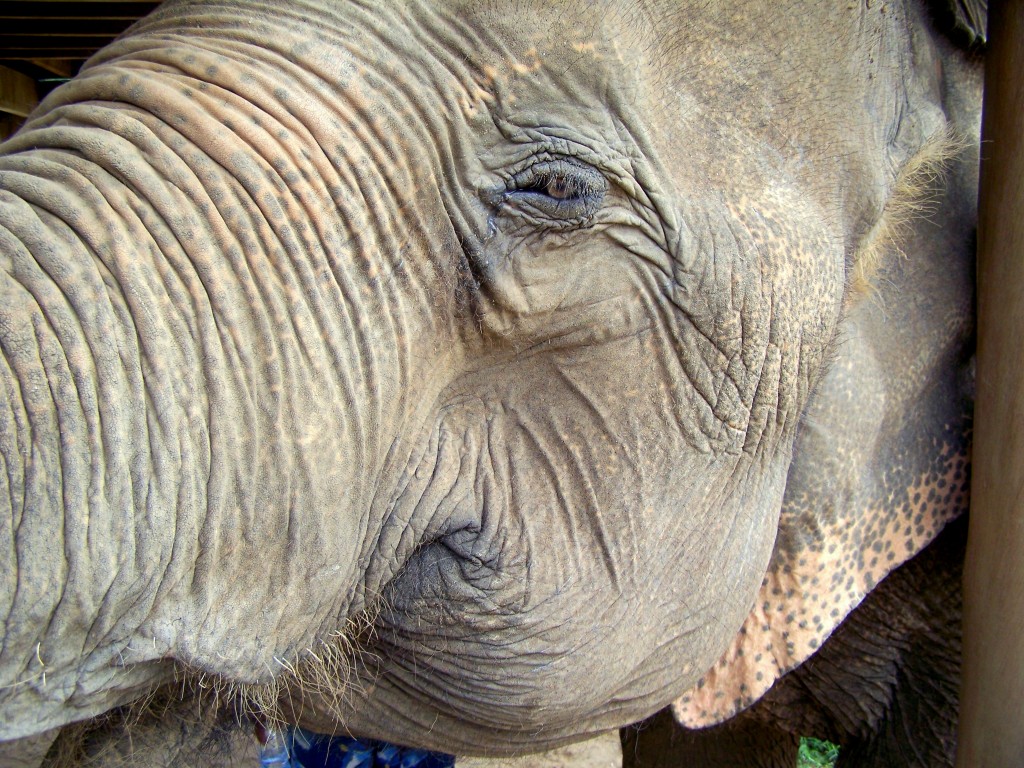
“Can we see her?” I ask him, gesturing down to the elephant, who is easily recognizable by injuries that have left a lasting mark on her body. I had a good look at the remnants of abuse on her body earlier in the week when I got up-close with the elephants.
He nods, stands up and walks with us down the wooden stairs to the creature.
I’ve loved Medo since the moment I saw her and heard her story.
She and I walk towards each other, her flapping her ears, me with a huge smile on my face.
I like to think both of us are smiling at our time together.
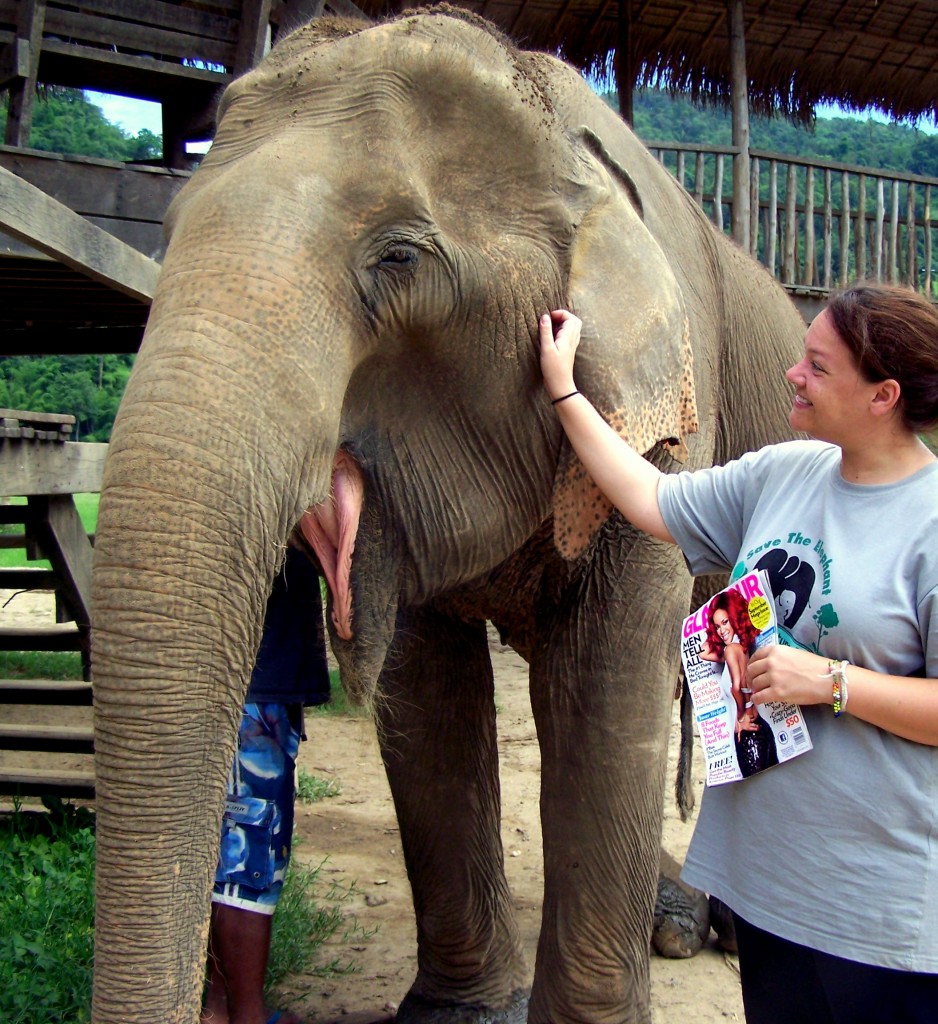
I look to her mahout, arm raised, about to reach up to her giant leathery gray and pink speckled face. “Can I?
He nods his head.
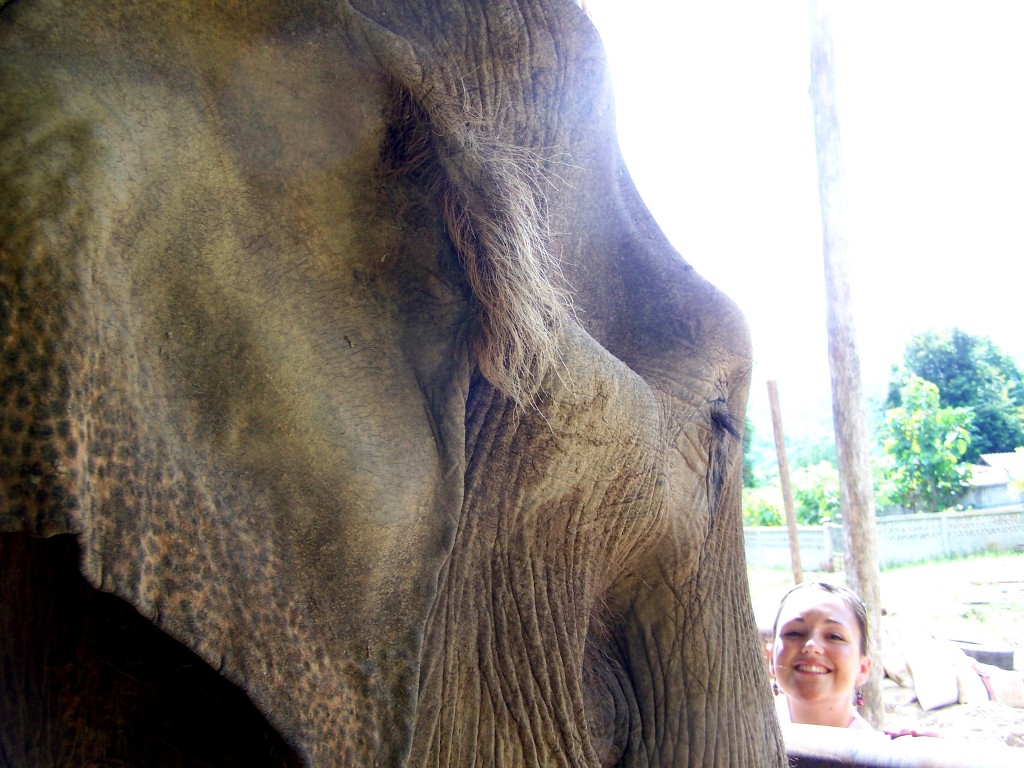
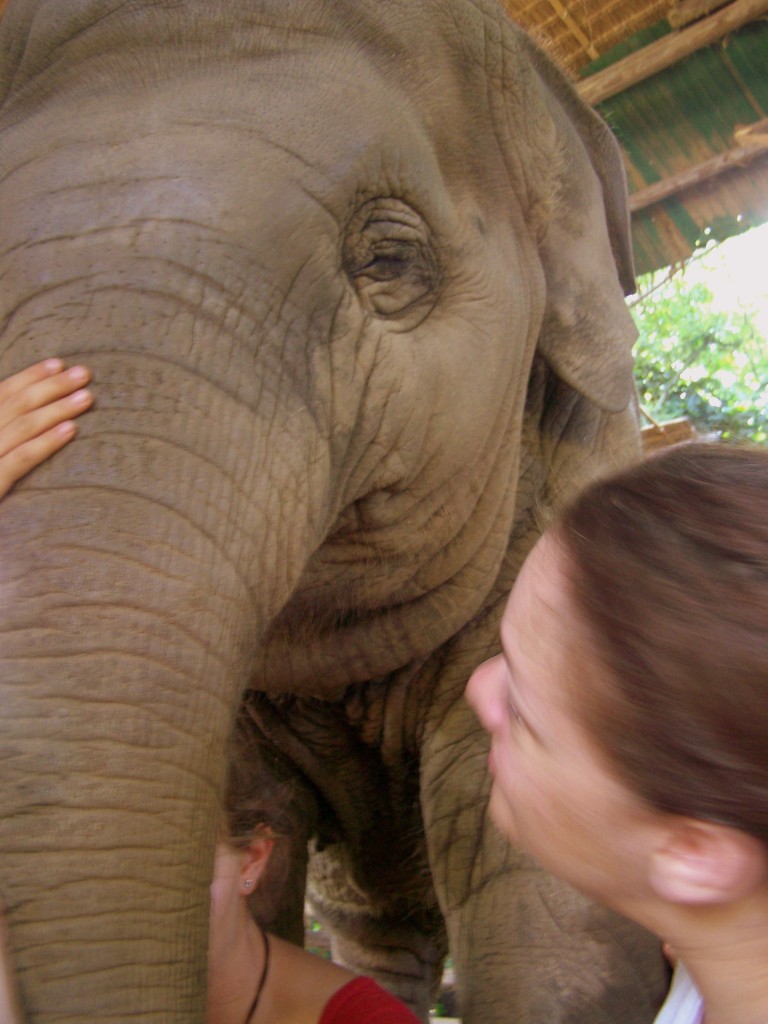
I place my hand on her face, behind her eye, and scratch.
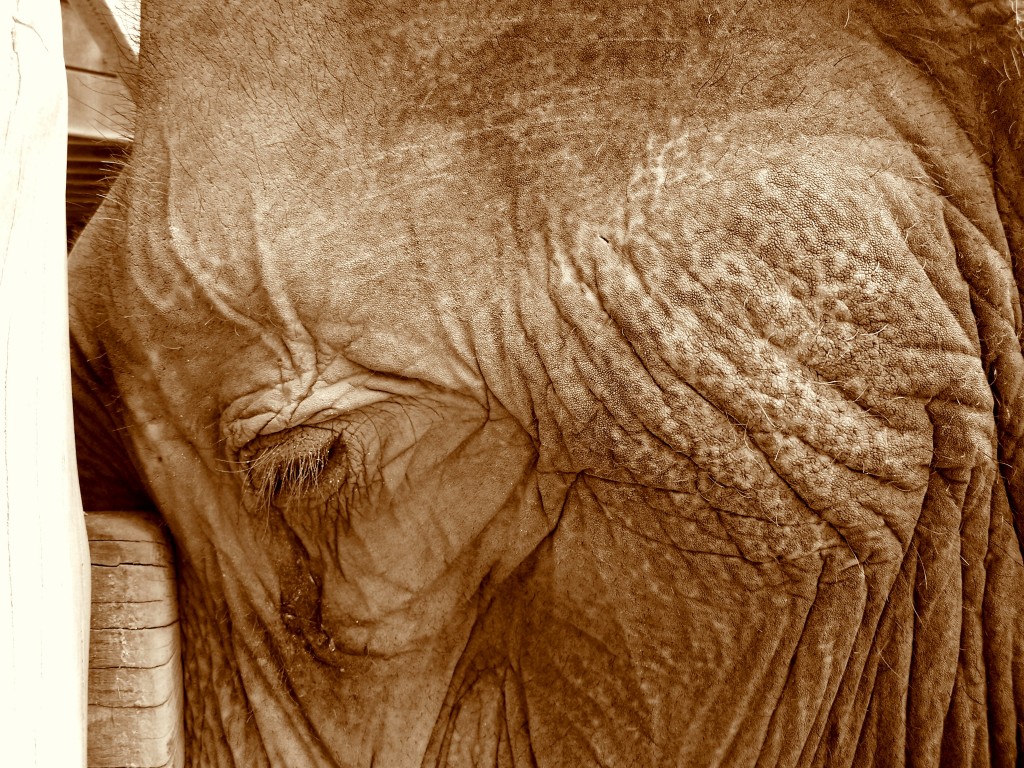
She closes her eyes.
Tears well up in mine.
I’m truly moved by this beautiful animal … her pain and struggles over as she lives the rest of her life here, at a place that within a week has touched me so deeply.
I whisper softly to her, telling her how lucky she is, that I love her. She presses the front of her face into a post and leans in, towards my hand as I scratch more.
I stand with her, filled to the brim with admiration and gratitude, for about 10 minutes. When it’s time to leave, I gently pat her cheek and promise to see her again one day.
Then, it’s off to Mae Sai Roong for Lucy.
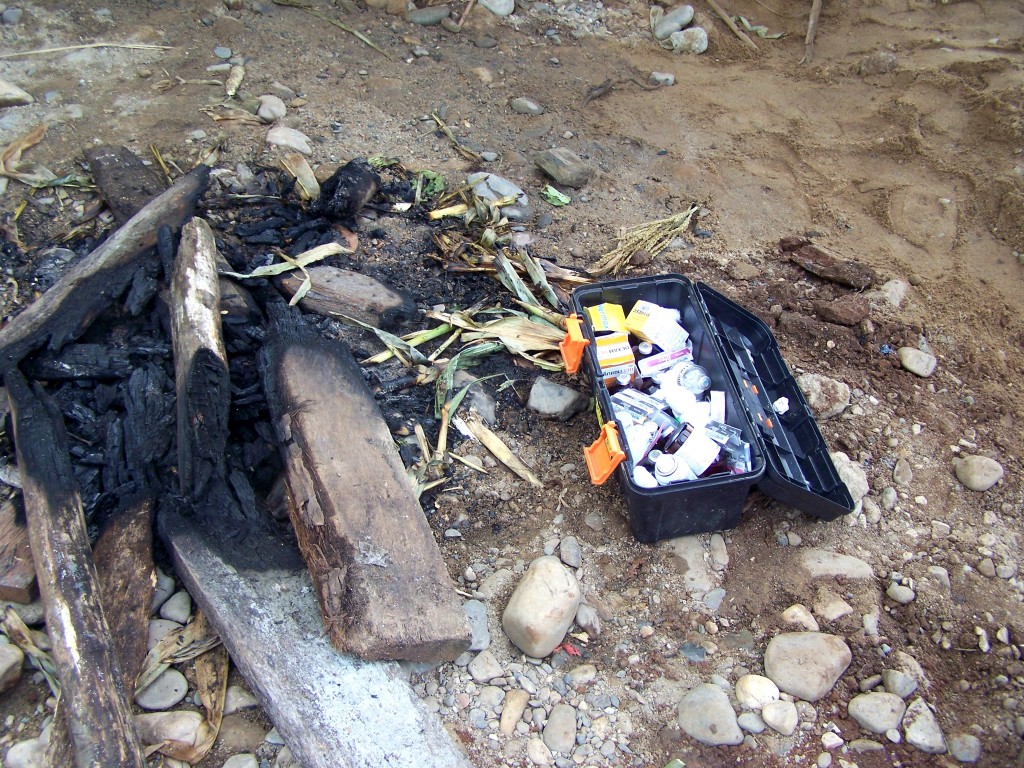
The makeshift bed for Mae Sai Roong is abandoned after a long 24 hours.Only remnants from a fire and medical supplies remain from the previous emergency.
When we get there, both of us freeze.
Mae Sai Roong stands up after nearly passing away the day before.
“I can’t believe it,” Lucy says as a smile breaks out across her face. “This morning, I didn’t think she’d make it. And now, look!”
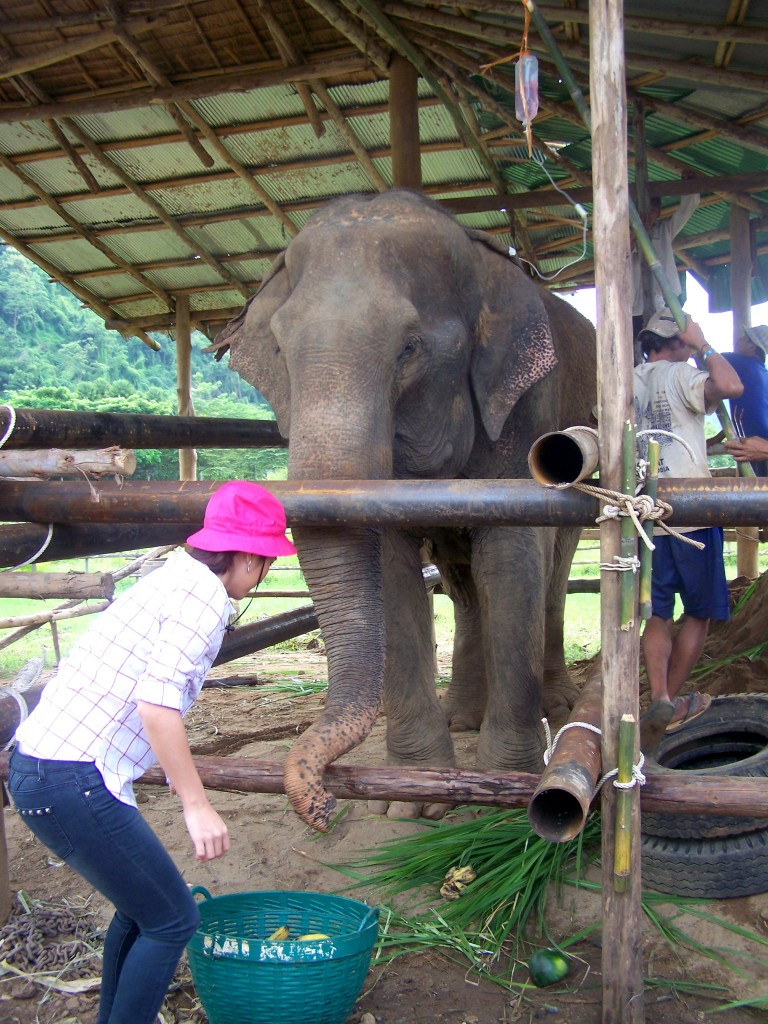
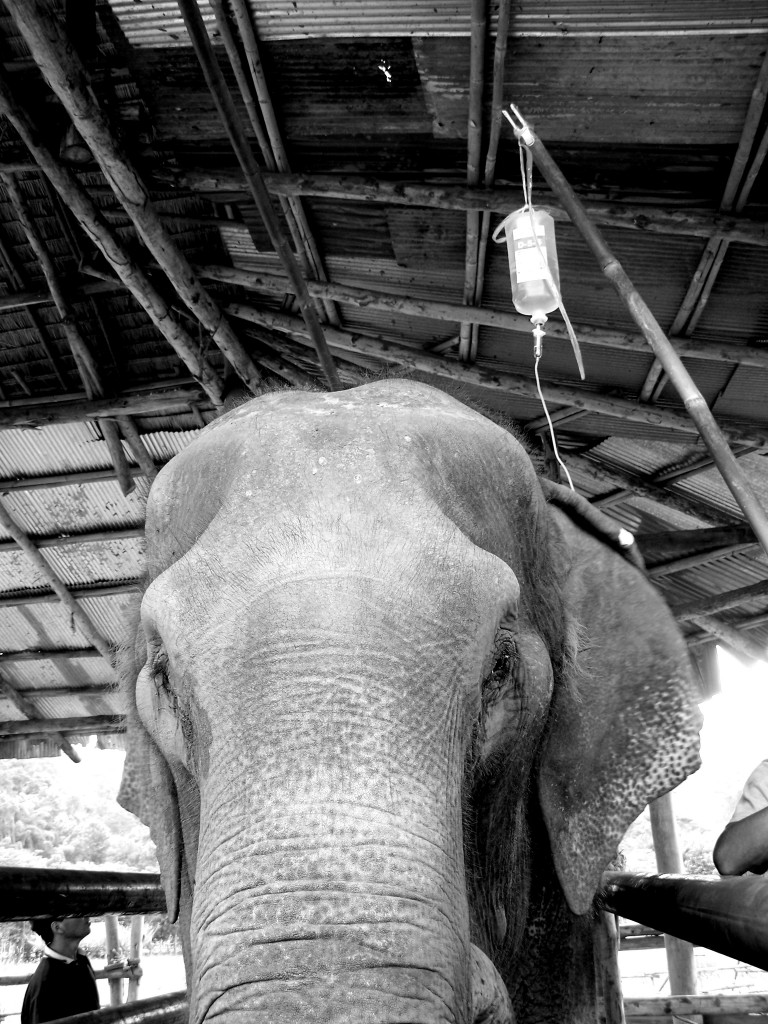
Hooked up to an IV, and with an appetite, Mae Sai Roong has come along way.
What a difference 24 hours make.
She’s standing. Flapping her ears. Chomping on fruit.
Tears of happy bubble up in my eyes.
Lucy smiles as she visits with the recovering elephant.
We reach our hands into a bucket and produce pieces of melon for her to eat. The elephant, who could barely muster the strength to swallow bananas the day before, sticks her trunk out through the fence and wraps it around our offerings, then shoves the fruit into her mouth.
We smile to each other.
Then, it’s time to go.
Time to leave the world of elephants.
I’m not even sure how to say a proper goodbye.
Lek is at the main compound when we begin to gather our things.
I walk up to her and hug her. This time, the tears choke me. I can barely muster a “thank you” to her. After all, how can I possibly convey my experiences in the form of “good bye.”
Instead, I hug her tightly, promise her I will share my stories.
As we drive down the dirt road, I wipe the tears from my eyes.
“D” and “skiing” are not used in sentences together.
I’m fairly confident the last time I put skis on and raced down a mountain was during President Clinton’s first term.
I’ll admit — I never imagined my first real foray into West Coast skiing would be in Las Vegas. As a teenager when I was able to whisk down those black diamonds, I envisioned myself clad in a faux fur hat and pink ski goggles racing down a majestic mountain on fancy skis in some resort town like Park City or other ski-bunny town.
Nope.
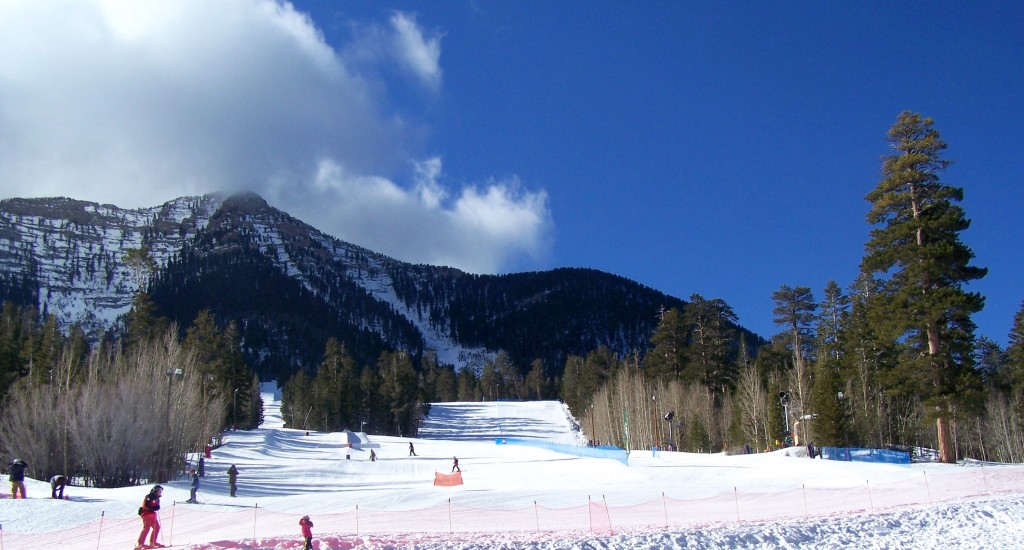
The first time in my adult life I faced the mountain west of the Mississippi was this past weekend. In Las Vegas. At Las Vegas Ski & Snowboard Resort.
Proof it’s Las Vegas!
Yes. Las Vegas has skiing.
And, it’s not inside some resort on an artificial mountain, it’s outside. In the mountains. With real snow. (Well, most of the stuff people actually ski on has been made by snow machines, but it’s still snow.) And, below that stuff is the real, fallen-from-the-sky deal. In fact, as we entered the holidays in 2011, Las Vegas Ski & Snowboard Resort, the only ski/snowboard resort in the area, had the deepest snow base in the region, measuring in at a whopping 50 inches.
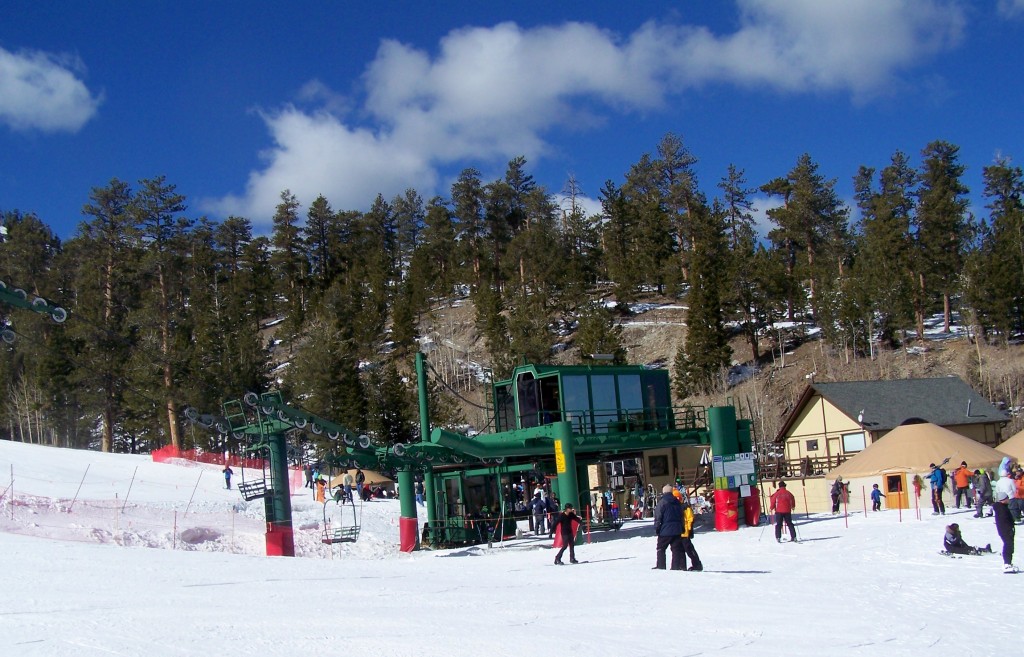
A pretty 45-minute drive from The Strip is the resort, tucked into the Spring Mountains’ Lee Canyon. Here, unlike the desert some 6,000 feet below, winter actually comes. Sometimes with striking force. Fortunately, the day I head up the mountain, the sun is shining.
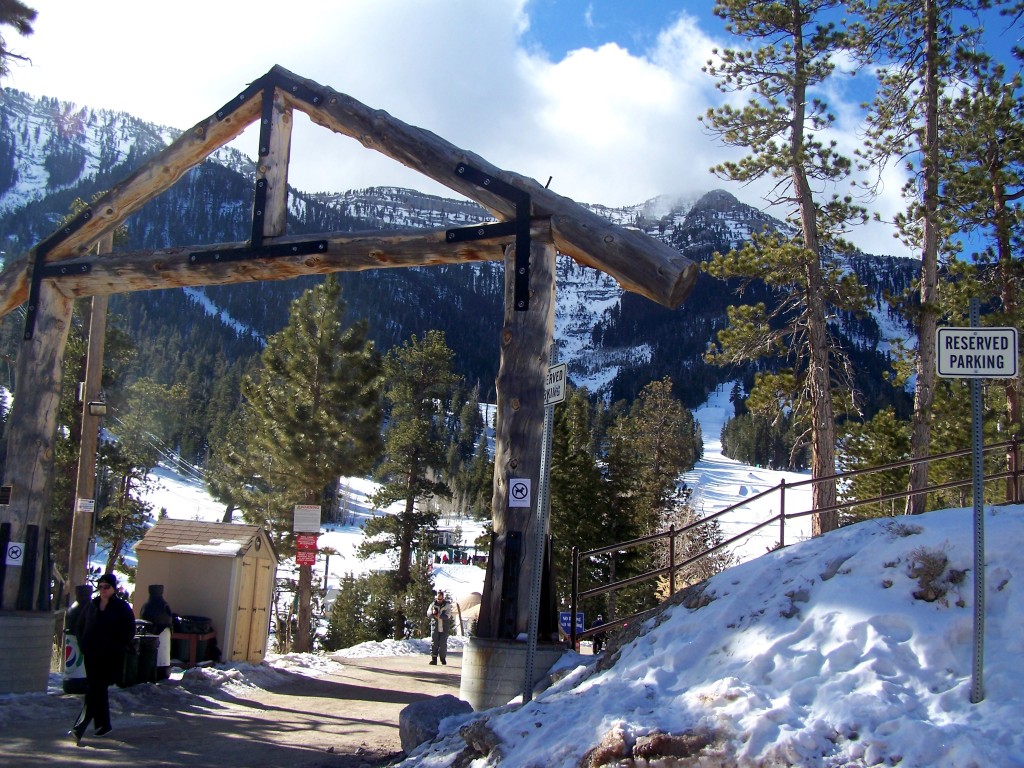
The rustic entrance to the resort.
The mountain attracts both locals looking for a day trip, and tourists keen on experiencing yet another side of Las Vegas.
The last leg of one of the blue slopes.
Las Vegas Ski & Snowboard Resort has 11 trails — only two of which are beginners (the ones I explored). The rest of the trails are blue (60 percent) and black (20 percent).
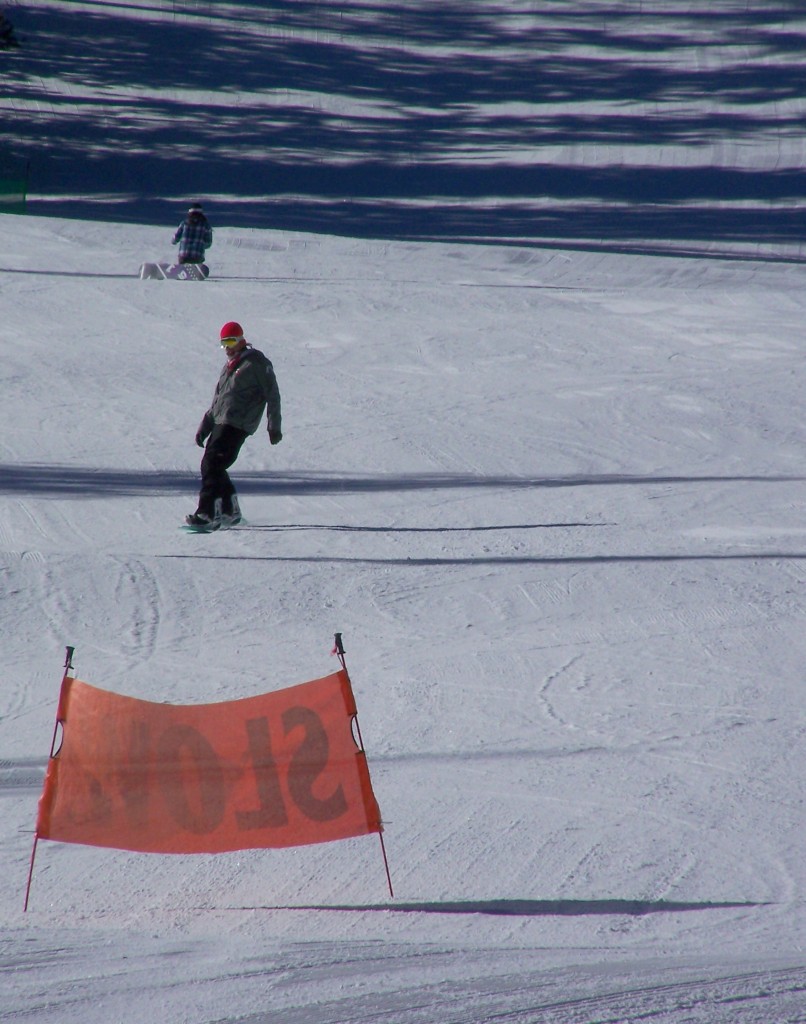
Thanks to the terrain park, the snowboarders outnumber skiers on the mountain.
The vertical drop is on par with what I’m used to from my Mid-Atlantic skiing days back home — a tamer 860 feet. In terms of distance, the longest run at the resort is 3,000 feet.
But, for me, that’s just fine.
Although I used to be a good skier, on the mountain that day my legs refuse to unfreeze from the oh-so-attractive “wedge.”
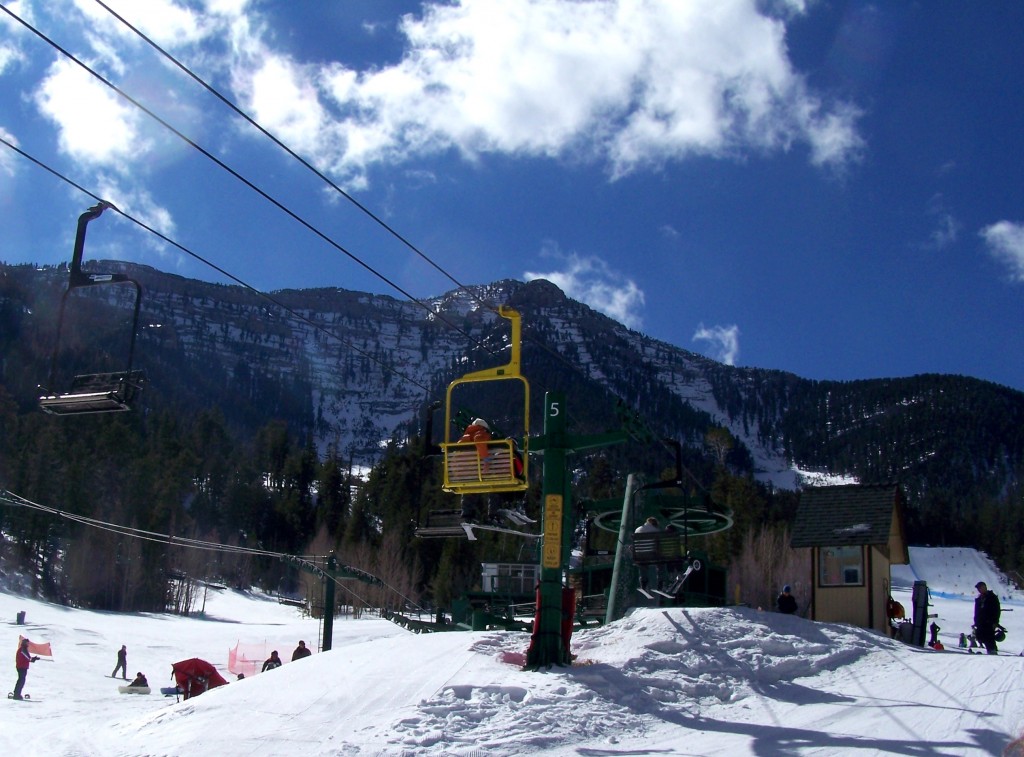
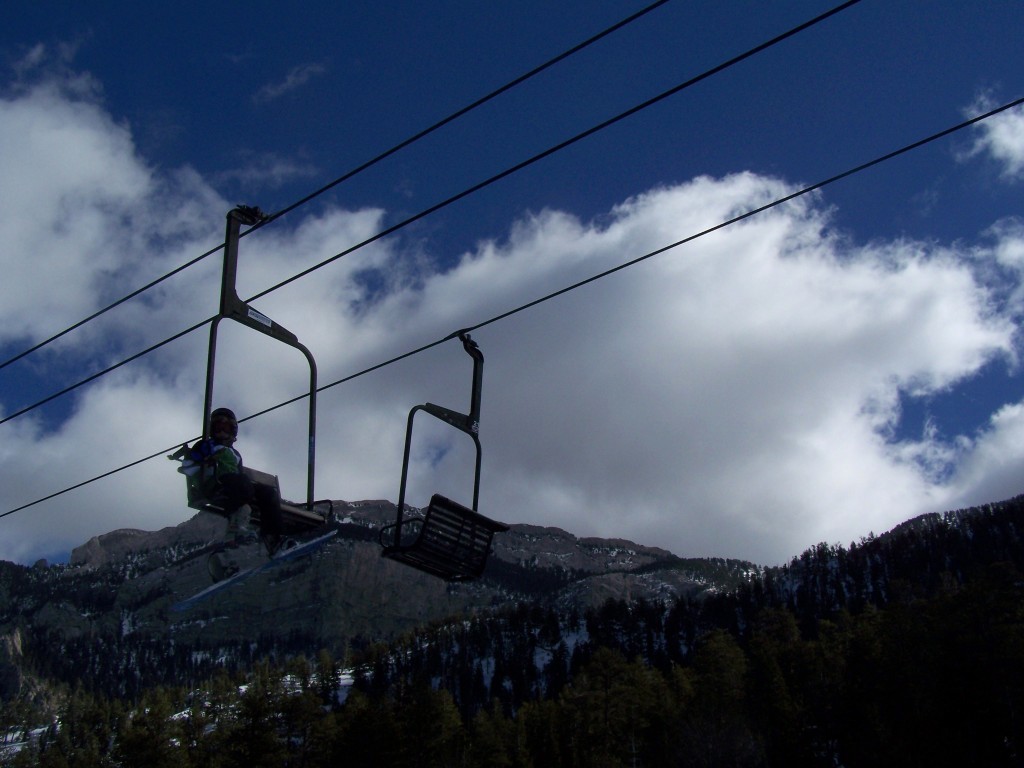
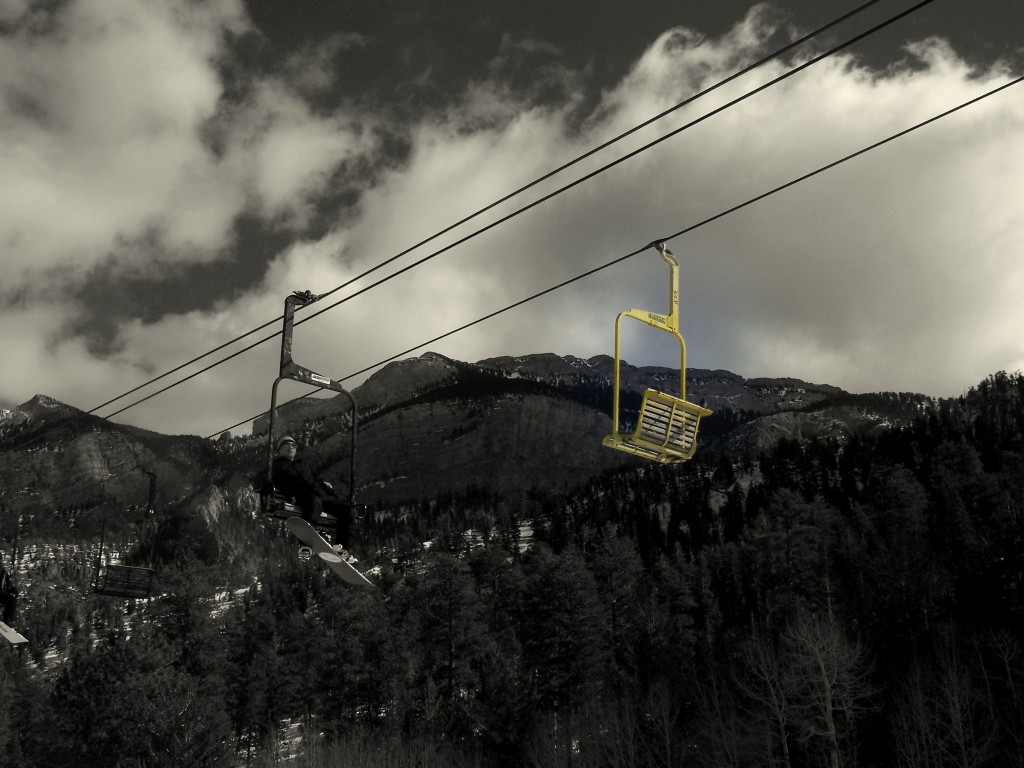
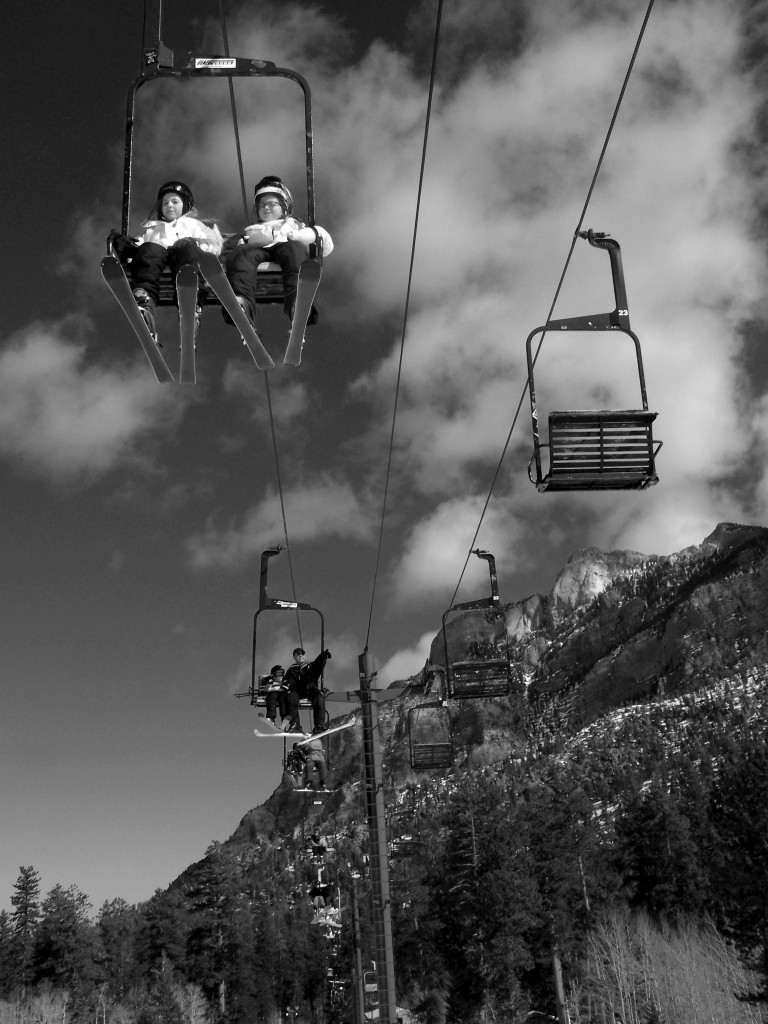
The biggest challenge for me wasn’t gliding down the mountain. It was getting on and off the lift the first time. There were no bars on these bad boys, so my hand wrapped around the frame in a death grip.
The wooden benches transport to the top of the bunny hill.
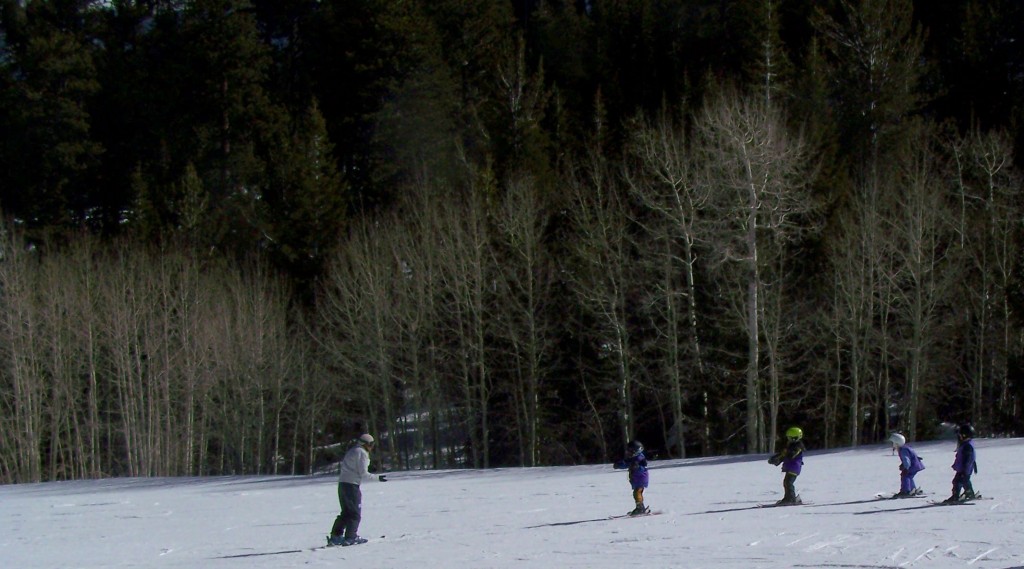
Granted, I was also a little nervous about the actual act of skiing. Since it had been ages, I joined a class quickly to get a refresher in the fine art of the “wedge.” The resort offers a wide-range of classes, including group and private lessons for skiers and snowboarders.
Little kids learn how to ski. And likely look more graceful than yours truly whilst learning.
I am very happy to report, I sustained no injuries on this sunny Las Vegas day. Which is more than I can say for other adventure sports activities I have tried … like the time I enjoyed para-falling instead of paragliding; or my sea navigation issues.
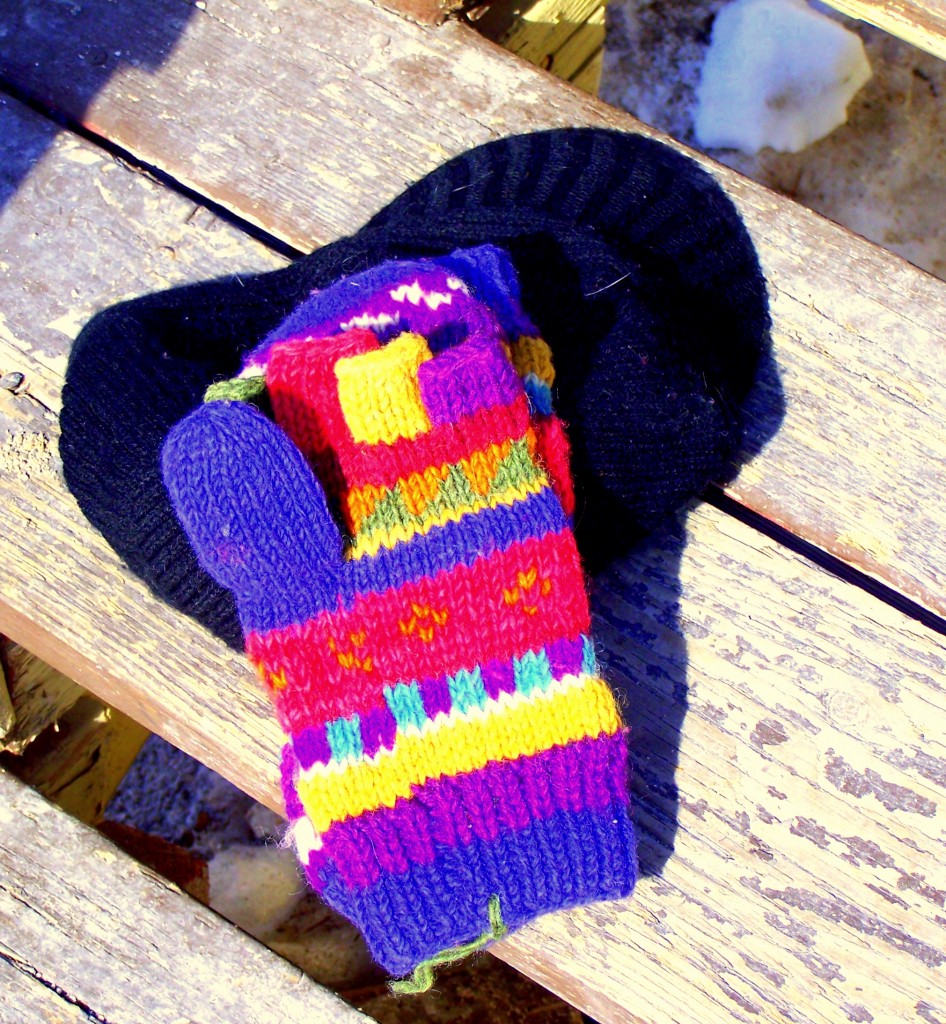
In terms of what to wear … I think it is safe to say my outfit was laughable. Being chic and a budget traveler don’t go together! I don’t own ski clothing, so I wore jeggings (I know …), a turtleneck, T-shirt, fleece vest and brought with me a pair of thick sweat pants, an REI fleece-lined jacket, knit gloves and a hat.
Hat and gloves I brought along to go with my sweats and fleece.
Fortunately, the resort offers clothing to rent so within minutes, I had a nice pair of waterproof pants to wear. And, had I needed it, I could have also rented a thicker coat. Bonus? Unlike my scrounged together winter monstrosity I assembled, the apparel at the resort won’t leave guests looking like they are a fashion “don’t.”
A gorgeous day in the Las Vegas mountains.
On this Saturday morning though, the sun was shining, the sky was nearly cloudless and the mid-30 temps didn’t require too many layers beyond what I was already wearing.
I also don’t own skis, or any of the other gear that goes with it, so I rented those there, too.
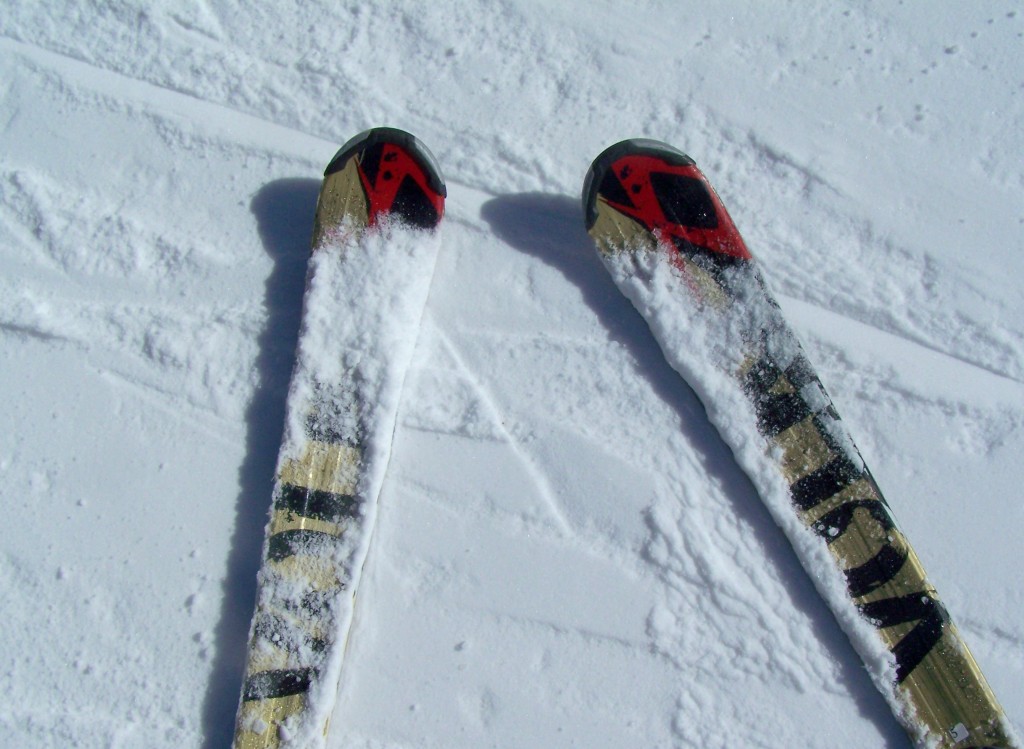
Skis covered with snow fresh from a quick run down the bunny slope.
When the snow melts, the resort turns into a gorgeous area for hikes winding through pine trees complete with fresh mountain area and perfect temps compared to the sweltering heat in town.
The bottom line:
Las Vegas Ski & Snowboard Resort is a the perfect place for people in Las Vegas looking to get a breath of the great outdoors without venturing too far from The Strip. The snow conditions vary depending on the weather and when I skied, it was packed and slightly icy. Price is fair, and deals can be found online to help minimize the expense. People coming to the mountain should not expect a Vail or an Aspen, but they should expect a fun day skiing less than an hour from one the most popular tourist destinations in the world — Las Vegas.
Lodging:
Unlike resorts dotting mountains in the west, this one doesn’t have on-site lodging. In fact, the closest beds available are on the other side of the mountain in Kyle Canyon with a choice of two properties — The Resort at Mt. Charleston or Mount Charleston Lodge.
Otherwise, it’s back down the mountain and into town. The closest major resort in town is Santa Fe Station.
Getting there:
From The Strip, take I-15 North to 95 North. Stick on that for around 30 miles then turn left onto Rt. 156 to Lee Canyon. About 17 miles up the road (note: don’t speed, there are police who will pull you over, take it from me), the road dead-ends into the resort. Don’t have a car? Don’t worry. The resort also operates a shuttle bus that departs from Town Square and Santa Fe Station around 8 a.m. every day, returning after 4 p.m.
Editor’s Note: I was a guest of the resort for the day, however all opinions are my own. If you have questions regarding this, please read my disclosure policy.
Review of Glow, a MANDARA Spa, at Tropicana Las Vegas’ Glo2 Facial
“It’s been, uh, awhile, since I had a facial,” I tell my esthetician, Jacqueline Zayed, when she comes into the dimly lit room at Glow inside Tropicana Las Vegas.
I search the corners of my mind to try and remember the last time I surrendered my face to someone else’s hands. October … 2009?
Yeah. It’s been awhile.
Laying in the room inside the megaresort of Tropicana marks my first treatment — ever — at a major Strip hotel.
Sure, all of the facials I have had in my life have been in Las Vegas, but never inside one of these behemoths.
Needless to say, knowing what I’m walking in to, and why others visit, I have high expectations.
Glow, a MANDARA Spa, is awash in mid-day sun when I check-in for my appointment. The hotel, which was recently renovated to emulate a South Beach vibe, added Glow in late 2011, so it’s pretty new to the Strip spa scene.
It a Blackberry photo, which means it’s no good. But, you get the point. The lobby of Glow.
Like the hotel and it’s new white wash overlay, everyone on staff here is clad in white. For some reason, seeing all of the staff in white instantly transports me to a place that is not Vegas. (Perhaps because it’s winter and white and winter don’t go together, even if I am smack dab in the middle of the Southwest and the desert.)
The man who checks me in hands me a mini bottle of ice cold water and instructs me to take a seat on the couch while I wait for my escort back.
Outside, the huge windows show a stunning late January Las Vegas day. The pool below glistens, even if a few stray leaves have begun to gather at the bottom and ropes announce it is closed for the season.
After a few minutes of waiting, another staff member greets me and takes me back into the delves of the spa. Which, in reality, isn’t that big compared to other Strip spas I have ventured through. Absent are the hot tubs, the sauna and other little touches that leave you elated to have access to the spa for the entire day.
“You have until 7 p.m. to enjoy the facilities,” she says to me. I look around. There’s the gym, a steam room and a shower (which looks divine with numerous jets coming out of the walls and the rainshower spout above).
It won’t keep me entertained for seven hours, but it’s still nice.
I am given a locker, a robe, some sandals, and then told to wait in the Relaxation Lounge, a dimly lit room filled with day beds and couches, for my esthetician to meet me.
The Relaxation Room at Glow. Photo courtesy of Tropicana Las Vegas.
Jacqueline is really nice, and seems to know what she’s talking about. Once I’m tucked into the spa bed, she asks if I have any allergies.
No one has ever asked me that before when getting a facial.
I explain I am allergic to Penicillin, but it shouldn’t matter. It’s a facial. Not medication.
“Thank goodness you told me that,” she says. “The chemical peel I was going to use has a derivative of that so we have to change it.”
Well, then. Glad I said something.
I close my eyes and let her work her magic.
First, she wipes my face clean, then applies the chemical mask — a glycolic peel. While the peel sinks into my skin, I get a scalp massage. I’m a sucker for scalp massages, and this one feels great as she runs her fingers up and down my scalp, applying pressure.
When the peel is done setting and tingling, she removes it and then preps my skin for extractions. While cream begins to penetrate my skin, she wraps plastic around my face and covers it with a warm towel. During this process, I get a hand and arm massage.
After about 10 minutes, it’s time for the extractions. Unlike other extractions, this one uses a metal spatula of sorts, called the Bliss Porefector Gadget. It pulses and glides along the skin, extracting and pushing the cream deeper into my skin to help give it a deep clean.
I then get a face massage, a nice once-over that helps send me further into relaxation.
Following the face massage, Jacqueline applies a combination of a triple oxygen mask and triple oxygen energizing cream. While it soaks, I get another massage. This time from my knees down to my feet.
Ahhhh.
I get distracted momentarily when the music, for some reason, gets louder. It’s not the typical spa music, but actual tunes with lyrics. It’s not music I’d like to hear in a spa, so I try to tune it out and just concentrate on her hands working out my legs and feet instead.
Then, it’s on to a daily detoxifying toner, an application of vitamins and a thin piece of gauze soaked in enzymes, left on my face below a hot towel.
During this, she gives me a décolletage massage.
Finally, the last big step in the 75-minute facial is the nebulizer with sea water and oxygen. It’s a light mist that showers my face for five minutes. Refreshing. Invigorating. My skin feels ridiculously clean and revitalized.
The last step in the process is the application of moisturizer and eye cream.
“You’re all done,” she says softly.
I slowly get up and wrap my thick spa robe around me. When I meet Jacquline outside, I go to touch my face to see how smooth it feels.
“Don’t!” She warns. “Wait until you wash your hands. It’s really clean!”
I oblige, then head off to the steam room for a few minutes.
The air is incredibly thick when I walk in and sit on one of the heated ledges. I close my eyes, but the rotating color of lights distracts me. I wish it would just stick on one relaxing color — maybe blue — instead of rotating through the rainbow.
Following a few minutes of steam, I hop in the multi-jet shower.
Amazing.
Then, it’s time to go.
The only down side? Having to walk through the smokey casino with my new, clean face.
The bottom line: The Glo2 Facial is $225 (including a 20 percent gratuity). The treatment includes all-day access to the spa facilities. I enjoyed the facial and even 24-hours later, my skin still feels clean and smooth. Plus, it has a great glow to it. It’s one of the only spas on the Strip to offer a medical treatment (chemical peel) with aromatherapy applications. While the spa facilities are a bit sparse, the facial will leave your skin gorgeous.
For more information on the services, visit Glow’s Web site.
Editor’s Note: I was a guest of Glow for this treatment, however all opinions are my own. If you have questions regarding this, please read my disclosure policy.
Homesickness while on long-term travel is nearly unavoidable.
Just three months after my 18th birthday I moved to Voronezh, Russia for half-a-year to teach English. This was, without a doubt, one of the very best things I ever did for myself. But, on the flip side, it was also one of the most difficult things I have ever done.
In retrospect I was young, but at the time I didn’t realize how young I really was – I became more homesick than I’d ever expected. Thankfully, I learned a few tricks to bring the familiar to the foreign.
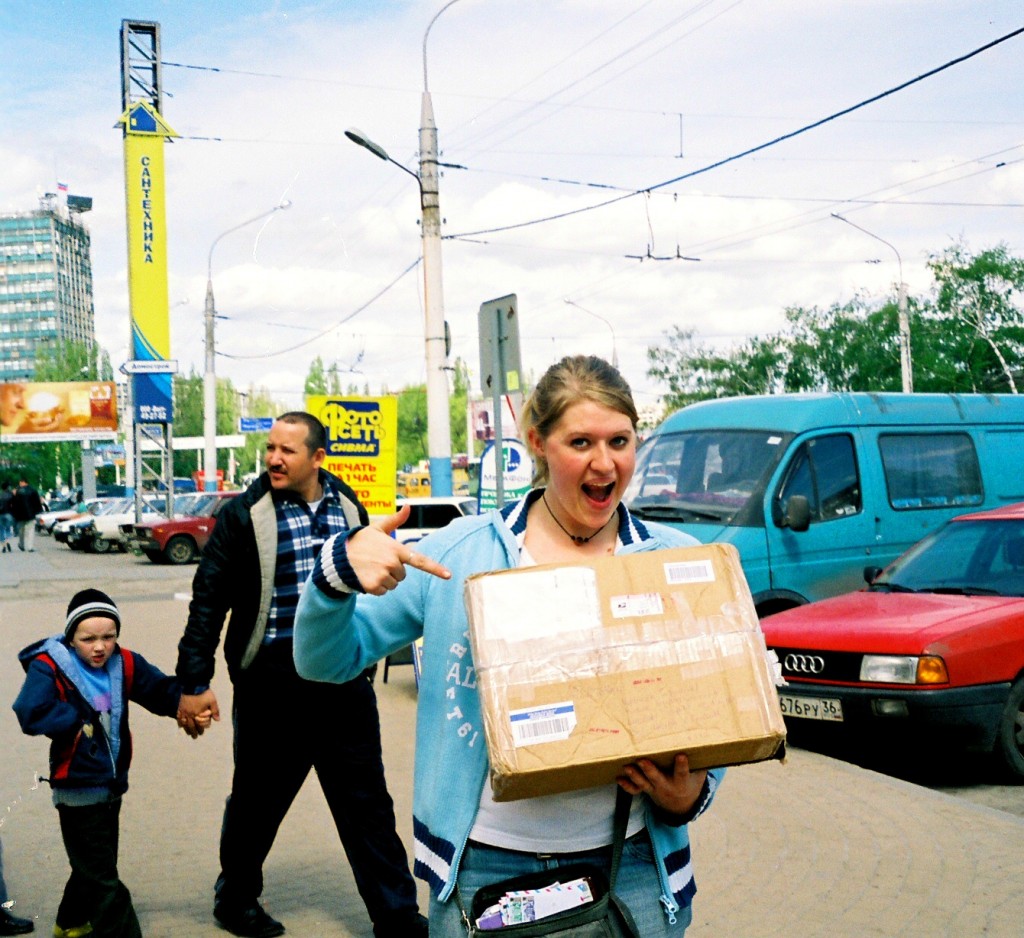
Goodies from home inside!
Ask for the comforts from home
Receiving packages isn’t just about pieces of home coming to you; packages are also a way for you to share pieces of your home with others. As I found myself wishing I had this or that, I would add them to my ongoing list of what I’d like to receive in a package. The list usually included items like Oreos, Peanut Butter Cups, lemonade mix, Butterfingers, microwave popcorn and card games like Uno, Skip-Bo and Phase 10. I had more fun getting to share and talk with others about what I got rather than sitting in a corner stuffing processed chocolates in my mouth.
The family I lived with was totally amazed that we could have popcorn at home rather than having to go to the movies, although it took some convincing and a promise that if I broke their microwave I would replace it with a new one. I’m pretty sure they were hoping for a new microwave to be the outcome rather than microwaveable popcorn, but the experience turned out to be one of my favorite stories to share.
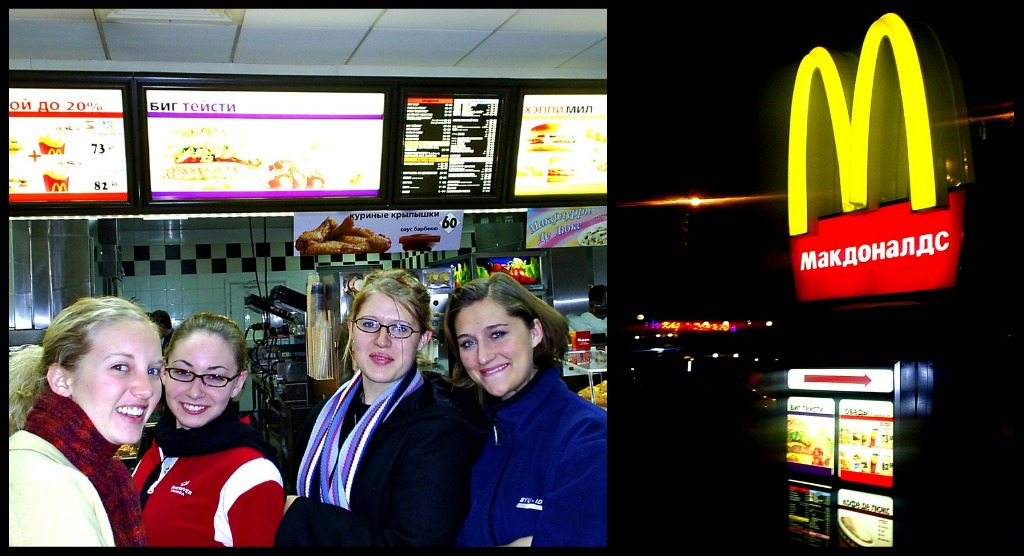
Those golden arches need no translation!
Find your nearest McD’s or other fast food outlet
I know it seems a little sacrilegious to eat at McDonalds while surrounded by a foreign culture but sometimes you just need that fix of home. McDonalds can be more than mainstream greasy food. They almost always have better bathrooms than other restaurants. Culture and the country isn’t lost — many McDonalds adds cultural twists like spices, sauces, meats, style and booze. Yes, booze.
Going to McDonalds has become a favorite tradition of mine. I’ve been to several international McDonalds outlets including enjoying little pieces of home in Lithuania, United States, Mexico, Israel, Russia, London and France. It’s fun to compare similarities and differences in cultures and countries.
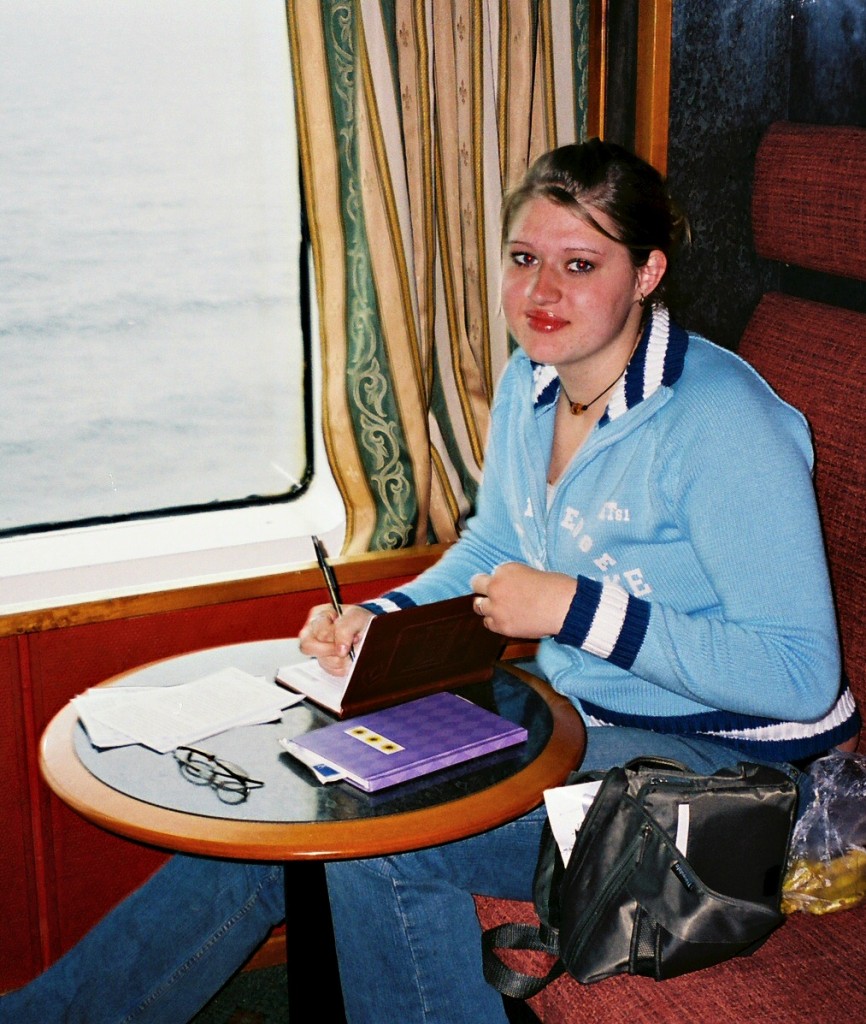
Carve out some time to write.
Stay in touch via the (gasp) postal system
I love to send postcards when I travel, probably because I love getting postcards when my friends travel. Who doesn’t love getting something in the mail? The further into the twenty-first century we get, the more of a novelty it is! Sending postcards worked well for me because it’s something I could do whenever I wanted … like when the craving for home hit, or trying to fall asleep after a long day, riding on a bus or even in between teaching classes. It was my way of letting my mind wander and allow myself to think about the people and things I missed from home while being productive, rather than missing home and letting myself get depressed.
Friends help cure homesickness.
Get out and meet people
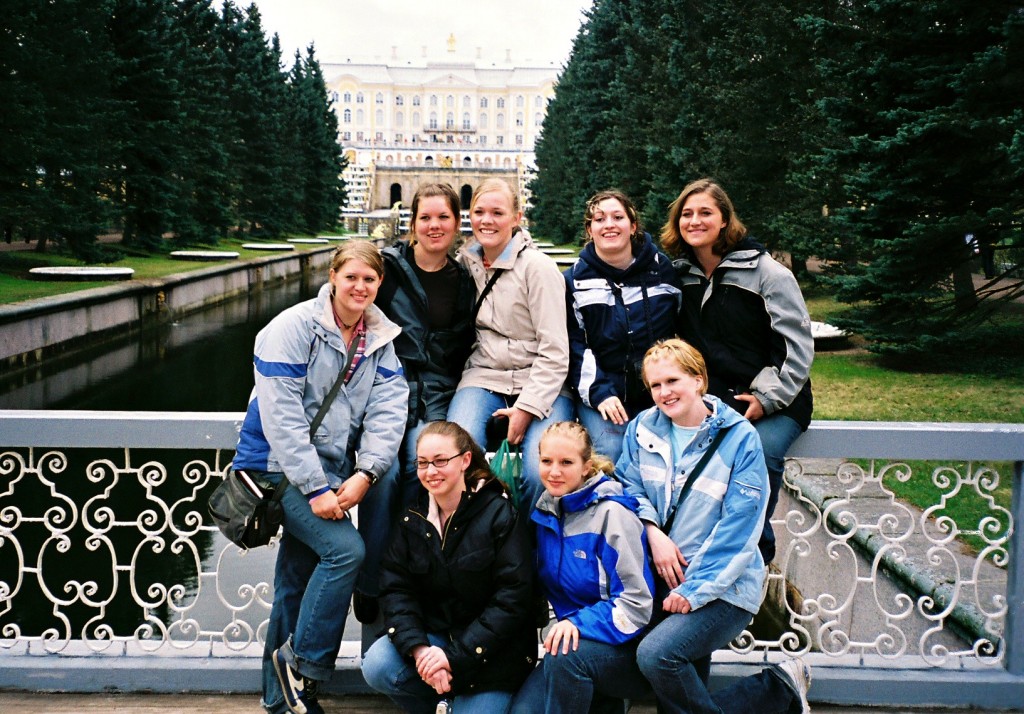
Traveling to Russia with seven fellow English teachers helped make the transition smoother for my stay in a foreign country. We became a great support system for each other, even though we all lived with separate local families. Having a host family was amazing – I wouldn’t do it any other way. They were a sweet, understanding family who included me in as many family outings as I wanted to attend.
The longer you’re abroad the easier it is to approach locals and other travelers. Take advantage of sites like Couchsurfing. Although I didn’t know about it when I was in Russia, I have since used it to find people in the area I was visiting for a cup of coffee, tips and ideas and even had a few people offer to show me around. I’ve never had a negative experience with Couchsurfing, but always remember to be safe and smart about meeting places.
There are other ways to meet people, too. Do a search on Facebook to see if there are any groups in the town you are living in. Enroll in a language course. Take a cooking class. Get out there and meet people with similar interests.
Subtitles rock!
Find music and movies to remind you of home
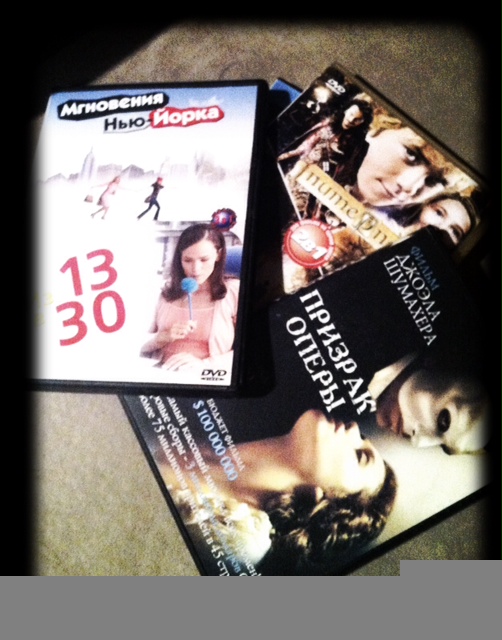
I moved to Russia before iPods or digital music and movies were common, so I was stuck with the dozens of CD’s I brought with me. Luckily, buying American movies made illegally were easy to find and fairly cheap. However, finding movies in English that hadn’t been dubbed over was a little bit trickier and more expensive. Needless to say, when I found them, I bought them. I came home with “Hitch,” “The Phantom of the Opera,” “Peter Pan” and “13 Going On 30.” Sure, none of them are my favorites, but it was nice to have 90 minutes of English and not have to make conversation.
What do you do when you get homesick? Do you have any surefire ways to kick it to the curb?
About the Author: Heather is passionate about three thing: 1) traveling; 2)humanity; and 3) education. In 2012, upon earning her Integrated Studies degree in History & Political Science, she is leaving her life in Salt Lake City, Utah to live the life of an expat. With only the intention to travel, she is leaving the planning and itinerary to where the trade winds of the universe send her. Follow Heather’s journey on her blog, HeathersHarmony, on Twitter and Facebook.
Bulgaria may not be the first place people think of to visit for a holiday. While the conversion doesn’t sound great (1USD equals roughly 1.50 Bulgarian Lev), the prices in Bulgaria are cheap.Like 8-Lev-for-a-delicious-dinner-cheap.
And, there are some great places to visit, too.
Windsurfers hang together in the Black Sea, just off the coast of Varna, Bulgaria.
I’ve spent time at two spots on the Black Sea. First there was Sunny Beach, a haven for European partiers in the summer. And then, I went up the coast to the far quieter (and far more charming) town of Varna.
Less crowded and more family-friendly than Sunny Beach, Varna is a more peaceful option for beach-goers.
Located on the Black Sea, Varna has what Sunny Beach does not — a quaint city that mixes history and present day together. Plus, there are far less touts promoting the nighttime discos and foam parties.
The town is known for its beach, which spans 8 km. Depending on what visitors are looking for in a beach, there are different areas. Families should head to the beach with the water park; revelers might like the beaches with clubs plunked down on the sand; and for those just looking to chill, there’s another section perfect for sunning and relaxing. Not a fan of the sand and surf? There is a thermal pool to enjoy, too.
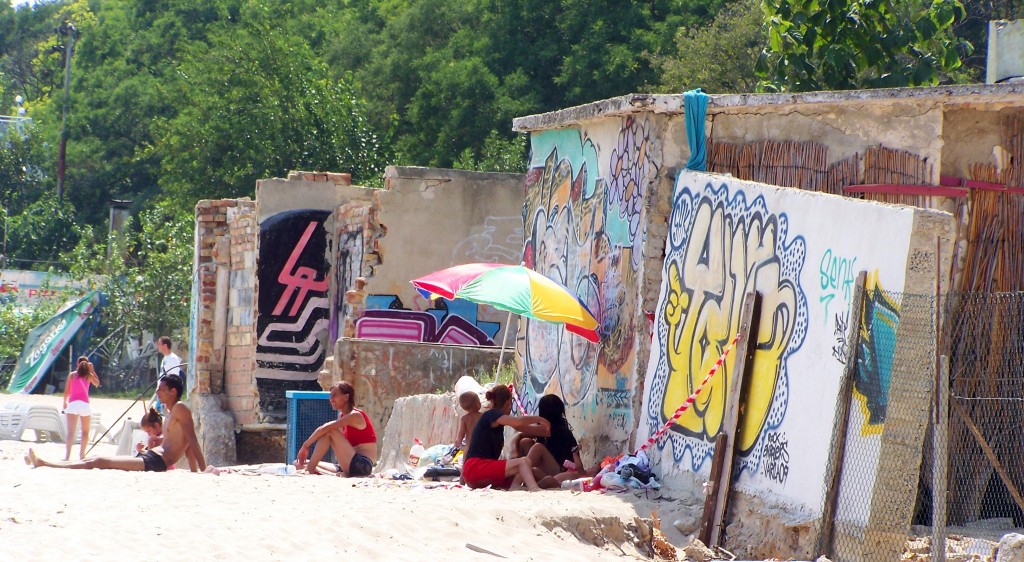
The main beaches aren't without character. Some areas even include cement walls complete with graffiti.
Aside from the actual sea, there are the attractions nearby the water. For an afternoon outside, check out Primorski Park, which runs parallel to the water. It’s got open-air cafes and restaurants to sit and enjoy the scenery.
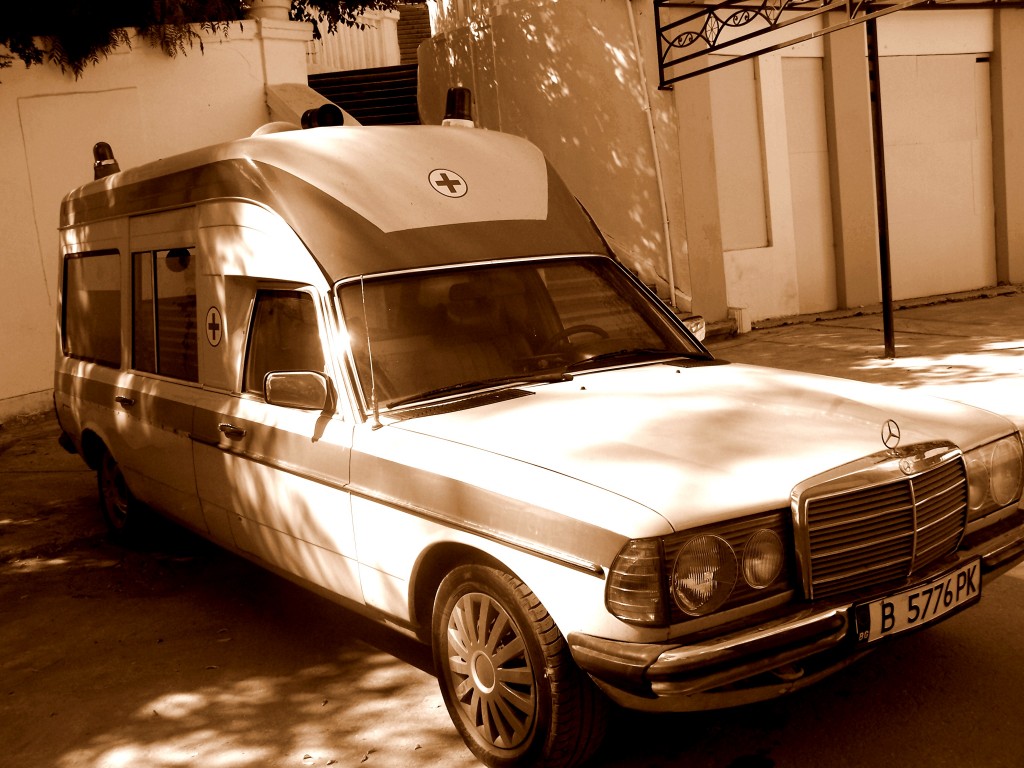
An old car is parked along Primorski Park.
The promenade leading down to the water can easily soak up an entire day. Wander the pedestrian streets, explore the little shops and boutiques, grab a coffee. And, definitely check out the restaurants offering cuisine from around the world (think sushi, Italian, tapas and more!). The area is gorgeous with its old and colorful buildings mixed with modern shops below.
Colorful buildings line the promenade down to the water.
For those who want more than a beach, spend time wandering the tree-lined streets of the city. There are museums to check out, like the expansive Archeological Museum; churches to explore; and traditional Bulgarian meals to be had.
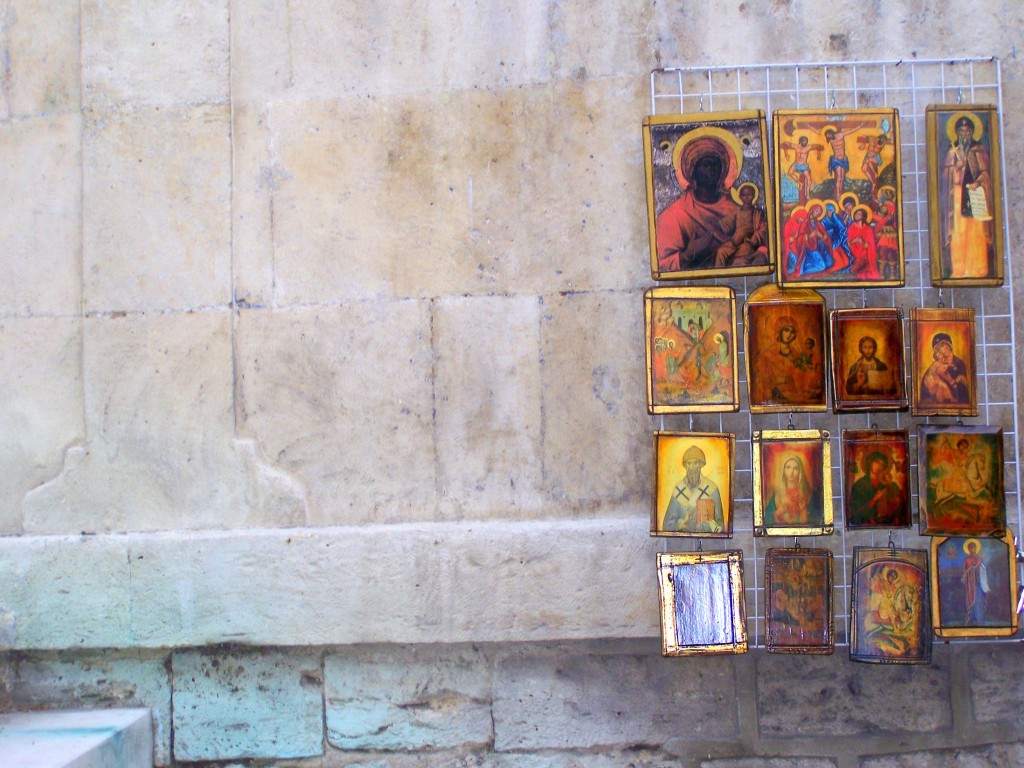
A church displays religious art outside its doors.
Where to stay
In terms of lodging, there are plenty of hostels and hotels to check out. I stayed at two — the hot, hot Flag Hostel, which I checked out of, and Yo Ho, which I enjoyed. Keep in mind, in the dead of summer, most hostels without air-conditioning are sweltering.
Worth mentioning
In Bulgaria, shaking the head up and down means “no.” Shaking the head side-to-side means “yes.” Practice.
Also, try anything with rose in it — rose water, rose Raki, rose sunblock. The country is known for its rose products and these items can be found in many places.
Getting there
Depending on where you are coming from, there are both buses and trains to whisk you off to this escape from Bulgaria, Turkey and more. There’s even a ferry that runs in the summer.
Mae Sai Roong lays on the ground. She looks so little compared to the throngs of people around here — the Elephant Nature Park volunteers, the vets, the mahouts, Lek — all scrambling to make sure she doesn’t give up on life just yet.
Every now and then, the old girl swings her heavy head up from the mound of dirt she’s resting it on. Swings her trunk to power her torso up, off the ground. Somehow, she manages to find the strength to do it. She looks around at all of us for a moment. Sits. Blinks.
We stand, frozen. Our hearts race. We pray she can stand. Fists clench. Hopes high.
Then, she gives up. Laying back down into the dirt.
The sigh from the entire group is audible. It echoes in the piles of dirt around us.
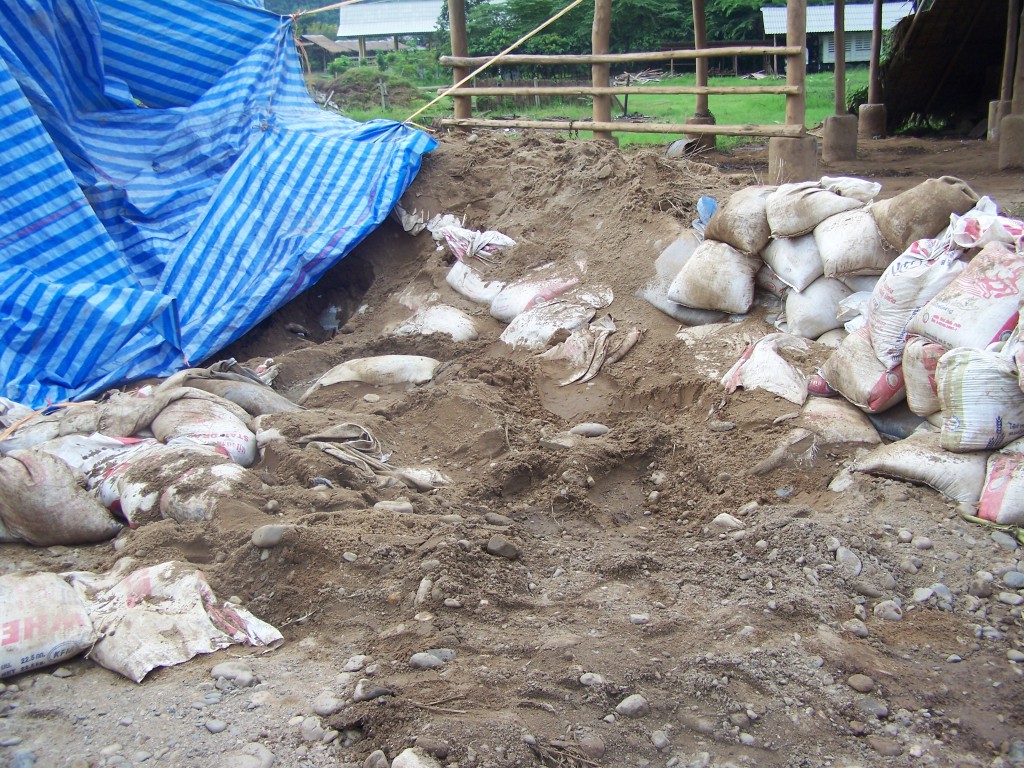
More scrambling ensues as people try to adjust the sand bags, the tires, the dirt, to contour to her body so she is comfortable, so her legs don’t lose circulation. So she doesn’t die in front of us.
Volunteers rush to move dirt to keep the elephant comfortable.
Me? I can barely watch this scene.
I had heard there was a sick elephant. But, I never imagined … this. This beautiful girl, her six tons so tiny on the ground. Her body nearly lifeless except for a few short whisps of air going through her trunk when she breathes deep.
After a lifetime of being in the logging and elephant trekking (giving rides to people like us) industries, they have taken their toll on this beautiful animal.
My last full day at the park isn’t supposed to be like this. It isn’t supposed to be sad. It isn’t supposed to be a reminder of the repercussions of what happens to these elephants who spend their lives delighting tourists who don’t know any better.
And yet, it is.
My day started out so promising. So happy.
Still glowing from the afternoon before and my time with Lek’s soft singing of “Que Sera Sera” to one of the park’s baby elephants, the sun finally came out Saturday morning, casting the entire park in that warm golden hue that sends little sparks of happy to the soul.
The sunny view over breakfast.
Over a breakfast of pancakes, Lucy, Katy, Adele, Marie and I sit, looking out at the park and the elephants making their way out on the grounds.
We all say the same thing. “They’re so beautiful.” “This week has been so amazing.” “I am so glad we learned about these elephants.” “I can’t wait to start spreading the word about why people shouldn’t ride them.”
We are all so happy.
Even after a morning of scooping, a few of us gather on the ledge of the medical shelter, simply taking pleasure in watching as the elephants stroll along with their mahouts nearby. As the water buffalo graze. As the visitors to the park explore the grounds for the first time with pure delight at what they were seeing.
I had my plan for the morning: to grab my camera, a soda, and go to the feeding platform and watch the elephants eat their buckets of fruit.
It sounded like the perfect way to spend two hours before lunch.
It never happened.
Instead, just as I am about to sit down to watch the blind elephant, Jokia, open her mouth in anticipation of food, Jack finds me.
“We need your help. There’s a sick elephant and we need to go fill sand bags. Can you come?”
Of course, I oblige.
Of all of the days for the sun to be out and strong, today is the worst for it.
Under the scorching sun and humid air, a group of 10 of us shovel dirt from the same mound that the elephants had rolled in two days prior when I had toured the park and gotten to be up-close with elephants.
Dripping sweat, we are quickly covered in a coating of flour from the bags, along with a layer of red dirt.
When the truck fills, some volunteers get in to go and take the bags to where the sick elephant is.
I opt to stay.
Then, after a few minutes cooling off under a tree, taking a breather from the summer sun, we’re back out, filling bags again. Only, when the truck fills up this time, we are all instructed to climb in and head to the elephant’s location.
I already know I don’t want to see it.
When we arrive, my heart breaks.
Jumping down from the back of the truck and seeing what was in front of me is something I will remember for the rest of my life. My own, personal reminder of why I will never ride an elephant or go to a circus or buy an elephant painting.
The image is burned into my brain.
So, this is what a dying elephant looks like.
Mae Sai Roong doesn’t move much. She lays silently, half watching as we form an assembly line and pass out sand bags, stacking them around her legs, trying to get her to re-position herself so she doesn’t cut off circulation in her back leg she is laying on.
Someone wraps a thick woven band under her belly.They are going to try to pull her up to a standing position with a crane.
Lek counts off, and the truck powers on, the crane begins to lift. Slowly, the Asian elephant’s body begins to elevate, but she fights it. She begins to fall sideways, looking horribly distressed as her eyes snap wide open.
“Stop! Stop!” People scream.
She is slowly lowered back down.
They wait a few minutes, and then, repeat the process. She again fights it. Her front legs coming out in front of her.
I choke on a sob and pull the neck of my dirtied T-shirt over half of my face so no one can see it is now covered with streaks of tears.
This time, when they begin to lower her back down, I turn around. I can’t watch this.
For a moment, she looks as if she might stand on her own.
As staff continue to work on the elephant and readjust dirt, tires and sand bags, Lek tells us to head back to the main building to get lunch, and then return with all of the volunteers when we are done.
The few of us still there race back to the group, find everyone else, and tell them what has happened.
I eat lunch quickly, filled with dread at having to return to Mae Sai Roong. I want to help. I just don’t want to see her suffering like this.
We head back after lunch and are immediately put to work digging. We need to move dirt from one spot to another and form it around her body.
Mae Sai Roong hasn’t changed much. She still lays there, only the efforts to get her to adjust her weight have ceased.
Bananas go uneaten in the elephant’s mouth.
People try in vain to get her to eat. She doesn’t. Instead, she takes the cluster of bananas wrapped in a coil of her trunk and just leaves them hanging in her mouth.
A vet hooks her up to an IV. Someone else takes a mister and hovers over her body, letting the light wash of water cool her hot skin down.
Then, I hear singing.
“Que sera, sera …”
I spin around from where I am standing behind the elephant and see Lucy, Katy, Pam, Evelyn, Sarah, Marie and Adele, all splayed out on the mound of dirt behind Mae Sai Roong. They lay there, scooping up handfuls of earth and rubbing it on her back. All the while, they sing to her softly.
“Whatever will be, will be …”
I crawl up on the mound with them and take my hand in the dirt, rubbing it into her tough skin, scratching. I try to join in, but I’m overcome with sadness and instead of singing, sob.
Singing to comfort Mae Sai Roong.
“We all need somebody to lean on … lean on me …”
Singing more songs to her …
Each song takes on meaning as we lay there, not caring about being filthy, not caring about being eaten by ants. All we care about in that moment is comforting a creature in her last moments. In letting her know she is not alone.
We spend nearly the entire afternoon with Mae Sai Roong, and then head to another shelter to make a bed of dirt for another elephant who needs a little help getting up from sleeping.
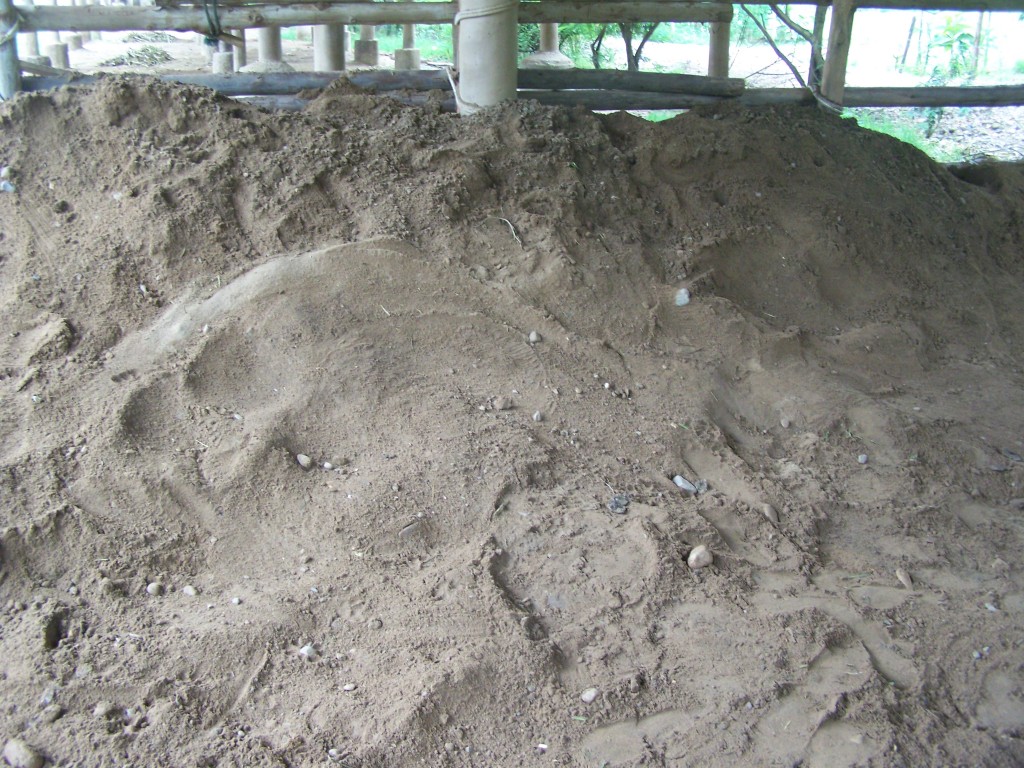
The next day, the outline is evident from the elephant who used the dirt as a bed.
Even though our last night is special, and the park creates a feast of Northern Thai food for us, the mood is somber. Our group of girls go from happy to sad, smiles to tears, quickly.
After dinner, Lucy, Adele, Marie and I decide we want to return to Mae Sai Roong to see her. To likely say goodbye.
I know I can’t do it alone. It’s too sad. Too heart-breaking. Especially after the week I have had, the things I have learned about the plight of the Asian elephants.
As we walk down the dark path towards the sick elephant, we all grab each other’s hands for comfort, and united, walk up to her.
Now, a fire burns and only a few park staff are there. They will sleep with her, making sure she is comfortable the entire evening.
When we get there, she looks even smaller than she did earlier. Her mahout has moved the bags of sand, helped her re-adjust.
Around her, in the dark, I can hear elephants in a nearby shelter moving about.
“Do they know she’s sick?” I ask one of the staff members.
“They don’t care,” she says. “She doesn’t have any friends.”
Except for humans.
The four of us sit together on the gravel, silently. I let myself cry. Not just for Mae Sai Roong, but for all of the elephants whose fate is the same as hers. For all of the elephants who went through the Phajaan. The abuse. The treks.
We get up after a few minutes and whisper our goodbyes to the sweet girl, and then head to the river.
It’s Saturday night, and loud Thai music from another camp wafts down to us. We sit in darkness, watching the strobe-light fireflies blink past us. We cry.
The girls decide to return to Mae Sai Roong in the morning before breakfast, but I pass.
The memory I have of her is enough for me.
I fall asleep that night listening to the music. Thinking about Mae Sai Roong.
In the morning, the girls visit her.
A volunteer comforts Mae Sai Roong in the morning.
“She doesn’t look good,” Lucy reports as soon as I find her at breakfast. “I don’t think she will make it.”
I’m glad I didn’t go.
We all sit together at breakfast, quiet.
This is our experience. Together. And, as sad as it is, I cannot be more thankful I am experiencing it. I feel like this was meant to happen so I can truly understand what happens to these elephants and then come home and tell everyone.
We split off into groups on our last morning with an air of sadness lingering. We’ve all been through this tragic experience together and no one wants to talk about it.
Until …
“Do you see over there?” Jack asks, pointing his finger towards a blue tarp in the distance.
“What?” We ask.
“Mae Sai Roong,” he says. “She’s standing.”
Suddenly, the sadness is replaced with elation. She’s alive. She’s standing.
We all smile, grateful to have gone through hell in order to be a part of this momentary bliss.
And, deep down, I’m warmed thinking our love and support had something to do with the elephant’s little victory for the day.
[Editor’s Note: Mae Sai Roong passed away a few weeks later. To read about her life, her death and more about how you can ensure other elephants don’t face the same fate, please read “Speaking for the elephants.” And, check out “A Brief Education: The dark side of the elephant tourism industry.” For even more information and reasons why you should never ride an elephant, read “Why elephant riding should be removed from your bucket list.” It is up to each of us to help spread the word about the plight of the Asian elephants and how we can make an impact and send a message to not only the tourism industry, but to other travelers who want to spend time with these magnificent creatures. And, special thanks to Gabrielle Esi Aw, Julie-Anne O’Neill, Lucy Tallis and Pam Brace for photos.]
A land entrenched in history, Whirling Dervishes, bazaars, spice-filled foods and a wide-range of landscapes to choose from. If you’re planning a trip to Turkey, take note — no trip here is complete unless Cappadocia travel is included.
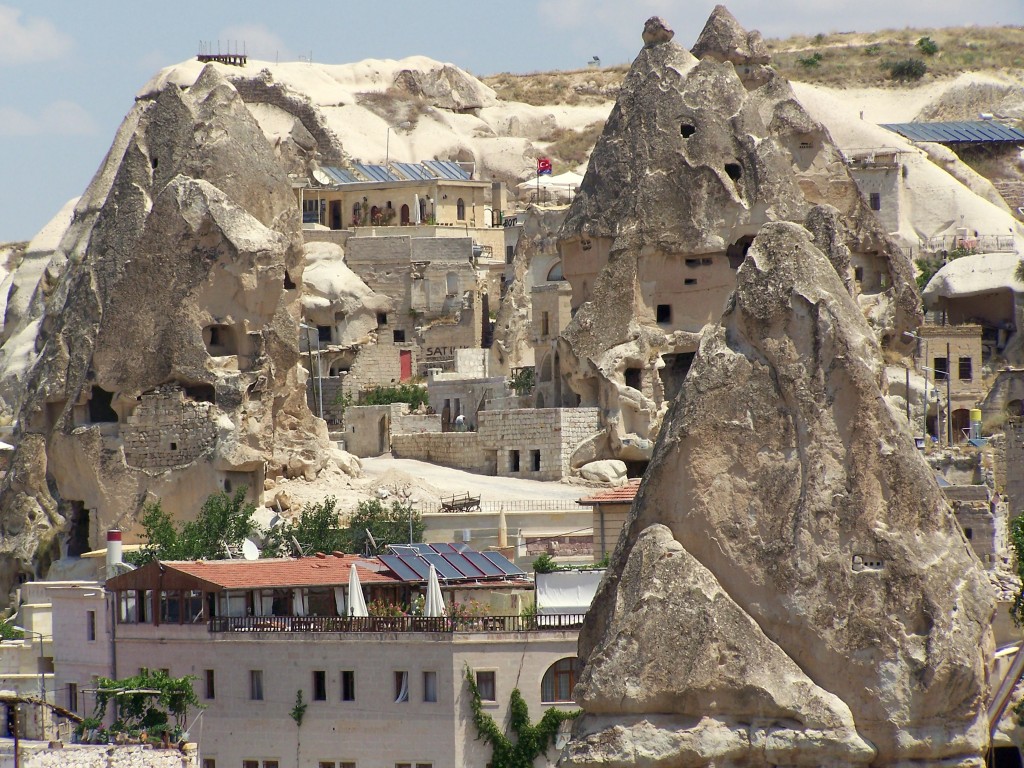
The Cappadocia region of Turkey is in the middle of the country, but worth a stop. Here, visitors are greeted by sunrise of pinks and oranges casting their colors across white rocks, and fairy chimneys to spark the world of fantasy.
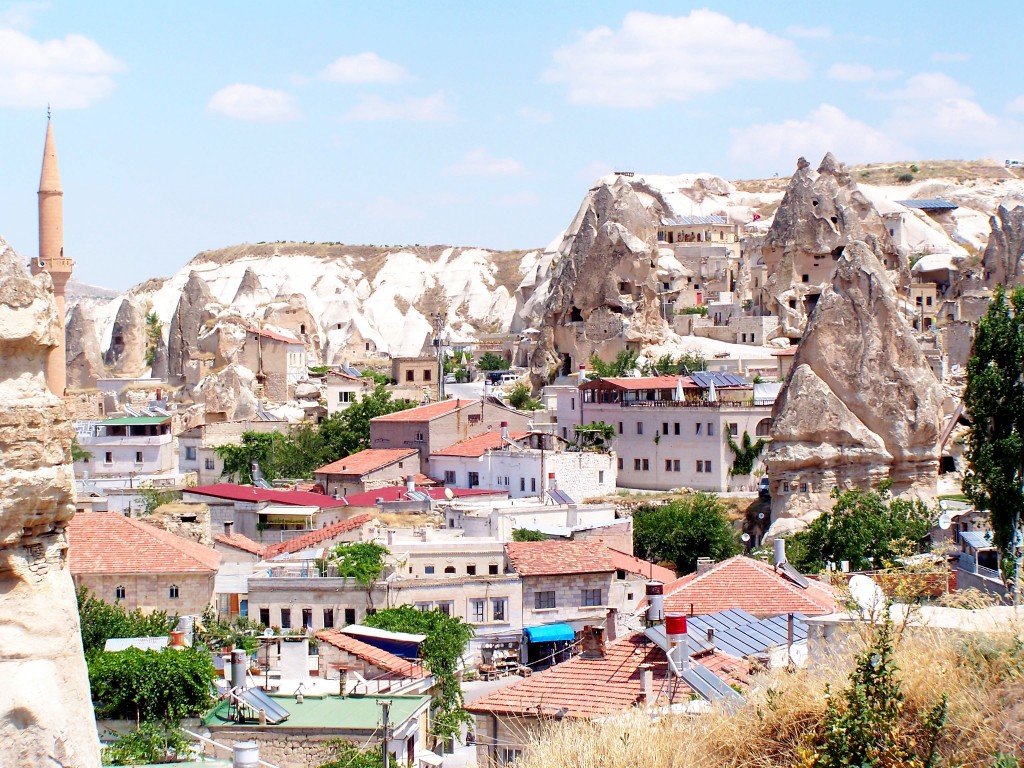
Some ancient and present day dwellings are the same in Goreme.
Formed from an eruption of Mt. Erciyes ages ago, the chimneys and valley are the permanent reminder of Mother Nature.
A fairy chimney in town.
While I was on my Fez Bus Tour, we stopped in Goreme, a little town in the region. For three days, I lived in the land of whimsical and ancient cave hotels (which used to be dwellings) and phallic rocks jutting out into the crisp blue horizon.
They are a bit phallic …
It’s an understatement to say the world of fairy chimneys and enormous rocks sprouting from the ground is cool. It’s mind-blowing.
While the town of Goreme itself isn’t huge, there is plenty to do since it caters largely to tourists.
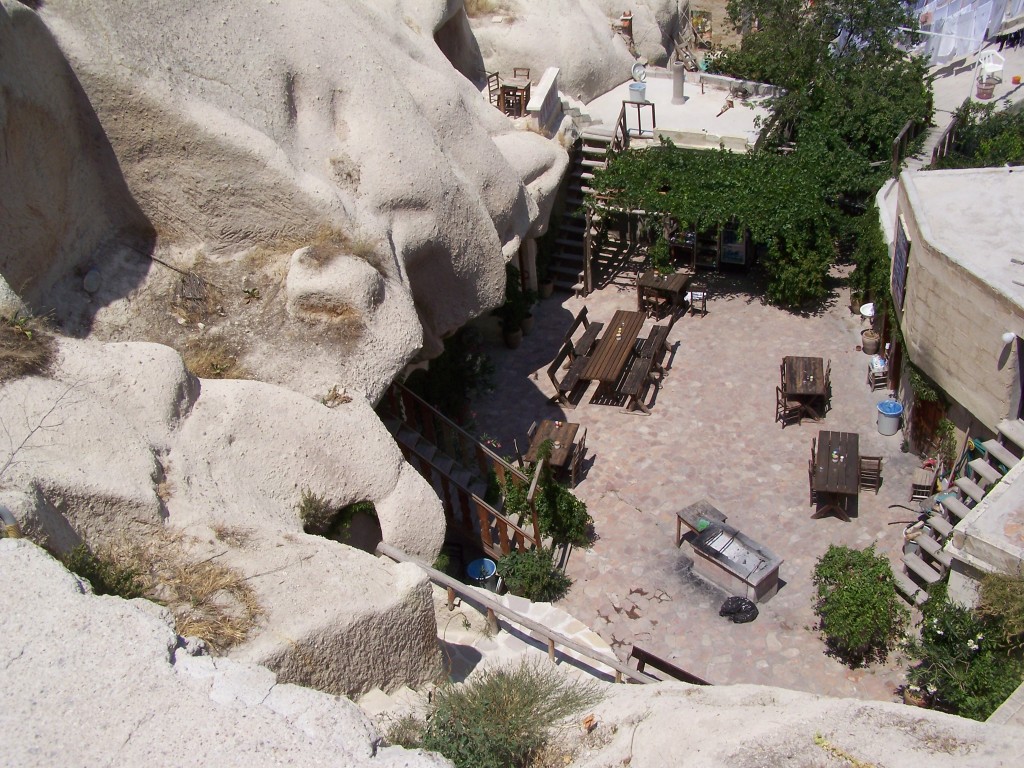
Looking down from the pool at Shoe String to the cave rooms below.
One must? Sleep in a cave. There are plenty of options, from budget friendly hostels like Shoe String Cave Pension to more expensive lodging like the lush Sultan Cave Suites Hotel.
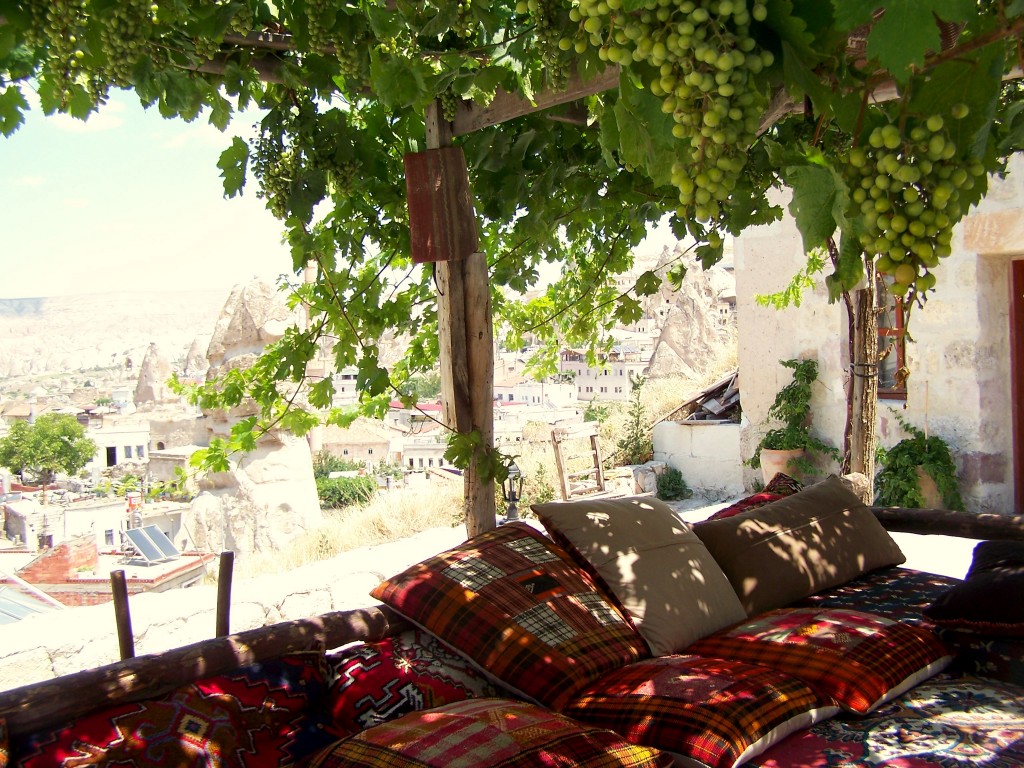
Shoe String’s pool includes lounge areas, grapes fresh for the picking, and stunning views of the town.A luxe cave hotel in the distance.
By day, take time to explore the region. There are plenty of tours operating from here that whisk people away on treks, to explore the underground cities of Kaymakli and Derinkuyu, or local ATV rides through the rock formations.
Stop by the main street for fresh and inexpensive fruit to nibble.
For early birds, the sun rise hot-air balloon ride over the fairy chimneys is absolutely magical. For those who prefer to keep their feet planted on the ground, try visiting the Goreme Open-Air Musuem which takes people through tiny cave churches still in use.
Kebap slow-cooked in a sealed terracotta pot. It tastes much better than it looks.
Don’t forget about food.
During my visit, I stopped in at Dibek, a darling authentic restaurant where we sat on gorgeous colorful carpets and drank homemade wine and dined on flavorful testi kebap. This dish is kebap, sealed in a terracotta jar, and slow-cooked for three hours in a stone oven. Then, it is brought to the table and broken open and served.
Delicious.
Getting there:
If in Istanbul, take the night train. It’s between 11 – 12 hours, but the Turkish bus system is largely run very well.
From Anakara, the bus is 4 1/2 hours. From Antalya, the trip by bus is 9 hours.
Lek accepts a playful smooch from Faa Mai's trunk.
“Que sera sera, whatever will be, will be. The future is ours, you’ll see, que sera sera,” Lek sings softly to the baby elephant, Faa Mai, as she sits on the dirt between the animal’s front legs.
I watch, silently, in awe.
Lek singing to her is a beautiful moment between friends. To me, someone who has spent nearly a week as a volunteer with elephants at Elephant Nature Park, it’s poetic and serves to further illustrate the struggles of the elephant in Thailand and Lek’s role in saving their future.
I smile to myself as she sits on the soft ground, gently stroking the gray legs of Faa Mai.
After a moment, Lek’s not alone on the ground anymore. In front of her, under the trunk of the baby, is one of the volutneers. An eight-year-old boy who’s been noticeably absent from most of the volunteer tasks but extremely present in this moment.
He looks petrified, even though Lek’s reassuring arm is wrapped tightly around him, as she watches the family that has now gathered around them under the thatched roof shelter.
It’s Faa Mai’s naptime, and when Lek is at the park and able to, she heads to the family shelter to spend time with the baby, singing her softly to sleep.
The previous day, she treated all of the volunteers to a special moment with her and the baby, ushering each of us, one-by-one, to sit with her on the ground as she sang.
The family shelter is just next to my modest quarters, and as I walk past the shelter, I spot the three of them inside the roofed area. The boy’s dad stands off to the side as Lek and his son sit together, surrounded by elephants.
I stand on the other side of the knobby wooden bars, resting my head against one of them, mesmerized by the founder’s connection with this elephant.
No matter how many times I watch her interact with these creatures, I can’t help but marvel at the bond she has with them.
It’s special. It’s beautiful. It’s amazing.
“D, you can come in, too,” she says, gesturing with her free arm to come into the shelter and hang out with the three of them … and a handful of elephants.
I hang to the side at first, letting the boy and Lek have time together.
I feel so fortunate for the time I had the previous day, I don’t dare impose on this moment they are sharing.
The dad and I watch as the elephants gather around the baby and the two humans on the ground.
It’s intimidating. Huge legs, capable of shattering bones, all around. And yet, they don’t even get near the people. They keep their distance, as if they know their own power.
I get a sense that so long as Lek is in the shelter with us, we won’t be harmed. They know and trust Lek.
“You can come here,” she says to me, once again motioning for me to come closer. This time, it’s to sit on the ground next to the baby.
Of course, I oblige.
Then, it’s the three of us. The child under the trunk of the elephant, me stationed at Faa Mai’s side, and Lek under the front legs. She signs softly again and then speaks to her in Thai, reaching out to touch the leathery trunk and pushing it towards her mom who stands in front of us.
“She needs to nurse,” Lek explains as Faa Mai’s trunk searches for Mae Bua Tong’s teat.
Faa Mai nurses.
For a few minutes, the two-year-old nurses as we sit and observe.
Then, I spot Evelyn, another volunteer, who has come up to watch. She stands like I did, on the other side of the fence, watching us.
“Come, come,” Lek says to her, and then the blonde Austrian girl comes and sits with us, too.
When Faa Mai finishes nursing, Evelyn takes the boy’s place under the massive head of the baby and Lek begins to sing, once again.
Sitting with Faa Mai as she sleeps.
“Put your hand out so she can rest her trunk in it when she sleeps,” Lek instructs Evelyn.
Within moments, Faa Mai (along with us), is under the spell of Lek’s lullaby, and has relaxed. Her big-lashed eyes flutter closed and her trunk hangs, curling at the bottom in Evelyn’s hand. Ever now and then, she puffs.
She’s sleeping. Standing up. As we sit at her feet.
I rest my head on her trunk, running my hand down the length of it, taking in the moment. The baby elephant sleeping at my side. Lek’s soft, sweet song quietly goes on in the background as I stare at Faa Mai.
It’s like a dream.
Every now and then, Faa Mai opens her eyes and looks around, and then closes them again.
I can’t believe it.
I’m sitting here with the elephant family towering over me. They let us sit with the baby of the family without pause.
“This is one of the most amazing moments of my life,” I whisper to no one in particular. I just want it put out into the world. In fact, the past 24-hours I have spent at Elephant Nature Park, have been possibly the most amazing experience of my life.
First, being a part of the herd and spending an afternoon with Lek. Now, sitting with Lek and keeping company with the baby as she drifts in and out of sleep.
It’s beautiful.
When Faa Mai wakes up a few minutes later, she’s playful, opening her mouth and carefully placing Lek’s head in it.
Lek laughs and tells her “no” as her hat almost dislodges. Then, she sticks a finger in the roof of Faa Mai’s mouth and tickles it.
If Faa Mai could giggle, I’m pretty sure she would. Her eyes sparkle as she stands there, letting Lek get a good scratch in.
Then, it’s time to go.
I walk back to my room, to the shower, giddy. Humming “Que Sera Sera” on repeat the entire evening.
I’m on Cloud Nine until the next morning, when all of the elation from the previous day is eclipsed. And, my heart, which had thumped so happily, now nearly breaks thanks to the truth of why we’re here — to care for elephants who have been a part of the elephant tourism industry and now have a chance to live the rest of their lives free from abuse.
Editor’s Note: Apologies for the lack of posts this week. I’m enjoying some gum surgery and medication, so in the meantime, enjoy this guest post from one of my favorite bloggers. And, if you want to contribute a guest post, feel free to contact me.
I joined the merchant Navy when I was 16. From that age until 22, that was all I knew. Working hard, partying harder and constantly moving taught me a few things which are I have transferred to my travels now.
As a young buck in the Merchant Marines.
Six travel lessons for any traveler … courtesy of my time in the Merchant Marines
1. Explore everything.
I visited many exotic and beautiful places when I worked at sea. The problem? We always ended up going to the bar. When I look back, I feel so frustrated at all the opportunities I missed to go and explore more. Now when I visit a place, I like to explore as much as possible. Even if that amounts to simply taking a different walk home every day (although I often get lost).
2. The majority of people are good people.
We were at anchor for a month off the coast Martinique, a small island in the Caribbean. We had taken to driving our small rescue boat, a tiny boat with a small engine on the back, ashore every other day to enable us to see the coast, go fishing, go for a meal and other activities. Normally, we tie the boat to a jetty. However, on this occasion there was no space for us. Rather then turn back, we decided we would just beach the boat and go get a meal. When we returned to our boat, left at the waterline two hours earlier, was now about 10-ft up from the waters edge. The tide had gone out and we were stuck. Or we would have been had it not been for about a handful of old women coming and helping us push it back into the water.
3. You will never have the perfect plan.
You cannot plan for everything when traveling. There are far too many variables. The more you learn how to plan on the fly and cope with change, the better your travels.
Creative Commons: WhitneyinChicago
4. There is no real cure for motion sickness.
I was once seasick for four days. I tried everything, but to no avail. If you suffer from motion sickness, you just have to ride it out! One tip though — if you do suffer horrific motion sickness eat jam sandwiches and drink lots of fruit juice and water. Hydration helps with everything and the jam sandwiches don’t taste that bad when they “come back.”
Creative Commons: Tyler Haglund
5.Things take time.
This is probably the most important lesson I learned. Sailing across the Pacific takes around 10 days. Thats a long time. Sometimes bridge watch would get monotonous and the hours would seem to drag. If patient then you will truly appreciate that landfall when you first see it. A good way to deal with excess time on the road is to have a hobby. I like to write because it is portable, I can do it anywhere and it takes up loads of time.
6. Stress happens.
When you are around the Far East sometimes the radar screen just goes yellow. This is not from interference or weather or anything. This is, in fact, hundreds of tiny wooden fishing boats. Four hours of weaving through these small crafts is one of the most delicate and stressful things you can experience at sea. And everyone copes differently. My friend Alan used to simply chain smoke, I on the other hand would bottle it all up and then go for a hard gym session after my watch. How you deal with stress while traveling can make or break an experience.
So those are my lessons. They may work for you. They may not. But trust me on the jam sandwiches!
What lessons have you learned?
About the Author: James Cook is a writer at OurOyster.com He has been travelling for the majority of his adult life and has just spent the last year in New Zealand. Our Oyster focuses on documenting his travel experiences, while at the same time providing practical information as well as budget travel tips. Currently James and his partner, Jade, are exploring all Australia has to offer. You can find him at Facebook and on Twitter.
—-
Think you’ve mastered these lessons? Try your hand and test it out travelling to Greece.



















 D Travels 'Round