
I have a bleeding heart. If you know me, you know this.
And, on my third day in Chiang Mai, this bleeding little heart is tested.
“Hi,” a couple says, walking up quietly to the large crop of desks inside the Elephant Nature Park office. “We found a kitten and wanted to let you know … it’s down the street … it doesn’t look good. Do you want to go and get it and bring it back here?”
I try to mind my own business as I sit on the other side of the desk, but when I hear the words “kitten” and “doesn’t look good” my ears immediately perk up.
“Oh noooo,” says Patty, who runs the office. “That’s not good.”
Silence.
“Diana, you go with them and see where the kitten is ka,” she says to me.
Me?
Charged with the task, I leave my laptop and follow the couple down the street, crossing over the moat which surrounds the old city of Chiang Mai and through Thaepae Gate.
“We saw it and tried to give it milk, but it just sat huddled in a corner, not moving much,” the girl says.
When we come to the kitten, my heart breaks.
Under a metal bench of some sort, I see him. Squatting down. Oh-so thin. Shaking. His orange and white fur is a shade of gray from the pollution. His leg looks a bit deformed. His one eye is cloudy.
My heart breaks.
“I … I … don’t know what to do,” I tell them. What am I supposed to do? Take him back to the office? “Let me call Patty.”
So, I get her on my phone and she tells me to call the park and the volunteer who runs the dog shelter. On the phone with her, I nearly burst into tears.
“We can’t save every street cat in Chiang Mai,” she explains, but I can hear it in her voice. Don’t give up … yet.
Then, I fight for the little guy.
“He just looks so scared. So sick. We can’t take him?”
“Well … look at him with me,” she says, quickly succumbing to my desperation at saving the sickly creature.
I scoop him up in my hand, report to her that he has pink gums, no fleas, a big belly.
“OK … what you can do … if you want … is take him to the vet and see what is wrong with him. You will have to pay for it. Then, if he is OK, I think we can take him up at the park.”
My heart thumps happy.
I leave the couple and scoop his tiny, shaking body into my arms and nuzzle him in my neck as I head back to the office, trying desperately to shield him from the puttering tuk tuks, the thick humidity and the smell of diesel fume that winds its way up my nose.
I try to get a red bus to the vet, but instead, one of the staffers tells me she can take me on her motorbike.
I freeze with fear. I’m scared to death of motorbikes, even though I have been on them before. Here, in Thailand, where you have to always be mindful of getting knicked by one, the idea of holding a kitty and clinging to someone driving sends me into a near panic.
“Don’t worry,” she says to me soothingly. “I will drive good. I promise.”
So, I put the kitten in a cardboard box and hop on the back of her motorbike.
“It is OK if I hold on to you?” I ask, voice shaky.
“Yes, of course.”
And then, we are off into traffic. I try to move as little as possible. At red lights, I peer into the box and talk sweetly to the kitten who has ceased his little meows and traded them for hisses.
“I know, I know,” I whisper to him, wishing with all the world that he will calm down.
When we arrive to the vet, they peel the box from my arms and take him into a room where they examine him.
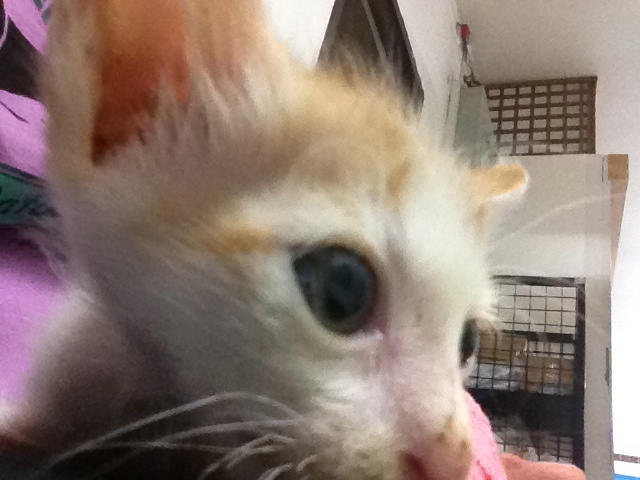
“He very sick,” the vets says once she is done. “He need lot of medicine.”
“What’s wrong with him?” I ask.
“Don’t know, but we do test to see. He stay overnight. Expensive.”
I’ve come this far.
“Do what you have to do,” I say, feeling myself give in to this little life I am trying desperately to save.
She does one blood test as I stand in the doorway, watching him cower on the metal table.
“Oh no, it no look good,” she says, furrowing her brow and casting a sympathetic glance in my direction. “He has parvo. Very sick. May not live.”
I stand there. I can feel the tears coming. I can feel them wanting to leak out of my eyes in front of these strangers. Although it has been less than an hour since he entered my life, he’s already touched it.
I don’t want him to die.
“What do you need to do?”
“He stay overnight for a few night, we give him medicine and get him to eat soft food,” she says.
“I can’t spend the money on him unless I know he has a chance at life,” I explain, wanting her to know if his chances are slim that he will make it, I cannot afford to pay the bill.
“He may make it, depend on immune system,” she says.
I hand over my credit card and let them swipe it. It’s not nearly as expensive as a vet in America, but it is pricey for someone who has just moved to Thailand and found a street cat.
“What his name?” She asks me before I leave.
“I don’t know,” I say, not wanting to name him and get attached to this little puff of cat.
“He Mr. Lucky,” she says. “Mr. Lucky because you found him.”
That night, she calls to report to me his condition. “He poo poo a little. He eat a little. He take medicine. Call you tomorrow night unless he get worse.”
The next night, she calls me to report that he is getting better slowly.
And, the night after, I head to the vet to go and see him.
“He would have died had you not found him,” she says as I stroke his little body in my arms. “He very sick. Mom and brothers and sisters probably dead. He would have died in days if not treated. Mr. Lucky? He very lucky.”
Mr. Lucky stays a few more nights at the vet and is then taken up to Elephant Nature Park to finish the de-worming (because he has that, too) and finish his treatment for parvo.
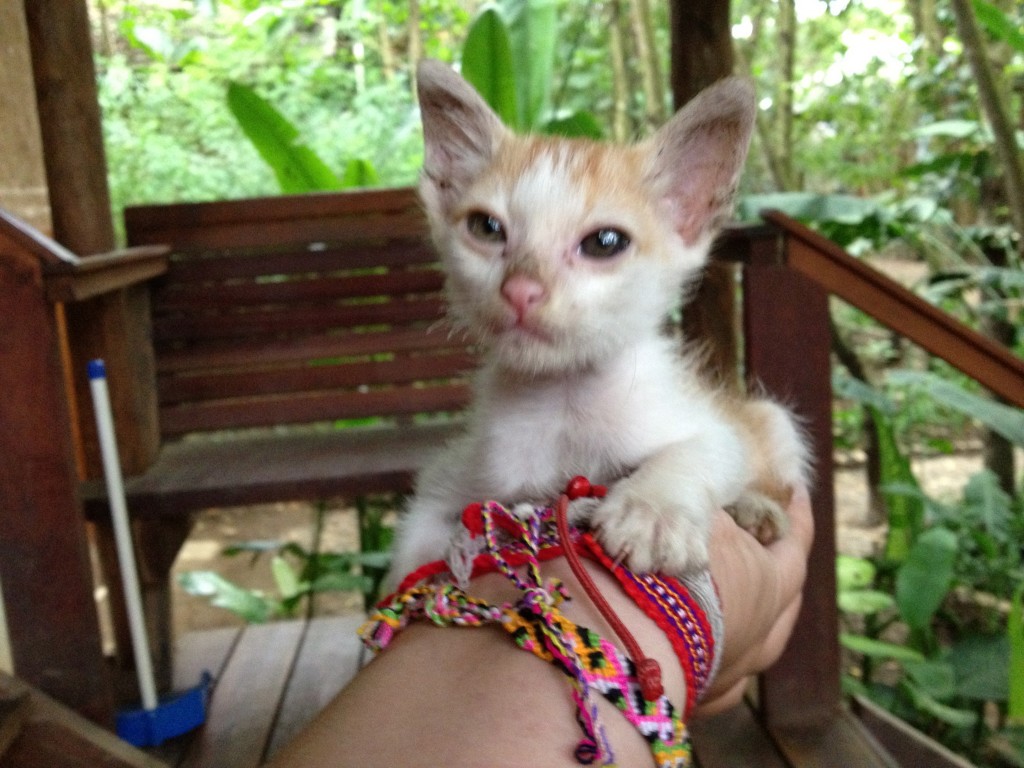
When I head to the park a few days later, the first thing I do is go and see him. He’s quarantined and when I step inside the room, my heart melts.
“Mr. Lucky,” says the volunteer who took him in, “Look who is here to see you.”
From under newspapers, he pokes his little head out and meows. Then, he is in my arms again, purring.
His belly is still a bit swollen from the worms, but he looks a million times better than he did when I first rescued him.
“Hey little guy,” I whisper to him, nuzzling his little body in my face. “You look so good.”
We snuggle for a few minutes before I put him back into his cage and I disinfect myself so as not to get the other animals at the park sick.
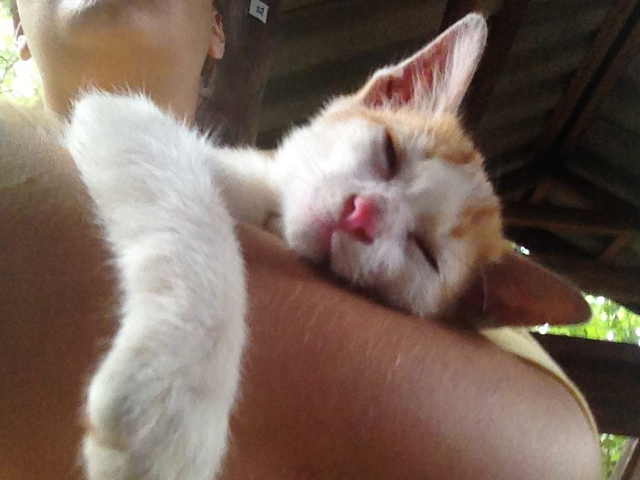
A week later, I head to see him again. This time, he is out of quarantine and hanging in a cage. He mews when he sees me and then, as soon as he is in my arms, crawls up to my neck and tucks his tiny body there, softly purring.
I walk away from his cage and find a secluded spot on a bench. We sit together for 30 minutes. A wave of happy rushes over me as he lays on me.
I saved a life. And, now I get to see this little Mr. Lucky live out his other eight lives. Entirely Lucky.
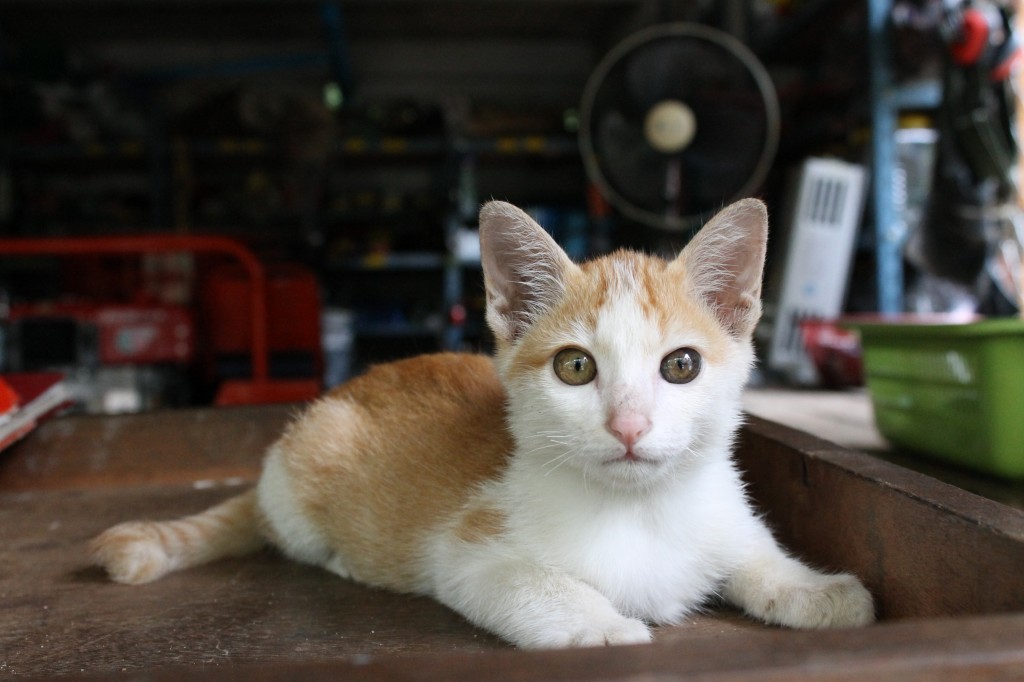
And now, more than six weeks after being treated and healthy, this is how cute the little playful guy is:




 D Travels 'Round