Hip and hot: LA’s Hotel Wilshire

Travel always exhausts me. So, when I had a chance to break up my trip from Maryland to Las Vegas to Los Angeles to Narita to Bangkok to Chiang Mai courtesy of some weird overnight stop over in LA, I jumped at spending the night in luxury.

After flying across the country to Las Vegas, having drinks in Vegas with Abby (one of my favorite people in the world) and then hopping on another plane to LA, the tired seeping into my body is undeniable.
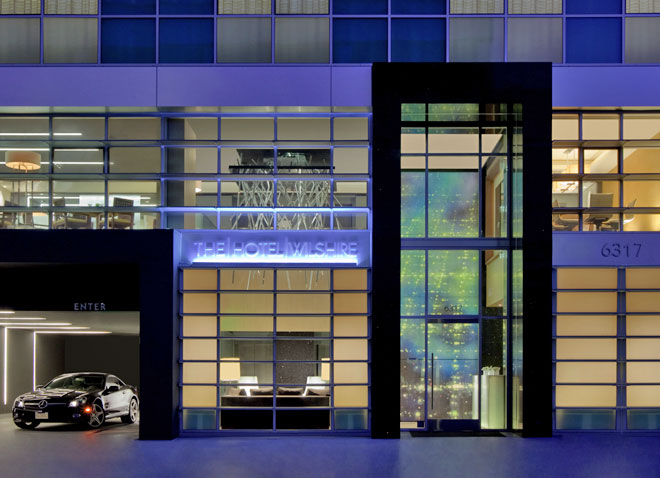
Photo courtesy Hotel Wilshire

Thankfully, as soon as I pull up to the Hotel Wilshire, previously a medical center, some of that washes away as my eyes light up at the hip facade in front of me.

It just looks so … sleek. The tiny lobby of the hotel doesn’t do the property justice. It only teases with slick modern furniture and some art installations. Fortunately, as soon as I walk into my deluxe room, I am entirely satisfied.
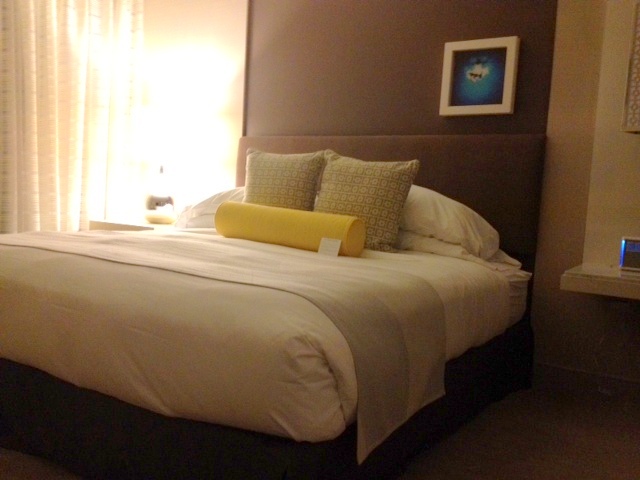
Deluxe room at Hotel Wilshire

There’s a gorgeous bathroom with a shower that makes my mouth water — especially after my somewhat inadequate bathroom experiences in SE Asia (minus the Grand Mirage).
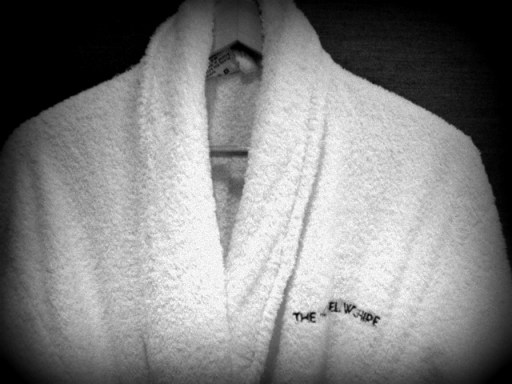
A plush robe at Hotel Wilshire

And, although the room isn’t that big, as soon as fling myself onto the bed, I am utterly happy. Plus, there is a fluffy bathrobe to wear. I decide quickly that little soft piece of goodness will be what I sleep in this evening.

The mattress is marshmallow soft, and the pillows … mmm … the pillows cave to my head and let me sink into another world. A world that I know will grant me a decadent sleep before a major trip across the Pacific.

Photo courtesy Hotel Wilshire

But, first I have to head upstairs to The Roof on Wilshire. I sadly remove myself from the soft comfort of the bed, thrown on shoes and head up to the top of the hotel for dinner.

It’s night time and on this gorgeous deck with a pool and fire pits, the lights of LA twinkle and glitter on all sides. I breathe in the balmy air before I take a seat at a table with overstuffed cushions.

Other than the mass amounts of hipsters hanging out around fire pits and clogging my view of the city, it is beautiful. I can see why this is one of the hotter spots to go in LA for a pool scene. By day, I can only imagine what incognito celebrities would hang out here, donning their designer swimsuits and wide-brimmed hats.

For me, it is a perfect way to finish up my day of travel.

Over dinner and drinks with a friend, we soak up the evening. I’m a bit of a dining snob after spending time in Las Vegas and working in the restaurant industry, so when I learn Eric Greenspan, Food Network’s Iron Chef 2010, is at the helms of the restaurant, I can feel the drool form. Considered California/French food, my friend and I order little snacks to try — the fresh tuna Nori Nachos, a big bowl of greens (Wilshire Salad), and an apple tart for dessert.

The food is pretty good, minus the dessert, which is disappointingly bland and not worth the calories. And the wine the server recommends from Ojai to pair with our meal is smooth but probably not the best one to go with the food we chose. But still … not a bad dining experience.

Then, it is back down to bed. As I slip between the plush Italian Frette bedding  and snuggle into my pillows, sleep takes over and I am treated to a decadent night of peace before I head back out into the travel world.

Sadly, since I stayed there the property became a part of the Kimpton brand. I was a few weeks too early for many of the signature Kimpton goodies, like the nightly wine hour, bike rentals and morning coffee (I was up far too early). So, next time I head there, I have to spend a little more time enjoying the amenities and a little less time sleeping. I did love the free and super speedy wifi.

Getting there:  From LAX, you will need to either rent a car or take a cab. Located on Wilshire Blvd. straddling Hollywood and Beverly Hills, the cab costs about $50.

The bottom line:  The 74-room LEED-certified hotel (one of only two LEED-certified under the Kimpton brand) is a nice respite from the mad dash of the city surrounding me. The room is on the small side, but the creature comforts — like the delicious bed — are fantastic. The Rooftop on Wilshire is trendy and I can see why people flock to it — the view is spectacular. It would have been nice to see a more diverse crowd there, but it is still a cool scene. Bonus — it isn’t far from LAX and when you’ve got a flight to catch, even in traffic, you won’t have to leave hours before your flight.

Editor’s Note: My time stay was courtesy of Hotel Wilshire, however all opinions are my own. If you have questions regarding this, please read my disclosure policy


The seedy side of Bangkok: Nana Plaza

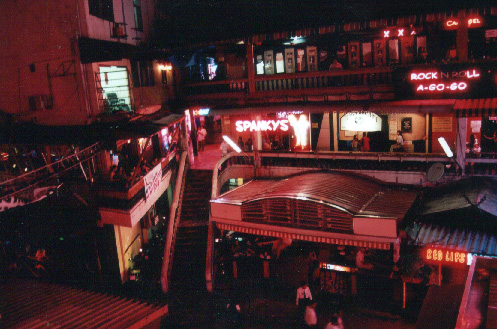
The girls stand around poles, clad in tiny bikinis, looking entirely uninterested at the crowd of mostly expats (and sexpats) who sit around the stage, sipping watered down drinks and gawking.

Daniel and I were unsure about going to the Nana Plaza complex, a part of Bangkok’s red light district, but after a bottle of wine and a tasty dinner, we’ve decided to hop in a bubble-gum-pink cab and learn more about the seedy side of Bangkok.

Nana Plaza

Nana Plaza was never on my itinerary when I decided to hop a flight down to Thailand’s capital and spend the weekend with my friend. In fact, up until dinner, I had never even considered supporting the sex industry in Thailand.

Then, things changed.

As we sit on the balcony of Oscar, a delicious restaurant, which overlooks many a nightclub, he tells me about the book he has finished reading, “Private Dancer.” The novel tells the tale of a western man who falls in love with a woman who works at one of the clubs at Nana.

“I just want to get an idea of where the book takes place,” he says.

After some pondering, I decide I want to see it, too. Especially since the book has just been handed over to me and Thailand’s sex industry is one I am curious to learn more about.

So, we go.

The massive three-story complex makes my jaw-drop. Situated in an area with Muslim storefronts, I find it entirely ironic that there are woman here who are wearing next-to-nothing, a thick coating of booze sticks to the floor and walking — even outside — means passing through billowing cigarette smoke.

We stand outside, hovering under a roof to protect ourselves from the remnants of the rainy season and look around. It’s old men. It’s European tourists. It’s Thai girls and lady boys sidling up to them, acting interested until something better comes along.

“Should we wander around?” I ask.

He nods, and we begin to investigate the first floor. We peak our heads through the curtains as the doormen try to lure us in with “hellos,” and “girls.”

For the most part, everything we see is pretty tame — especially in comparison to what I’ve seen in Las Vegas strip clubs.

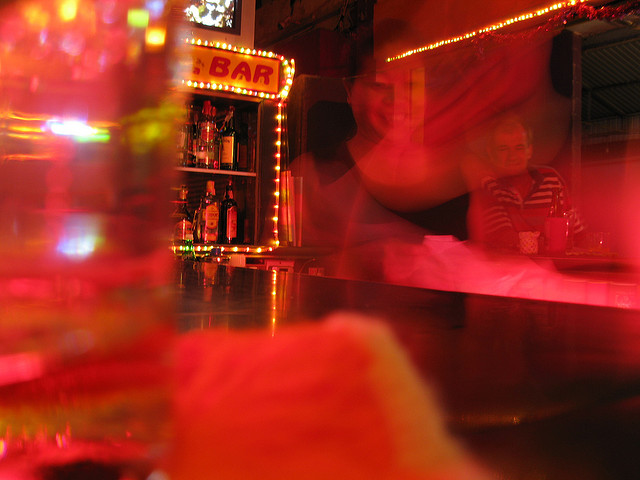
Finally, we settle on a bar on the second floor and walk in. A cocktail waitress with a flashlight guides us into the club, weaving us through high top tables to an open seat in front of the stage.

Around us, servers sit with men, giggling, talking, pretending to be interested in what they are saying with the hopes that the men will pay their bar fine.

The stage has about 10 girls on it, some holding onto poles, some standing around. They all wear black bikinis and all look ridiculously bored, barely dancing to the music. Occasionally, they sway a bit, but for the most part, there is a dull look in their eyes as they survey the crowd. In front of us, a girl readies herself for her time on the stage, primping in front of the mirror before she climbs up.

“This is lame,” I say, so we head out and climb up another flight of stairs to the even seedier stuff.

Sex shows! Ping pong shows! Naked!

I roll my eyes at it. I find it all utterly disgusting.

We walk past one club and peak in — there are lady boys doing a dance routine.

“Oooh, can we go in here?” I beg Daniel, excited at the prospect of actually being entertained and seeing — for lack of better words — a drag show.

He agrees and we head into the dark bar. A cocktail server leads us up a few rows of seats to an empty spot and sits down with us.

I don’t want her there. 

“Where you from?” She asks, looking more at Daniel, who is seated next to her, than me.

“Europe and America,” he says.

“Ooooh. You on honeymoon?”

Say yes, Daniel. Then she will leave.

“No.”

Damnit.

We both sit there, taking everything in. The drag show ends quickly and is replaced by some of the most gorgeous lady boys I have ever seen. I mean — they are more gorgeous than most females I have seen. But, like the club before, they seem entirely uninterested. Except a few who don props like fake eyeglasses, and show off their numbers with the hopes that someone in the bar will ask them to come off the stage and sit with them, order them drinks and then pay their bar fine.

I look down the rows of seats and see a woman straddling an older man. She licks his ear and he grabs her breast. I roll my eyes and turn around, saying softly under my breath “gross.”

“You buy me drink farang,” the woman next to us says to Daniel.

I smile, grab his hand and squeeze it.

“No,” he says.

Then, she gets up and leaves, clearly disappointed she has even wasted a moment of her time sitting with us.

I look back over at the couple and the man now is sucking on the lady boy’s breast.

“Seriously,” I murmur to no one in particular. “I mean … come on. This is just … horrible.”

We sit a few more minutes as my mind is blown by this entire culture, then we leave the bar. Leave Nana Plaza.

Grime still on my feet, we head towards a Thai nightclub to grab some whisky and get Nana out of our minds.

To rescue elephants

It is pitch black when Lek knocks on the door of my room at the guest house.

“Ok, we go,” she says softly through the wood. “The elephants are ready.”

I’m up.

Today — this morning — we are on a mission: to rescue two female elephants from their lives of work and deliver them to freedom at Save Elephant Foundation’s newest project, Elephant Sanctuary Cambodia.

I’ve only slept for a couple of hours, and the travel to get here has been exhausting. But, I don’t care. The tired vanishes from my body as I pull on my clothes and head downstairs.

At 4:30 a.m., our group loads into the van and begins our journey.

“They loaded the first elephants at 3:30,” Lek reports. “She was a bit difficult, but the other girl went on the truck easily.”

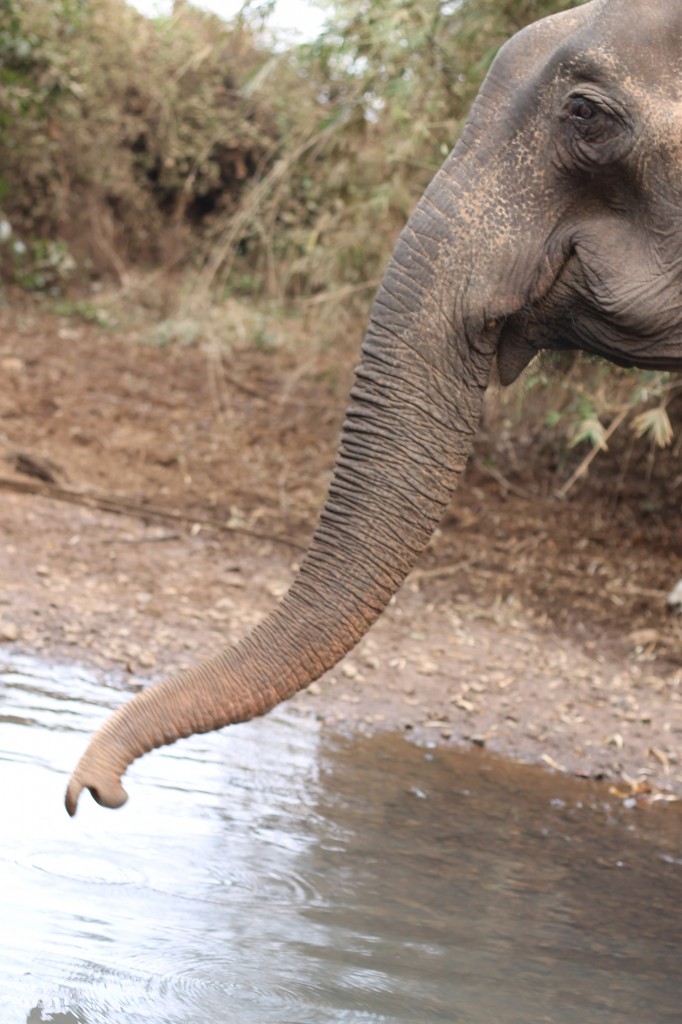
Kham Lin's first bath time after being captive

The “other girl” is Kham Lin, the younger of the two elephants. Her previous life was in a small village which used to have 100 elephants. She is the last one. Because of inadequate (read: non-existent) veterinary care, each elephant has been chained up when they have gotten sick and left to die. Her time in the village, thanks to Lek, is now finished.

The villagers walk with the elephant the day before the rescue

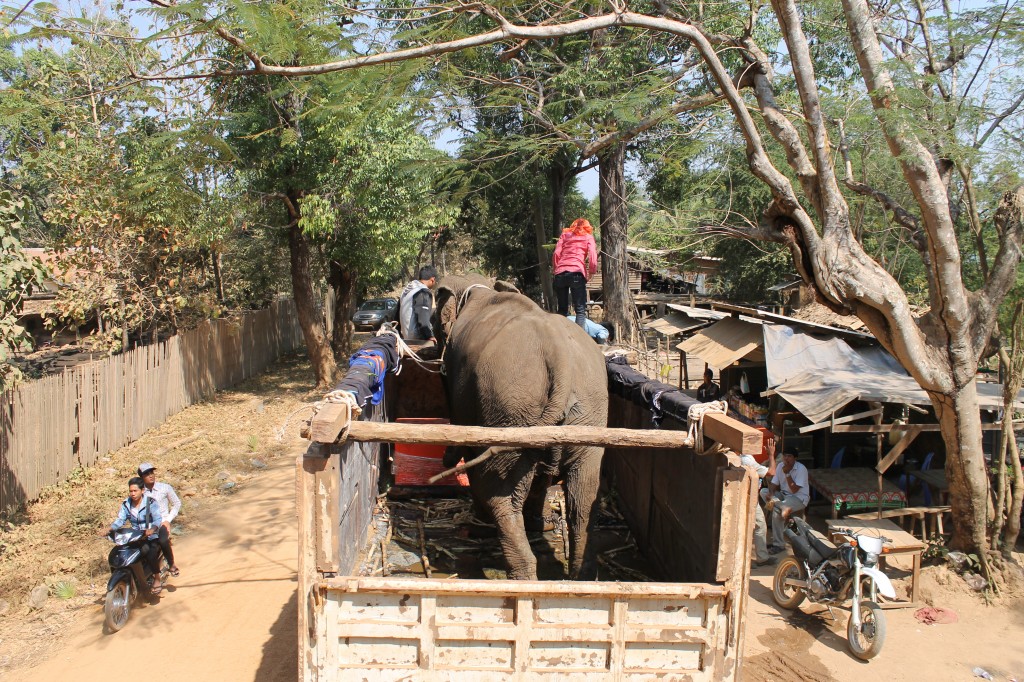
The day earlier, we watched as she took her last steps as a captive elephant, flanked by children from the village. Without hesitation, she walked onto the truck. Immediately, my heart fluttered and tears filled my eyes.

This life of work is done for you, Kham Lin.

As we head out of town with the sun just beginning to crack the horizon, I feel that warm feeling move through my body again. I know I am a part of something incredibly special … at least to the two elephants who are being rescued.

Our first glimpse of the trucks with the elephants being rescued

We pull over on the side of the road a little outside of town and wait for the two elephant trucks to drive by. As they move down the hill, I see our team on the trucks, balanced on wooden boards affixed to the top, covered in blankets to fight the nippy Cambodian morning. They wave to us on the road below.

We drive a little longer and Lek asks me if I want to ride on top of one of the trucks.

My parents would definitely not approve of this.

I agree in an instant, even though I’ve inspected the trucks. The one I want to ride one, the one with Kham Lin, is especially scary for me. The ladder to the top doesn’t even start until above the massive front wheel, and then there is a gap where you have to hoist yourself onto the roof of the cab, and then a step onto the top of the back of the truck.

I’m petrified.

Lauren, a volunteer with us, climbs up first.

“Come on, D, you can do it,” she says, looking down at me from the bench she is sitting on.

I can’t not get on the truck, I can’t not ride with the elephant because I am scared of falling down a ladder.

I muster my little courage and climb up, with the help of two people — one on the ground and one pulling my onto the top of the cab.

Heart racing, I finally make it to the bench and look behind me.

Kham Lin stands in the truck calmly.

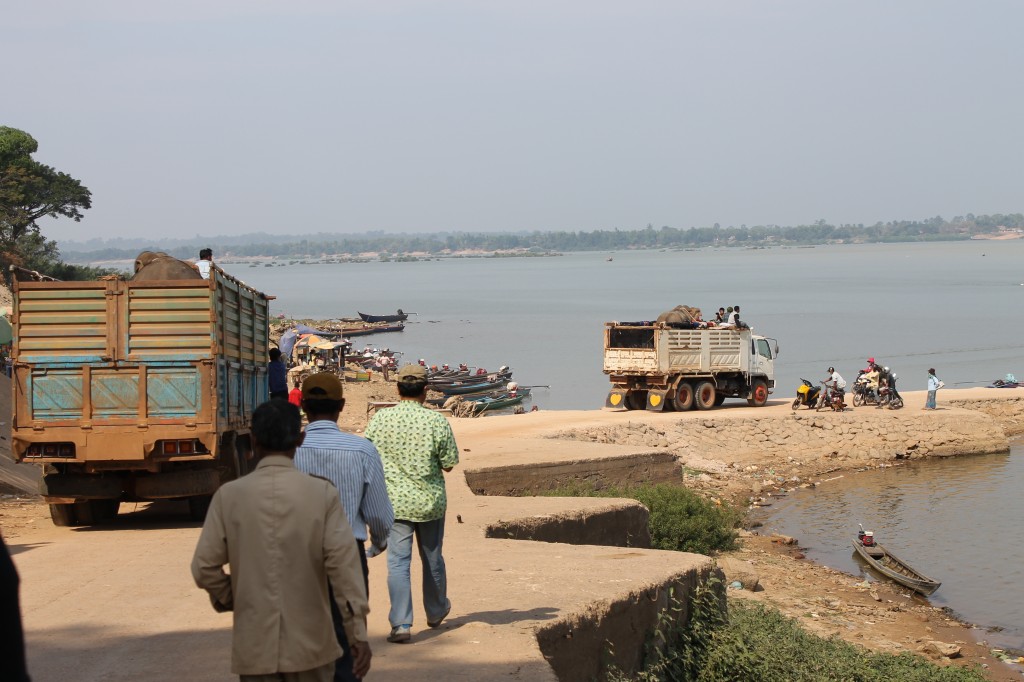
After the barge, Kham Lin, one of the elephant rescues, waits for the next leg of the journey

I wish she could understand how much her life is about to change.

Then, we begin our journey to the Mekong.

It’s chilly. Bugs slap my face. Dust settles on every inch of my body. And, I don’t care. Being on top of the truck, seeing Cambodia pass me by like this … there is no place I would rather be.

We drive for two hours down a two-lane, paved road. Around us is eerily quiet at this hour, as the sun begins to cast its golden light onto the (depleted) countryside.

It’s magical and sad at the same time, driving through tiny villages of homes on wooden stilts and tiny shacks which sell goods to the people on the road.

We arrive to the Mekong mid-morning. There is no bridge to take us across the river, only a barge. The three trucks load onto the barge and we begin the 30-minute ride across the river.

Getting ready to cross the Mekong with the elephants

When we are delivered to the opposite side, the world is entirely different. Instead of pavement, it is dirt. Instead of buildings, there are wooden huts. And, the military which greet us and stop us, inspecting our documents and looking through a book Lek has brought which shows photos from Elephant Nature Park and the happy lives of the elephants there. That is her dream for the sanctuary in Cambodia: to give the elephants happy lives.

Military stop and examine documents as we rescue elephants

The military thumb through the book, pointing and smiling at the photos, and then wave us on our way.

That’s when the journey gets more difficult.

One of the elephants being rescued in Cambodia

The road isn’t good. In fact, the bumps and dips make for a difficult time a top the truck. I haven’t gotten comfortable yet, so my feet attempt to brace my body against the back of the cab, and I have a death grip on the wooden bench I’m sitting on. As we drive across Cambodia, my heart begins to quietly break.

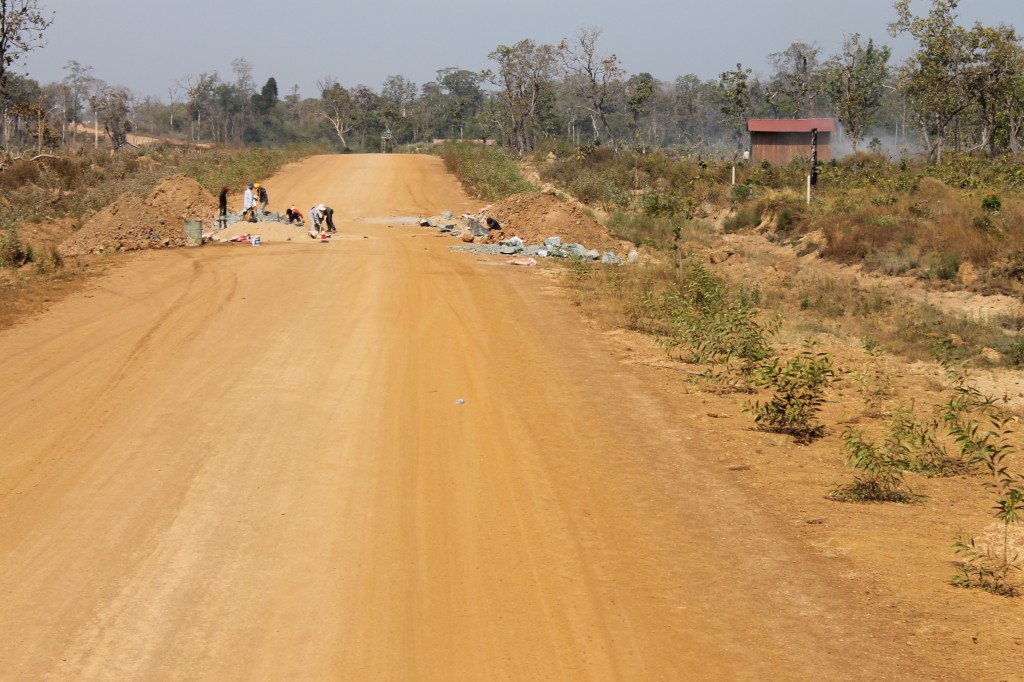
Villagers working on the road in Cambodia

All around me is extreme poverty. Animals living under homes that will be meals. Children running with tattered clothing and smeared in dirt. Yet, each little village we drive through, we are greeted with excitement.

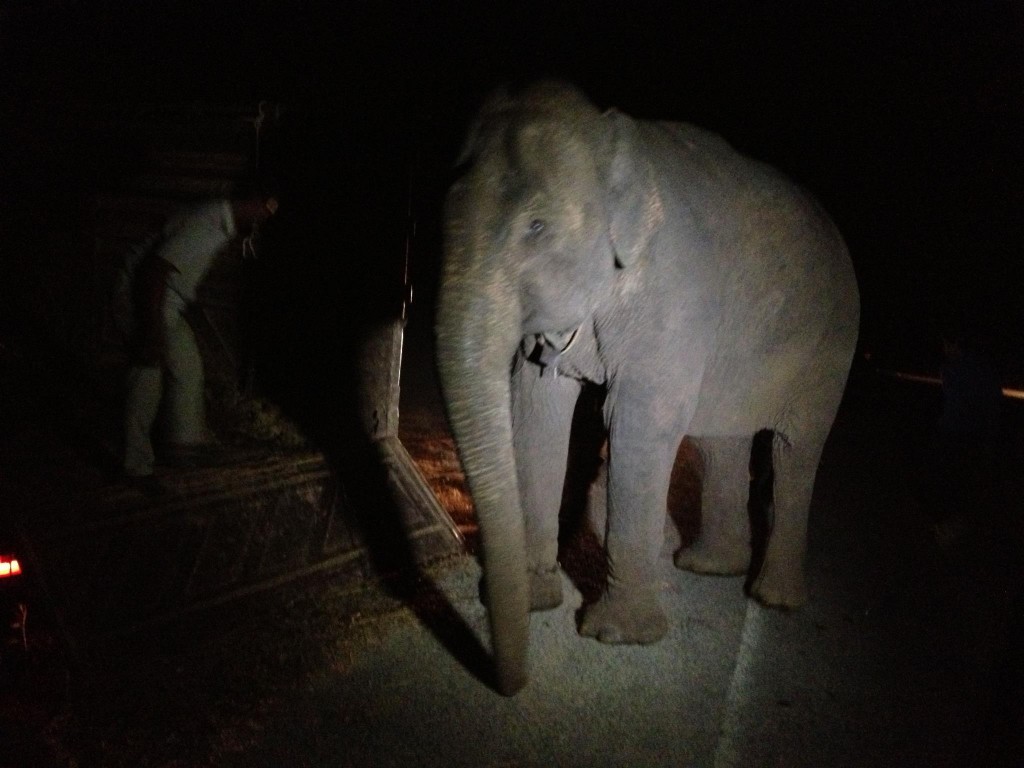
An elephant! In a truck!

For most, it is the first time they have seen an elephants  — because today, there are so few left in the wild in Cambodia.

The children run up to the side of the road and wave up to us on top of the truck. They point and smile at the elephants as we zoom by their world.

I wish we could bring these people with us, too.

Before the dust picks up, the view still is desolate

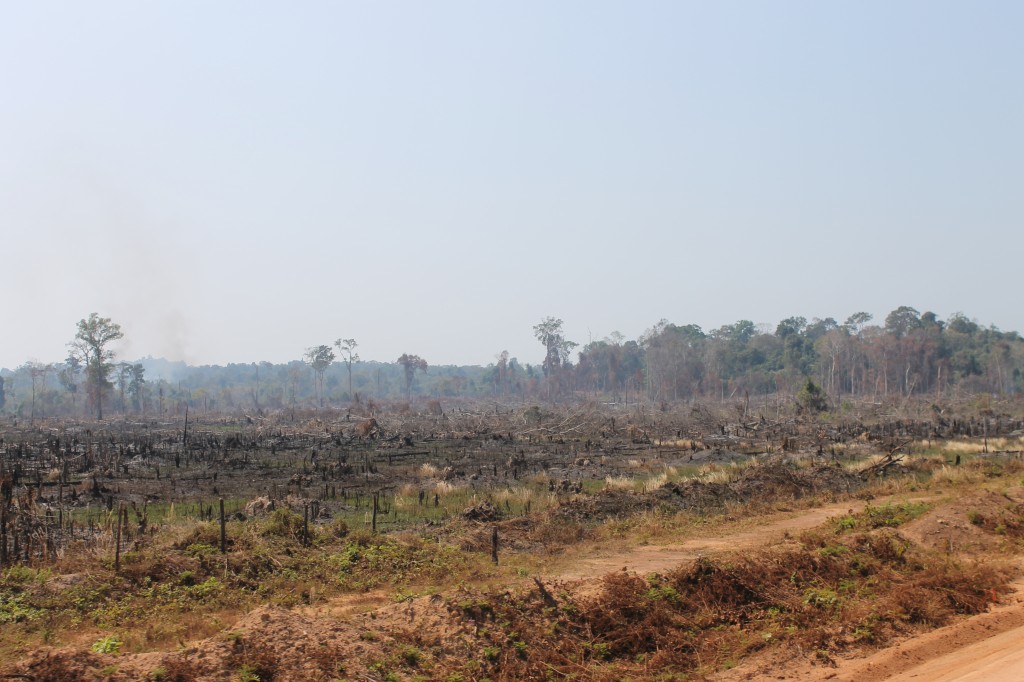
The interior of Cambodia is desolate. Graveyards of forests surround the dirt road. It reminds me a lot of the Las Vegas desert, only there is little life here, thanks to the burning of the jungle.

The remains of a jungle in Cambodia, a result of slash and burn

There are places where the stench of burn sits thick in the air.

The smoke from the fires permeates the air in Cambodia

And then there are places where the fires are so strong, I can feel the heat from them as we drive by. I can hear the crackling of the fires around us.

Sadly, there is little jungle left.

We drive for 16 hours, racing through dangerous areas as we get closer to Siem Reap and closer to the sanctuary. At one point, we get pulled over by police. But, since we’re doing everything above board, the only thing they ask is for $2 from us. I shake my head at this. Two. Dollars. That is nothing, but to them …

Finally, as the sky turns pink, I decide to get back into the truck. I can’t take anymore of the smoke, which has grown even worse.

The last two hours, we trail the elephants in the van and I stare intently on them. Filled with happy that they are going to their new home.

It is well into the night when we get to the sanctuary and there is one last part of the rescue which needs to be executed: the elephants getting off of the truck and taking their first steps into their new home.

The first girl, the one who had trouble getting onto the truck, turns to us and gently kneels down and steps off of the truck.

A small cheer and claps break out from the people who have stopped to watch this scene unfold on the side of the road. Immediately, I feel myself glow, I feel the tears begin to sting my eyes.

We did it.

Then, Kham Lin steps off the truck.

The first steps of freedom for the rescued Kham Lin

Our team leads them into the park as we trail behind, watching them as they take their first steps to the rest of their lives.

“This is just amazing,” I say to Lauren.

“Yeah … I mean … well … you get it … you’re here,” she says.

I know exactly what she means.

We’ve been a part of something so magical. So special. A month earlier, I visited Cambodia with Lek to see these elephants and to learn about them before they were rescued. To know I was a tiny part of something that gave these two gorgeous creatures a better life fills me with such warmth and takes me away from my selfish human needs and allows me to look at the bigger picture.

It’s actions like this that can change the world and change the thinking of people. And, I am so glad to be a part of this momentous occasion. To witness these elephants be brought to a new life. To be at the start of something new with the sanctuary.

In this moment, I could not be happier.

Want more on the elephant rescue? Check out The Diary of an Elephant Rescue.

Daily Wanderlust: The other side of Las Vegas

From 2005 until 2012, I lived mostly in a place that is known for gambling, amazing food and late, late nights resulting in questioning the activities the following morning. Whenever people ask me about what it was like to live in Las Vegas, I always tell them there is much more to the desert town than The Strip and taking in the city’s infamous skyline. In fact, there is an entire other world. From the towering and snow-capped (in the winter) Mt. Charleston, to the water-depleted Lake Mead, to the charming town of Boulder City and more. There is no shortage of gorgeous places to visit in and around Las Vegas that take you to an entirely different (and very real) world.

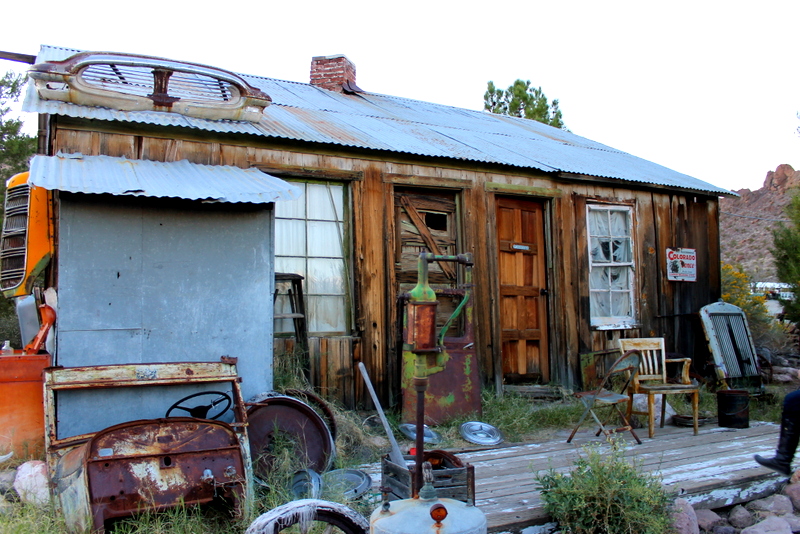
This last trip home, I found yet another place to visit in Vegas that is off-the-beaten-path, the ghost town of Nelson, Nevada. While there are plenty of great things to do in Las Vegas that do leave your feet firmly planted in the artificial worlds of Venice, Paris, the pyramids and more, on your next visit, consider hitting up this hidden gem of a spot.

Nelson isn’t far from Vegas, but I promise you this — it is the absolute opposite of the rest of the city.

The ghost town of Nelson, Nevada, just outside of Las Vegas


Daily Wanderlust: Paper Lanterns for Buddha

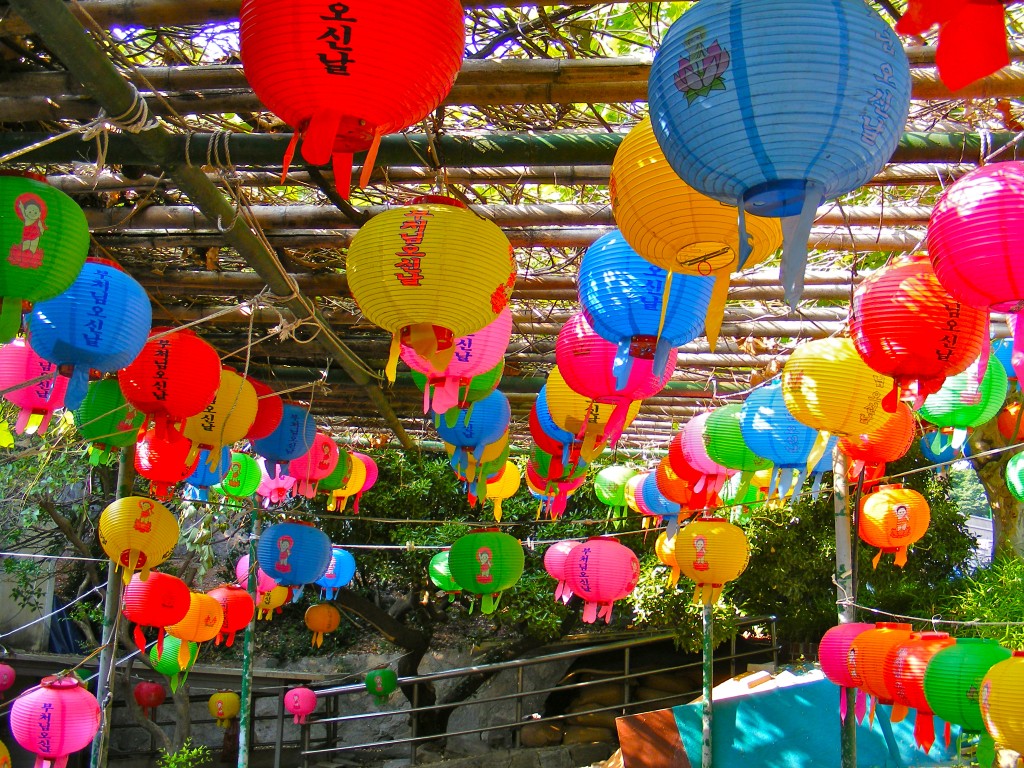
The best time of year to visit Korea, in my opinion, is May. This is when Buddha’s birthday is celebrated, and the entire country is decorated in colorful paper lanterns to mark the big occasion. They hang in the temples, line the sidewalks, and dot the storefronts. It’s a beautiful sight to behold and you can’t help but feel excited for the celebrations that ensue. This past year, Buddha turned a whopping 2556 years old. The turn out for the Lotus Lantern Festival included monks, dancers, musicians, street performers, foreigners and locals. This particular shot was taken at a park a few days after the celebrations; the lanterns still hung brightly for weeks to come.

Paper lanterns hang in honor of Buddha

Fact vs. Fiction: the Thailand Sex Industry


Editor’s Note: After my post What not to do in Chiang Mai drew some comments from my readers regarding my stance on sex tourism in the region (or lack thereof), I decided I wanted someone who knows more about the subject to weigh in on the topic. As someone who is heavily involved in responsible tourism, it is incredibly important for me that my readers are educated and then allowed to make their own decisions in regards to what they choose to support or skip while traveling. While I do not condone the Thailand sex industry, I do want my readers to know what really happens in this area in regards to working girls. Human trafficking, child slavery, drug addictions all do exist in the world of sex in parts of SE Asia, particularly those whose people live in extreme poverty. BUT, according to in-depth research, these problems are not occurring in Chiang Mai. This post is written by Alex Martin, someone who has spent a lot of time investigating the Thailand sex industry and sex tourism. 

What’s the deal with Thailand’s sex industry?

Thailand sex industry
Photo courtesy scatterwadatai via Flickr Creative Commons

The sex industry in Thailand is a vast and complex organism — something that cannot be defined in concrete terms. Also, the concept of ‘pay-to-play’ relations in regards to morality is subjective to the individual and their social and cultural background. For the purpose of this — a post examining the ins and outs of the sex industry (and a topic that is nearly impossible to fit into one concise piece) it is more prudent and beneficial to give a holistic description of Thailand’s industry so people can make their own decision.

I will keep my opinion until the end and ask you to set aside any pre-conceived notions of what you think sex should be about.

I sometimes work as a guide and translator for an educational tour company and almost always get at least one student who is studying women’s rights in Asia. It’s been my assignment on more than one occasion to bring a student to different venues and interview women working there. Most of the information I am using for this article comes directly from interviews I have conducted on these trips.

We all know that prostitution is an ancient profession, but that doesn’t make it anachronistic in the least. In Thailand, it’s a huge industry with many faces. It has ‘lady bars’, special massage parlors, brothels, go-go bars, and many other venues that travelers and locals frequent. There are even whole streets dedicated to different forms of ‘pay for sex’ places. Since this article is for tourists, I’ll keep the information narrowed down to places they usually frequent.

But first, ping pong shows

The most famous form of prostitution in Thailand is the ping pong show, which is exactly what it sounds like. Interestingly enough, when I’ve been asked to bring a person there, nine out of 10 times it has been by a woman, while the men in the group are very uncomfortable. I personally refuse to even talk about where it is possible to see one of these shows.

Ping pong shows are notorious for getting women addicted to ya ba, which is a methamphetamine that directly translates into “crazy drug,” as a way to keep them working. For many people, this show has become a popular tourist attraction that many people say is one of those things they just have to see once. The thing is, with millions of tourists coming to Thailand ‘just once’ every year, it keeps the demand up and the horrid-ness and exploitation continues.

There is no choice for women who work these shows and men (and women) aren’t going there for any sort of connection. Most people look at it and go for a joke or shock value, making it some sort of sick luxury. Many people don’t understand the implications of what they contribute to. This is not a ‘must see’ attraction in Thailand.

Sex and the women behind it

Thailand sex industry
Photo courtesy of Jessica Rabbit via Flickr Creative Commons.

Now that ping pong shows are out of the way, let’s look at the women who work at the other venues (bars, massage parlors, etc.). The places I was able to conduct interviews at were go-go bars and ‘lady bars’. The first thing I gathered from speaking with many of them is that they are women first and sex workers second. Upon meeting them, most of them wanted to talk about their family, hobbies, and other normal conversation that you would have with any person you met for the first time. These interactions happened in Chiang Mai and most of the girls working were from other provinces. They had come to Chiang Mai of their own volition, usually telling their family they had found a job that wasn’t what they were actually doing, to be able to make money to send back to them. Many times, women said that they had a child whose father wasn’t supporting in any way. In Thailand, child support is almost non-existent and there are not many ways to legally get a father to financially contribute to the life of his child.

Financially, working in the sex industry is almost logical to a person who is desperate to support their family. There aren’t many government aid programs for people with money problems and a person who works as a farmer or in a factory can make as little as 300 baht a day (the minimum wage was just raised). The working conditions aren’t comfortable. There is no nine to five or overtime. In the sex industry, women can make more money without even sleeping with men.

The concept of pay-to-play

At lady and go go bars, women aren’t forced to sleep with men. It is their job to entertain them while they are drinking and get them to buy them drinks, which cost significantly more than a regular cocktail or beer. For each drink a man buys them, the woman makes a commission. If a man likes the woman (and the woman likes the man), he can pay a bar fine to let her leave work early. This does not promise sex. If a woman chooses to sleep with a man, it’s her decision if she wants to charge him and how much. Many women choose to give men their phone numbers and meet after work so they don’t have to pay the bar fine. The reason? These women are looking for more than cash for having sex one time. They are looking for somebody to take care of them as they have learned that society won’t. Obviously, there are people who are just looking to make as much money as they can by sleeping with men.

Regardless, they have the choice to do it.

The men who pay

Many people look at the men who frequent these types of places and label them as ‘old creepy perverts’ or sexpats. Upon asking different women their opinions of the men who frequented lady bars, they usually said the men were often polite and gentle. Interestingly enough, they said the younger men were often more problematic as they wanted to pay for women just so they “could do things that their girlfriends wouldn’t let them do.”

Upon talking to men who spend time at lady bars, I’ve noticed that many of them are widows or divorced. For how much they talk about it, one can only guess that they are still hurting. Losing a loved one is difficult and sometimes leaves a person feeling like they can’t ever love again. Many men who go to these places are looking for some sort of connection that isn’t as intense so they can’t get hurt again. Many marry girls from these bars because they want companionship that feels simpler than what they previously went through romantically. At the end of the day, as unorthodox as it is to many western standards, the relationship between men and bar girls is consensual and mutually beneficial.

To sex or not to sex?

Sex tourism Thailand
Photo courtesy Nicolai Bangsgaard via Flickr Creative Commons

I urge people to empathize —  instead of judge —  both the men and women who are working or patrons of these types of venues. There are things I can confidently say a person should not take part in while traveling to Thailand like the Tiger Temple, Full Moon Party, or almost any elephant camp that isn’t Elephant Nature Park.

My personal opinion is this: in regards to lady bars I can only say it isn’t something I’m interested in doing. I think the real problem isn’t this form of sex-as-profit, but a society that makes it almost necessary for the industry to exist as a whole.  For me, I find it more disturbing that there aren’t any government programs to help single mothers who have to pay for their children’s food, clothing, and education as only the worst schools in Thailand are free. Students are expected to buy their own books, uniforms, and lunches regardless.  Outside of Bangkok, there is nearly no government funding to public schools.

I also urge every person who travels to Thailand to have a look around in one of these bars. Talk to the women and buy them a drink. Learn about their lives and tell their story. Don’t treat them like they are anything less than a person who is trying to make a living and take care of themselves and their families.


Escape of the Week: Udawalawae National Park, Sri Lanka

The sunrise in Sri Lanka casts a pink and orange glow across the peach dirt, warming me despite the slight chill in the air. In front of the guest house we’ve stayed at, there are two larger-than-life Jeeps, with their sides and roof ripped off and rows of plastic benches replacing the normal seats.

We’re off on a safari to see some elephants where they belong — in the wild.

“It’s nothing like what you’ve seen before,” my friend tells me before I climb into our SUV. “Seeing these animals in the wild … it is just amazing. It gives you an entirely different appreciation for them.”

Pee-ow. Pee-ow.

That’s the first thing I hear as we pull onto the very dry dirt road at the entrance to Udawalawae National Park.

What on earth? 

“Peacocks,” our guide explains. For the past two days, every time I hear that call, I have thought it was cats. But, nope. Peacocks.

Udawalawae National Park, Sri Lanka

He points to one in the distance, perched on a tree. Shutters snap as our group lay claim to the memory of our first peacock at the park.

But, the peacocks aren’t what we’re after. So, as the sun rises higher into the Sri Lankan sky, we set off on our journey through the vast park.

The third most visited park in the country, Udawalawae is home to various species of birds, lizards, cows, buffalo, and, of course, elephants. Spanning around 119 square miles, the 30-plus-year-old sanctuary is quiet at this time of morning. Even though we’re told it is the perfect time of day to spot wild elephants, it seems at 6:30 a.m., most of the world has yet to wake up to join us on our journey.

And I’m totally OK with sharing Udawalawae with only my team and the animals.

As the pee-ow continues to be the soundtrack, we venture into the park, bumping and thumping along dirt roads in our yellow SUV. Every now and then, our guide clinks a rupee against the metal shell of the vehicle, alerting our driver to stop. He will point out an animal, our cameras will all go off simultaneously, and then we will continue on.

It isn’t far into our journey when we spot our first elephants.

Udawalawae elephants

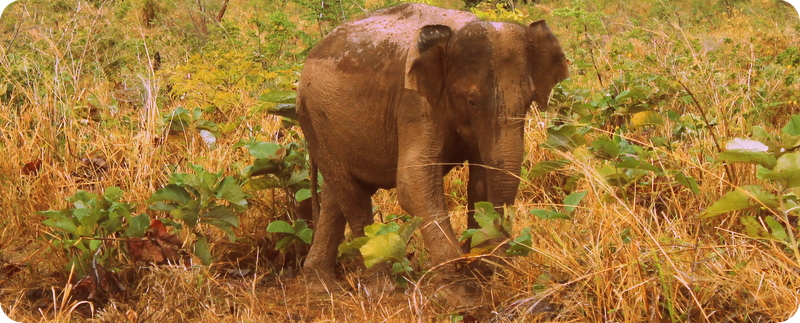
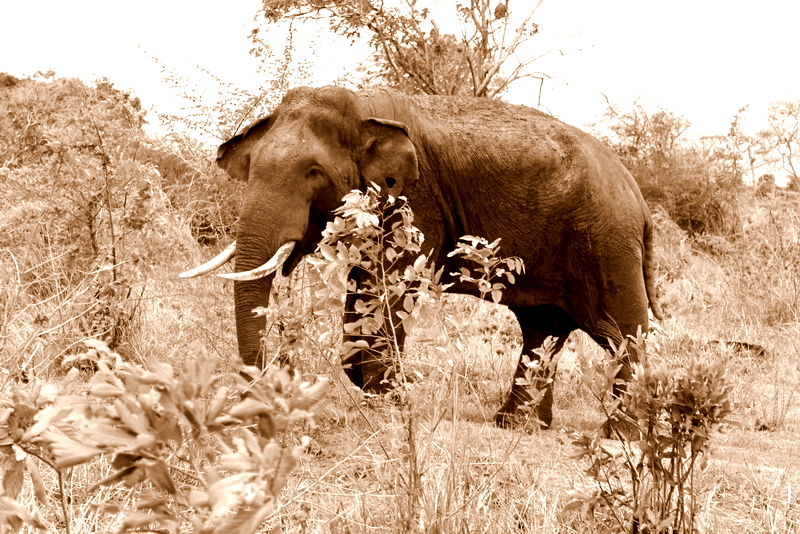
Bathed in thick brown mud, Mom and Baby meander together through a thicket of tall grass, casually whacking the blades against their legs to soften them and then depositing the vegetation into their big mouths and chewing it.

Udawalawae elephant

A wild elephant. In front of me.

Udawalawae National Park

Two wild elephants. In front of me.

I blink, gently dig my thumb into my palm to remind myself this is real. I am in Sri Lanka on a safari and witnessing these animals before they have been abused in the name of tourism, before they have been made to give rides. They are happy. They are free.

For a moment, I can feel the tears well up in my eyes. Then, we continue on, getting a better angle from the safe confines of our vehicle.

“Shall we go?” One of the members of our group asks once the photos have slowed down.

We continue on, stopping every few minutes to spot different elephants.

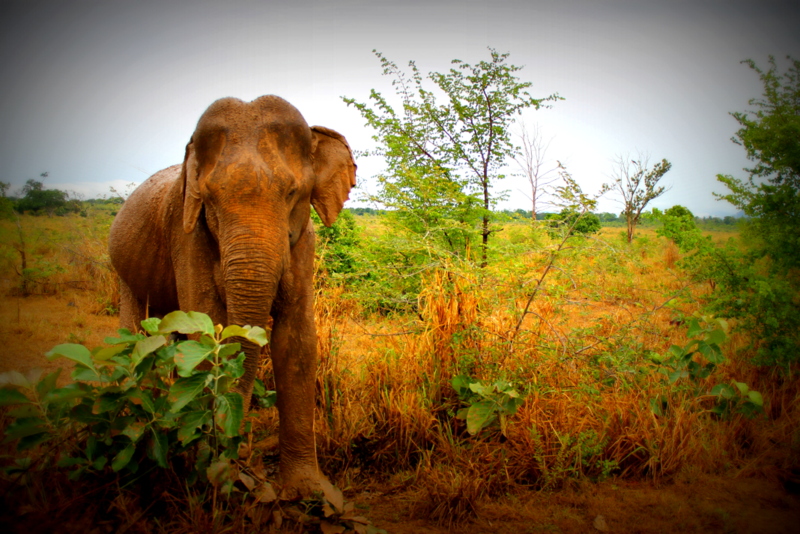
A male elephant at Udawalawae

A solitary male, or “tusker” as the guide refers to him.

Family of elephants at Udawalawae

A family group.

Elephant at Udawalawae

And more. And more. And more.

With each stop, my heart warms even more at the experience.

Until we encounter one single female elephant. 

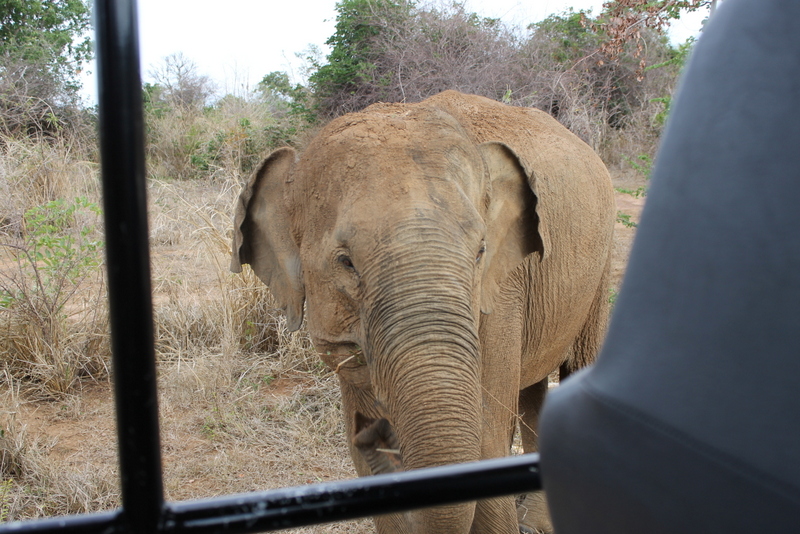
We pull up beside her as she snacks. Two jeeps, parked at odd angles in the late morning. She watches us watching her, casting as curious of glance as an elephant can give. Then, she slowly meanders up to the jeep I’m in. Our guide reaches out his hand to touch her. She leans her head into his hand.

Udawalawae National Park

“Hello, girl,” he says, his eyes twinkling as she leans more and more into his hand. Suddenly, his hand is no longer against her head. Instead, her head is against the metal of our SUV. And, we’re being pushed.

Oh my god. I’ve seen this on You Tube videos. Stupid tourists get too close to wild animals and pay the price.

“Woah, woah,” he says. Then, she backs off our ride and slowly returns to her grazing.

“Again! Again!” My boss says, delighted at our mini assault from the girl.

I laugh, a nervous laugh. A laugh that says, “that was great … but never again.”

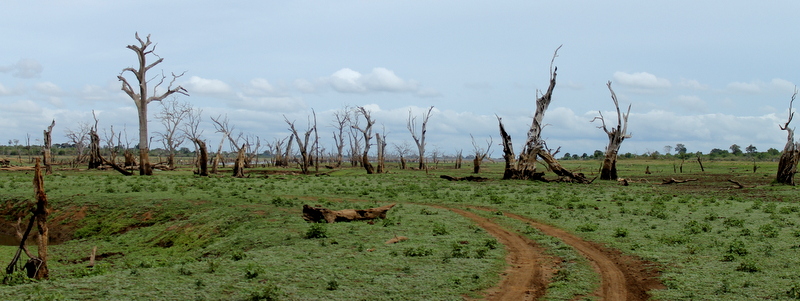
The day continues, weaving through gorgeous landscapes of dried lake beds against far-off mountains and grasslands.

Udawalawae landscape

After nearly 10 hours of being on a safari, we call it a day. After all, we’ve got another safari tomorrow to tend to.

Getting there: I recommend being a part of a tour. Head there in the morning and stick around for lunch. The elephants are most visible in the early morning hours. The park is located near the Ratnapura-Hambantota turn-off, about 35 miles from Embilipitiya. The closest major city is Colombo. Cost for entrance is $12.

PLEASE NOTE: There are many places to enjoy safaris in Sri Lanka, but not many which do it right. Places like Chitwan National Park, which pile people onto elephants and offer elephant rides into a safari, are not animal-friendly or examples of responsible tourism. These places encourage the capture of elephants from the wild, their spirit to be broken through abuse, and the ultimate demise of the animal from the very place you want to see it live. It is not only safer, but the responsible way to experience wildlife in this beautiful country.


Daily Wanderlust: Dublin’s Liberator Statue

There are gorgeous statues dotting the streets of Dublin, Ireland.

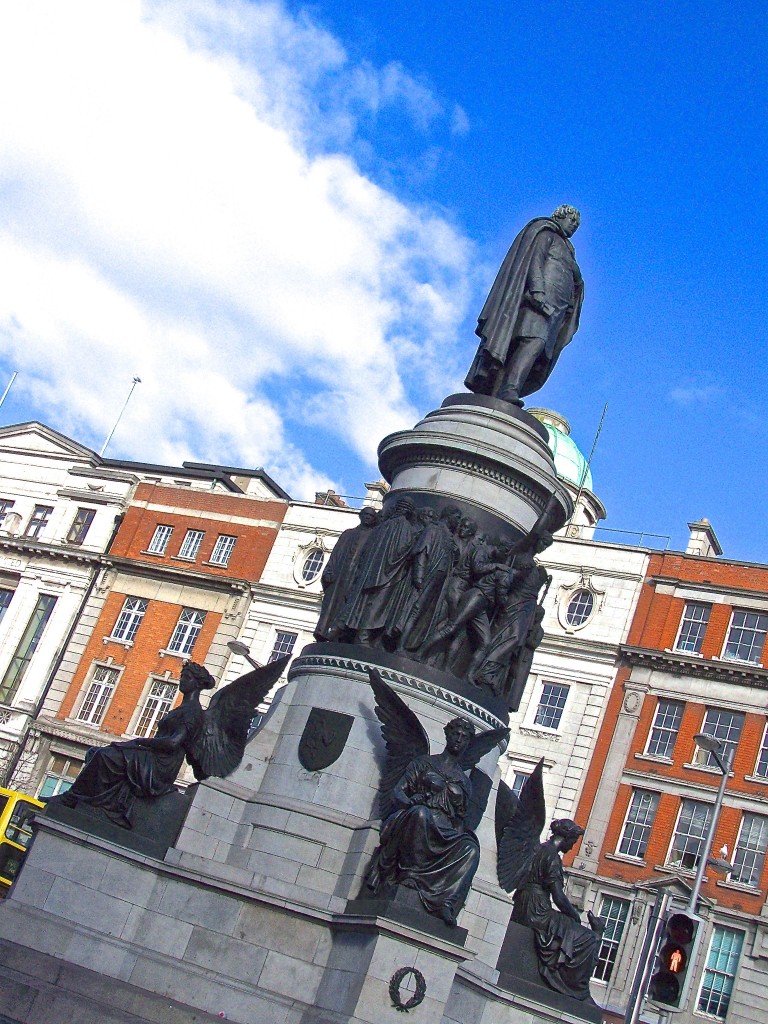
One of the most well-known is the Liberator Statue (also known as the O’Connell Statue) on O’Connell Street. The bronze statue depicts Daniel O’Connell, an Irish political leader from the 1800s.

When I wasn’t celebrating St. Patrick’s Day in Ireland and making my liver hate me, I was wandering around the River Liffey, hitting up Temple Bar, and admiring some of the historic landmarks, like The Liberator.

Liberator Statue, Dublin

Daily Wanderlust: Buckingham Palace

London always makes me feel like I’ve stepped back in time, even if its residents are ridiculously fashion-forward and uber chic.

Strolling down the cobblestone streets, passing by gorgeous old structures, just makes me feel like I should be back in a different century where corsets were the norm.

I feel this way particularly when I stand in front of the gates at Buckingham Palace or in front of Big Ben.

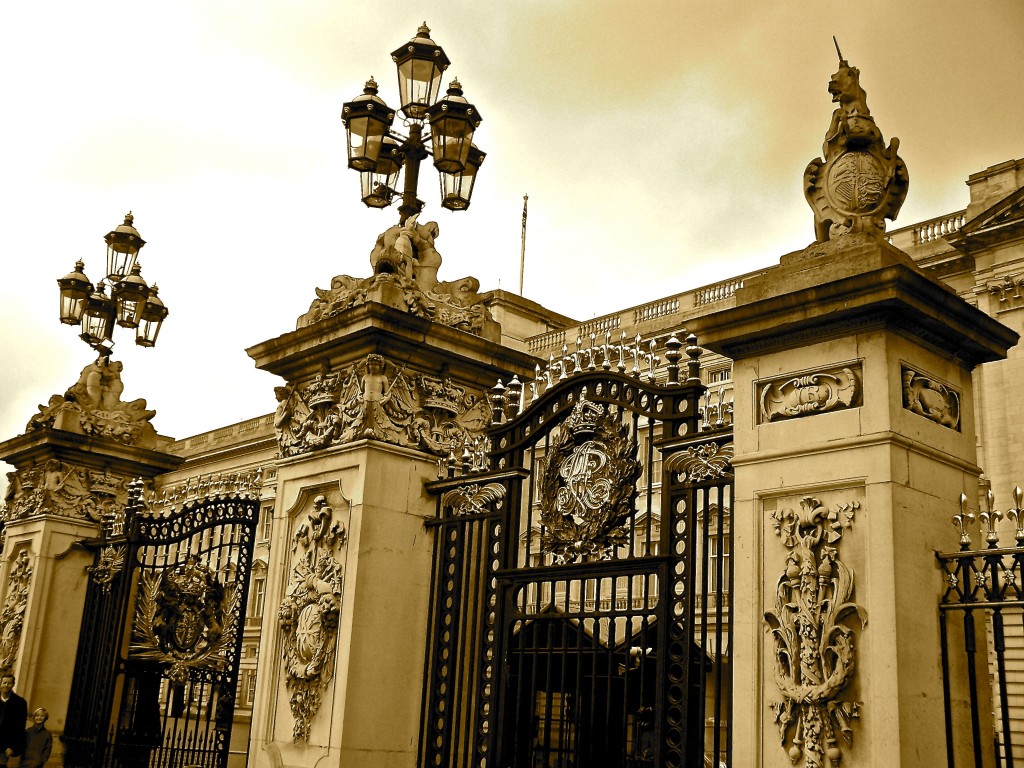
Buckingham Palace

Daily Wanderlust: Alleyway graffiti in Zagreb

Before I officially hit my 30-Life-Crisis, I headed to Croatia for a holiday. My first stop in the magical and life-changing country was Zagreb, the capital of the country.

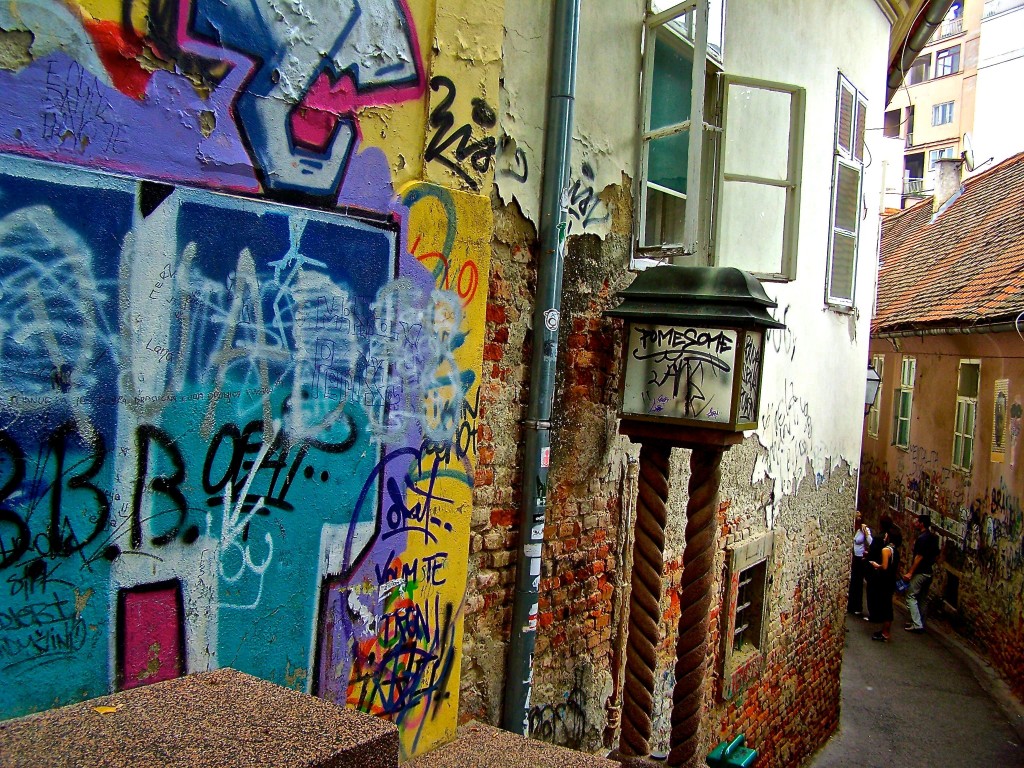
I’m a bit unconventional in terms of what I desire out of visits to foreign places (I’m so churched out!), so I popped in my headphones and took a proper wander through the historic city. Down one little alley near in the Lower City, I came across colorful tags adorning the the old European buildings.

Photo of Zagreb, Croatia